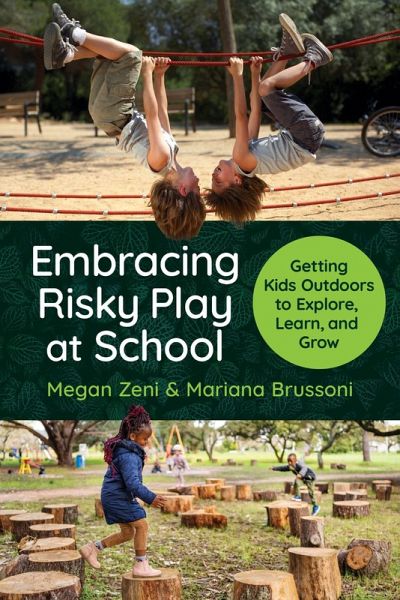
Embracing Risky Play at School
Getting Kids Outdoors to Explore, Learn, and Grow
Versandkostenfrei!
Erscheint vorauss. 23. Januar 2026
108,99 €
inkl. MwSt.
Weitere Ausgaben:

This book provides K–8 educators with practical, research-based guidance for implementing—and advocating for!—risky play at school. Children are naturally drawn to risky play—taking physical chances, seeking excitement, and satisfying curiosity—and are more physically active when playing outdoors. Embracing Risky Play at School introduces readers to outdoor play and learning (OPAL) in the kindergarten to middle school years, explains the difference between risks and hazards, presents the concept of “Yes” spaces, and describes how and why risky play supports academic development a...
This book provides K–8 educators with practical, research-based guidance for implementing—and advocating for!—risky play at school. Children are naturally drawn to risky play—taking physical chances, seeking excitement, and satisfying curiosity—and are more physically active when playing outdoors. Embracing Risky Play at School introduces readers to outdoor play and learning (OPAL) in the kindergarten to middle school years, explains the difference between risks and hazards, presents the concept of “Yes” spaces, and describes how and why risky play supports academic development and student well-being. Zeni and Brussoni, two experts in the field with decades of experience, share research evidence alongside accessible strategies for overcoming common barriers to implementing risky play at school. The Canadian Pediatric Society recommends risky play as a preventative measure for childhood obesity, anxiety, and behavioral issues, and schools have an important role to play in providing access to the unique benefits of risky outdoor play. This book addresses the collective responsibility of adults to support risky play when designing learning environments. Book Features: * A clear understanding of what risky play is, and is not, particularly when supervising other people’s children as a professional educator in group learning environments. * Guidance for creating conditions and building capacity for risky play in schools, which serves to support the physical, social, emotional, and cognitive growth of children. * Links to learning modules that extend chapter content through the authors’ Outside Play website (www.outsideplay.org/).
Andere Kunden interessierten sich für