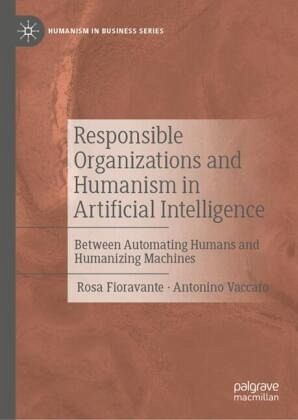
Responsible Organizations and Humanism in Artificial Intelligence
Between Automating Humans and Humanizing Machines
Versandkostenfrei!
Erscheint vorauss. Juni 2026
91,99 €
inkl. MwSt.

Organizations confronting the technological disruption brought by Artificial Intelligence (AI) face unprecedented ethical issues and ethical dilemmas. Among others, risks of dehumanization and stakeholders enhanced vulnerabilities, require a comprehensive ethical strategy based on responsibility and accountability. This book asks how organizations can identify AI related ethical risks, evaluate AI ethical impact and perform ethical decision making upon AI design, deployment and use.This book adopts the humanistic approach to management as a theoretical framework, which assesses business models...
Organizations confronting the technological disruption brought by Artificial Intelligence (AI) face unprecedented ethical issues and ethical dilemmas. Among others, risks of dehumanization and stakeholders enhanced vulnerabilities, require a comprehensive ethical strategy based on responsibility and accountability. This book asks how organizations can identify AI related ethical risks, evaluate AI ethical impact and perform ethical decision making upon AI design, deployment and use.
This book adopts the humanistic approach to management as a theoretical framework, which assesses business models and organizations according to their impact on human well-being and flourishing. This approach allows organizations to harness the opportunities for human capabilities that AI brings, without incurring ethical harms and negative impacts. Through the humanistic framework, organizations can align strategic and operational decisions regarding AI with social and environmental goals, with considerations beyond mere compliance and risk management. This book will be of great interest to scholars and students of business ethics, CSR and technology management, as well as to practitioners involved in AI ethical management.
This book adopts the humanistic approach to management as a theoretical framework, which assesses business models and organizations according to their impact on human well-being and flourishing. This approach allows organizations to harness the opportunities for human capabilities that AI brings, without incurring ethical harms and negative impacts. Through the humanistic framework, organizations can align strategic and operational decisions regarding AI with social and environmental goals, with considerations beyond mere compliance and risk management. This book will be of great interest to scholars and students of business ethics, CSR and technology management, as well as to practitioners involved in AI ethical management.
Andere Kunden interessierten sich für