• Produktbild: The Parallel Curriculum in the Classroom, Book 1
  • Produktbild: The Parallel Curriculum in the Classroom, Book 1

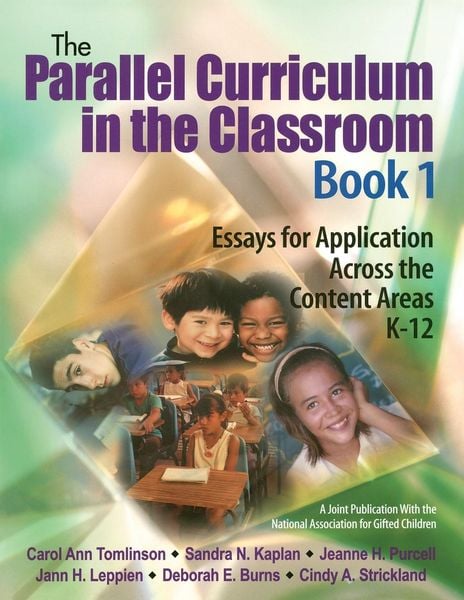
The Parallel Curriculum in the Classroom, Book 1 Essays for Application Across the Content Areas, K-12

51,99 €

inkl. MwSt, Versandkostenfrei

Lieferung nach Hause

Beschreibung

Details

ISBN

978-0-7619-2972-7

Erscheinungsdatum

30.08.2005

Einband

Taschenbuch

Herausgeber

Tomlinson Carol Ann + weitere

Verlag

Sage Publications

Seitenzahl

128

Maße (L/B/H)

28/21,6/0,7 cm

Gewicht

370 g

Sprache

Englisch

Beschreibung

Details

ISBN

978-0-7619-2972-7

Erscheinungsdatum

30.08.2005

Einband

Taschenbuch

Herausgeber

Verlag

Sage Publications

Seitenzahl

128

Maße (L/B/H)

28/21,6/0,7 cm

Gewicht

370 g

Sprache

Englisch

Herstelleradresse

Libri GmbH
Europaallee 1
36244 Bad Hersfeld
DE

Email: gpsr@libri.de

Unsere Kundinnen und Kunden meinen

0 Bewertungen

Informationen zu Bewertungen

Zur Abgabe einer Bewertung ist eine Anmeldung im Konto notwendig. Die Authentizität der Bewertungen wird von uns nicht überprüft. Wir behalten uns vor, Bewertungstexte, die unseren Richtlinien widersprechen, entsprechend zu kürzen oder zu löschen.

Verfassen Sie die erste Bewertung zu diesem Artikel

Helfen Sie anderen Kund*innen durch Ihre Meinung

Unsere Kundinnen und Kunden meinen

0 Bewertungen filtern

Weitere Artikel findest du in

  • Produktbild: The Parallel Curriculum in the Classroom, Book 1
  • Produktbild: The Parallel Curriculum in the Classroom, Book 1
  • Introducing the Parallel Curriculum Model in the Classroom by Carol Ann Tomlinson and Sandra Kaplan
    About the Book
    Using the Model and Units for Professional Development
    Acknowledgments
    1. In Praise of Protocols: Navigating the Design Process Within the Parallel Curriculum Model by Deborah E. Burns
    Curriculum as a Road Map
    The Purpose, Problems, and Process of Curriculum Writing
    The Goal and Sequence of This Essay
    The Beginning: Agreeing on the Components of a Curriculum Plan
    The Challenge of Writing Well-Aligned PCM Curriculum
    Supporting the Work of Creative Professionals
    The Parallel Curriculum Model Protocols
    Conclusion
    2. The Importance of the Focusing Questions in Each of the Curriculum Parallels by Jann H. Leppien
    The Nature of a Discipline and How It Relates to the Focusing Questions
    Early in the Curriculum Planning Process
    Using the Core Curriculum's Purpose, Characteristics, and Questions to Guide Curricular Decisions
    Using the Curriculum of Connections' Purpose, Characteristics, and Questions to Guide Curricular Decisions
    Using the Curriculum of Practice's Purpose, Characteristics, and Questions to Guide Curricular Decisions
    Using the Curriculum of Identity's Purpose, Characteristics, and Questions to Guide Curricular Decisions
    In Closing
    3. Using the Four Parallel Curricula as a Comprehensive Curriculum Model: Philosophy and Pragmatism by Sandra N. Kaplan
    The Philosophical Rationale
    The Pragmatic Rationale
    Conclusion
    4. Exploring the Curriculum of Identity in the PCM Model by Jeanne Purcell
    What Is the Curriculum of Identity?
    What's In It for Me?
    Conclusion
    References
    5. Ascending Intellectual Demand Within and Beyond the Parallel Curriculum Model by Carol Tomlinson, Sandra Kaplan, and Kelly Hedrick
    What Is Ascending Intellectual Demand?
    How Does Ascending Intellectual Demand Relate to Other Guides for Challenge?
    How Is Ascending Intellectual Demand Different Than Other Approaches to Challenge?
    Using Ascending Intellectual Demand to Plan Curriculum and Instruction
    When and Where Do Teachers Apply Ascending Intellectual Demand?
    A Word of Caution
    Why Does Ascending Intellectual Demand Matter?
    References
    Index