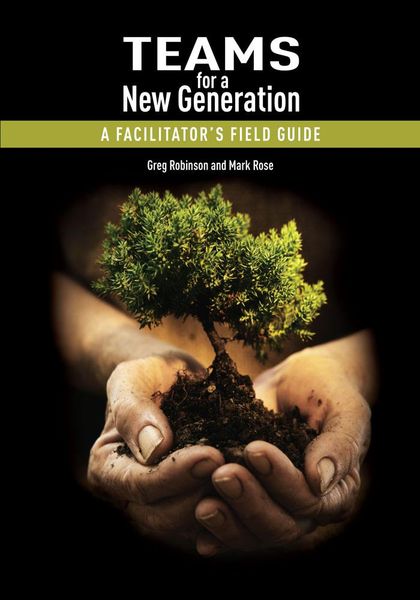
Teams for a New Generation A Facilitator's Field Guide
-
- Taschenbuch
- eBook ausgewählt
-
Form:Einzelkauf Download
-
Sprache:Englisch
3,49 €
inkl. MwStBeschreibung
Details
Format
ePUB
Kopierschutz
Ja
Family Sharing
Nein
Text-to-Speech
Ja
Erscheinungsdatum
12.10.2007
Verlag
AuthorhouseSeitenzahl
176 (Printausgabe)
Dateigröße
1992 KB
Sprache
Englisch
EAN
9781434324115
There has been much written about teams with an ongoing debate about the primacy of environment or dynamics as the most important element to effective teams. Yet the need for groups to be able to consistently tap into the collective intelligence present in the team is more and more important. This requires teams to move beyond cooperation, goodwill and consensus and be able to challenge individual and collective assumptions to see new alternatives. This book provides a simple but elegant model to understand how teams move past the mediocrity of consensus to innovative thinking that comes with Collective Learning.
Collective Learning occurs when teams become aware of their assumptions and it challenges them to create a new understanding of what is real and what is important. When that happens, lasting change can come from within the team. There are four distinct abilities that must be present to provide the infrastructure for a group to learn collectively, and here is the 'how to' to dramatically increase team effectiveness.
This book is focused on how a facilitator can help groups and the individuals in those groups slow down the emotional and belief processes in order to create opportunities to choose responses rather than being on automatic pilot. The purpose of the facilitator's effort is to move experiential learning beyond the traditional notion of teambuilding. Teambuilding has become a catchall phrase for helping a group get more comfortable with one another and develop trust. It is our opinion that to unlock the power of these experiential tools, facilitators must think about developing two Meta-skills - Emotional Maturity and Critical Thinking. Using experiential learning to develop the attitudes and skills to continually learn provides a real hope for creating fundamental change in the way people and groups interact.
Unsere Kundinnen und Kunden meinen
Verfassen Sie die erste Bewertung zu diesem Artikel
Helfen Sie anderen Kund*innen durch Ihre Meinung
Kurze Frage zu unserer Seite
Vielen Dank für dein Feedback
Wir nutzen dein Feedback, um unsere Produktseiten zu verbessern. Bitte habe Verständnis, dass wir dir keine Rückmeldung geben können. Falls du Kontakt mit uns aufnehmen möchtest, kannst du dich aber gerne an unseren Kund*innenservice wenden.
zum Kundenservice