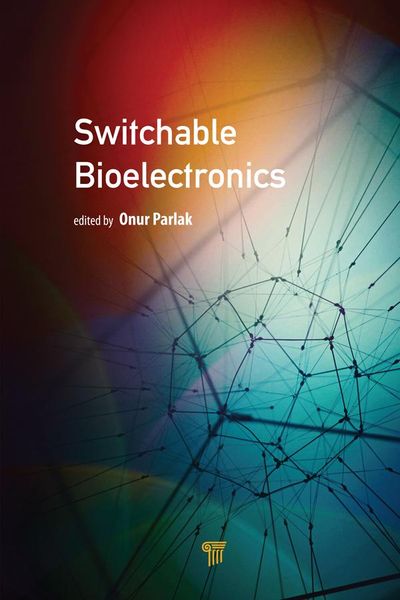
Switchable Bioelectronics
-
- Einzelkauf Download ausgewählt
-
Sprache:Englisch
-
eBook Format:ePUB
- PDF 153,99 €
- ePUB 153,99 € ausgewählt
153,99 €
inkl. gesetzl. MwSt.Beschreibung
Produktdetails
Format
ePUB
Kopierschutz
Nein
Family Sharing
Nein
Text-to-Speech
Ja
Erscheinungsdatum
21.04.2020
Herausgeber
Onur ParlakVerlag
Taylor & Francis eBooksSeitenzahl
208 (Printausgabe)
Dateigröße
6133 KB
Auflage
1. Auflage
Sprache
Englisch
EAN
9781000092233
This book reviews the rapidly emerging field of switchable interfaces and its implications for bioelectronics. The authors piece together early breakthroughs and key developments and highlight the future of switchable bioelectronics by focusing on bioelectrochemical processes based on mimicking and controlling biological environments with external stimuli as well as responsive systems for drug delivery. All chapters in the book strive to answer the fundamental question: How do living systems probe and respond to their surroundings? Following on from that, how can one transform these concepts to serve the practical world of bioelectronics? The central obstacle to this vision is the absence of versatile interfaces that are able to control and regulate the means of communication between biological and electronic systems. This book summarizes the overall progress made to date in building such interfaces at the level of individual biomolecules and focuses on the latest efforts to generate device platforms that integrate biointerfaces with electronics.
Chapter 1 introduces the general concept of dynamic interfaces for bioelectronics and gives an overview of the importance of materials and systems for switchable bioelectronics, introducing the reader to different biointerfaces. Chapter 2 pieces together different types of stimuli-responsive polymers and applications. Chapter 3 lays special emphasis on stimuli-responsive polymers with tunable release kinetics and describes the importance of polymer design for delivery applications. Chapter 4 reviews the field of conformational switching in nanofibers for gas-sensing applications. Finally, Chapter 5 focuses on molecular imprinting polymers as recognition elements for sensing applications.
As informative as it is lucid, this handbook makes an essential resource for advanced undergraduate- and graduate-level students in chemistry, as well as researchers in polymer science and electrochemistry, especially those with an interest in responsive polymers and biosensors.
Kundinnen und Kunden meinen
Verfassen Sie die erste Bewertung zu diesem Artikel
Helfen Sie anderen Kund*innen durch Ihre Meinung
Kurze Frage zu unserer Seite
Vielen Dank für dein Feedback
Wir nutzen dein Feedback, um unsere Produktseiten zu verbessern. Bitte habe Verständnis, dass wir dir keine Rückmeldung geben können. Falls du Kontakt mit uns aufnehmen möchtest, kannst du dich aber gerne an unseren Kund*innenservice wenden.
zum Kundenservice