
Johan van Benthem on Logic and Information Dynamics
-
- Hardcover
- Taschenbuch
- eBook ausgewählt
-
Form:Einzelkauf Download
-
Sprache:Englisch
213,99 €
inkl. MwStBeschreibung
Details
Format
Kopierschutz
Nein
Family Sharing
Nein
Text-to-Speech
Nein
Erscheinungsdatum
27.08.2014
Herausgeber
Alexandru Baltag + weitereVerlag
SpringerSeitenzahl
1027 (Printausgabe)
Dateigröße
14671 KB
Auflage
2014
Sprache
Englisch
EAN
9783319060255
This book illustrates the program of Logical-Informational Dynamics. Rational agents exploit the information available in the world in delicate ways, adopt a wide range of epistemic attitudes, and in that process, constantly change the world itself. Logical-Informational Dynamics is about logical systems putting such activities at center stage, focusing on the events by which we acquire information and change attitudes. Its contributions show many current logics of information and change at work, often in multi-agent settings where social behavior is essential, and often stressing Johan van Benthem's pioneering work in establishing this program. However, this is not a Festschrift, but a rich tapestry for a field with a wealth of strands of its own. The reader will see the state of the art in such topics as information update, belief change, preference, learning over time, and strategic interaction in games. Moreover, no tight boundary has been enforced, and some chapters add more general mathematical or philosophical foundations or links to current trends in computer science.
The theme of this book lies at the interface of many disciplines. Logic is the main methodology, but the various chapters cross easily between mathematics, computer science, philosophy, linguistics, cognitive and social sciences, while also ranging from pure theory to empirical work. Accordingly, the authors of this book represent a wide variety of original thinkers from different research communities. And their interconnected themes challenge at the same time how we think of logic, philosophy and computation.
Thus, very much in line with van Benthem's work over many decades, the volume shows how all these disciplines forma natural unity in the perspective of dynamic logicians (broadly conceived) exploring their new themes today. And at the same time, in doing so, it offers a broader conception of logic with a certain grandeur, moving its horizons beyond the traditional study of consequence relations.
Weitere Bände von Outstanding Contributions to Logic
-
Krister Segerberg on Logic of Actions von Robert Trypuz
 Band 1
Robert Trypuz
Krister Segerberg on Logic of ActionseBook
96,29 €
-
David Makinson on Classical Methods for Non-Classical Problems von Sven Ove Hansson
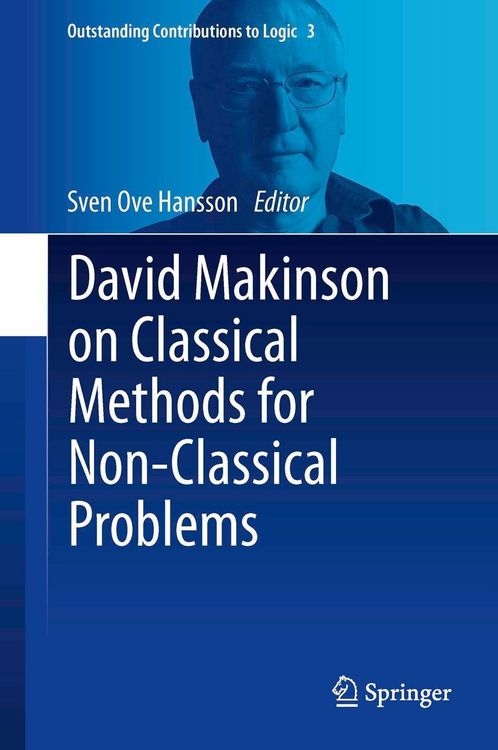 Band 3
Sven Ove Hansson
David Makinson on Classical Methods for Non-Classical ProblemseBook
149,79 €
-
Leo Esakia on Duality in Modal and Intuitionistic Logics von Guram Bezhanishvili
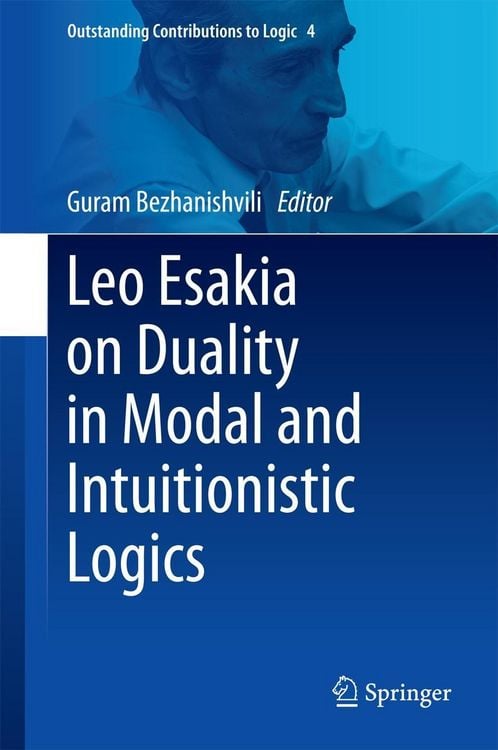 Band 4
Guram Bezhanishvili
Leo Esakia on Duality in Modal and Intuitionistic LogicseBook
96,29 €
-
Johan van Benthem on Logic and Information Dynamics von Alexandru Baltag
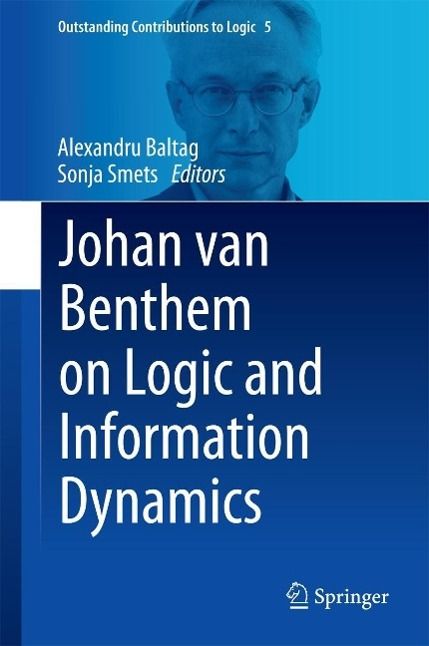 Band 5
Alexandru Baltag
Johan van Benthem on Logic and Information DynamicseBook
213,99 €
-
Petr Hájek on Mathematical Fuzzy Logic von Franco Montagna
 Band 6
Franco Montagna
Petr Hájek on Mathematical Fuzzy LogiceBook
96,29 €
-
Dag Prawitz on Proofs and Meaning von Heinrich Wansing
 Band 7
Heinrich Wansing
Dag Prawitz on Proofs and MeaningeBook
96,29 €
-
J. Michael Dunn on Information Based Logics von Katalin Bimbo
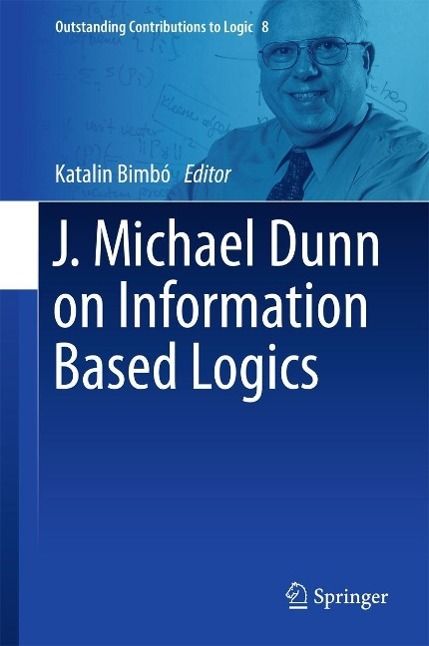 Band 8
Katalin Bimbo
J. Michael Dunn on Information Based LogicseBook
96,29 €
-
Hilary Putnam on Logic and Mathematics von Geoffrey Hellman
 Band 9
Geoffrey Hellman
Hilary Putnam on Logic and MathematicseBook
128,39 €
-
Martin Davis on Computability, Computational Logic, and Mathematical Foundations von Eugenio G. Omodeo
 Band 10
Eugenio G. Omodeo
Martin Davis on Computability, Computational Logic, and Mathematical FoundationseBook
96,29 €
-
Rohit Parikh on Logic, Language and Society von Can Baskent
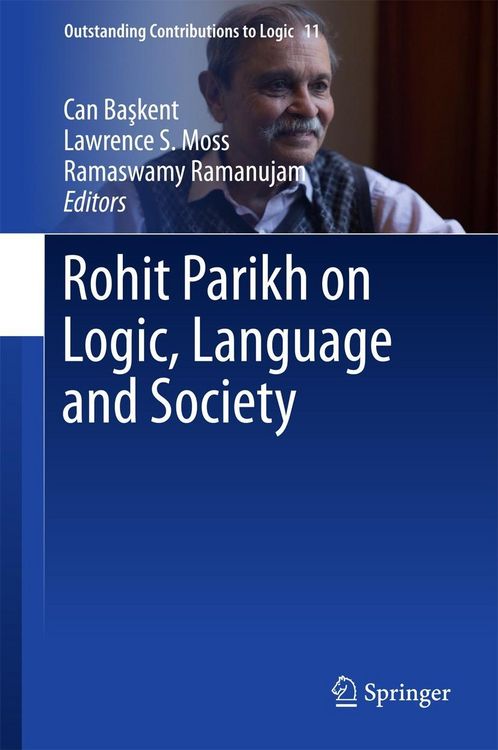 Band 11
Can Baskent
Rohit Parikh on Logic, Language and SocietyeBook
106,99 €
-
Jaakko Hintikka on Knowledge and Game-Theoretical Semantics von Hans Van Ditmarsch
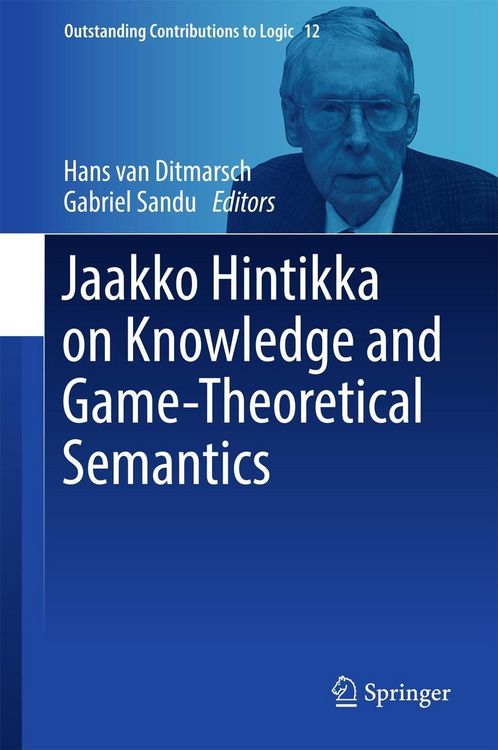 Band 12
Hans Van Ditmarsch
Jaakko Hintikka on Knowledge and Game-Theoretical SemanticseBook
160,49 €
-
Feferman on Foundations von Gerhard Jäger
 Band 13
Gerhard Jäger
Feferman on FoundationseBook
192,59 €
Unsere Kundinnen und Kunden meinen
Verfassen Sie die erste Bewertung zu diesem Artikel
Helfen Sie anderen Kund*innen durch Ihre Meinung
Kurze Frage zu unserer Seite
Vielen Dank für dein Feedback
Wir nutzen dein Feedback, um unsere Produktseiten zu verbessern. Bitte habe Verständnis, dass wir dir keine Rückmeldung geben können. Falls du Kontakt mit uns aufnehmen möchtest, kannst du dich aber gerne an unseren Kund*innenservice wenden.
zum Kundenservice