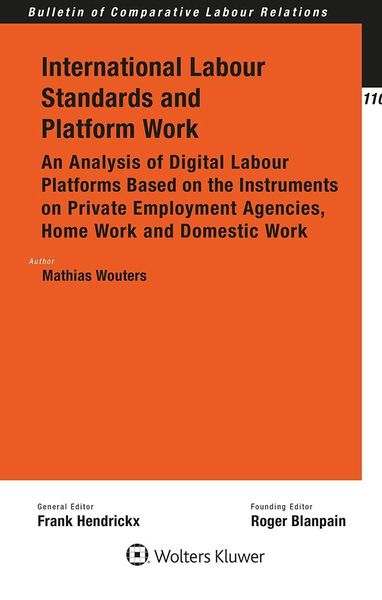
International Labour Standards and Platform Work An Analysis of Digital Labour Platforms Based on the Instruments on Private Employment Agencies, Home Work and Domestic Work
-
- Einzelkauf Download ausgewählt
-
Sprache:Englisch
-
eBook Format:PDF
- PDF 130,99 € ausgewählt
- ePUB 130,99 €
130,99 €
inkl. MwStBeschreibung
Details
Format
Kopierschutz
Ja
Family Sharing
Ja
Text-to-Speech
Nein
Erscheinungsdatum
25.11.2021
Verlag
Wolters KluwerSeitenzahl
408 (Printausgabe)
Dateigröße
3294 KB
Sprache
Englisch
EAN
9789403540429
Platform work - the matching of the supply of and demand for paid labour through an online platform - often depends on workers who operate in a "grey area" between the archetype of an employee and a self-employed worker. This important book explores the utility of the International Labour Organization's existing standards in governing this phenomenon. It indicates that despite their relevance, many standards have little or no impact. The standards apply to the issue but they fail to connect with it.
The author shows how three ILO conventions - the Home Work Convention, 1996 (No. 177), the Private Employment Agencies Convention, 1997 (No. 181), and the Domestic Workers Convention, 2011 (No. 189) - can be revitalised to have an impact on the platform work debate. In the course of the analysis he responds in depth to such questions as the following:
- What are digital labour platforms?
- What does decent work mean?
- Did the ILO centenary fundamentally change anything?
- What is the link between private employment services and platform work?
- How do crowdworkers relate to homeworkers and teleworkers?
- Are platform workers engaged in domestic work?
- What form could a future ILO standard on platform work take?
Given that the ILO plans to start discussions on a potential future standard for platform work in 2022, this book will prove very useful in highlighting the issues and standards that such discussions should consider.
Research has shown that the techniques and tools of the platform economy have spread far beyond gig work, resulting in widespread "gigification" and restructuring of workplace behaviours and relationships, jobs, and communities across the world. For this and other reasons, including the book's detailed analysis of issues not addressed elsewhere, labour lawyers, in-house counsel, researchers, and policymakers will gain valuable insight into what decent work in the platform economy would require, thus greatly broadening the discussion on this difficult-to-regulate phenomenon.
Unsere Kundinnen und Kunden meinen
Verfassen Sie die erste Bewertung zu diesem Artikel
Helfen Sie anderen Kund*innen durch Ihre Meinung
Kurze Frage zu unserer Seite
Vielen Dank für dein Feedback
Wir nutzen dein Feedback, um unsere Produktseiten zu verbessern. Bitte habe Verständnis, dass wir dir keine Rückmeldung geben können. Falls du Kontakt mit uns aufnehmen möchtest, kannst du dich aber gerne an unseren Kund*innenservice wenden.
zum Kundenservice