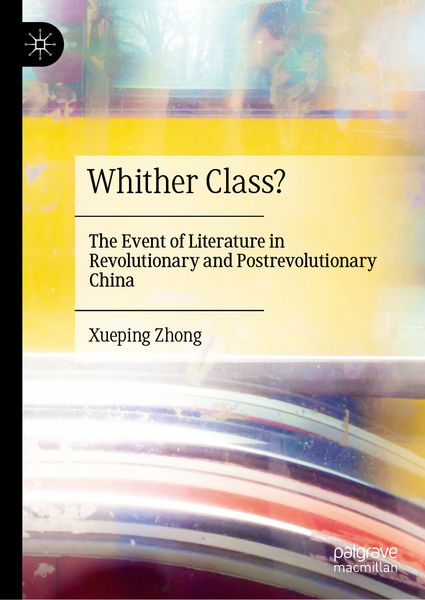
Whither Class? The Event of Literature in Revolutionary and Postrevolutionary China
111,99 €
UVP
139,09 €
inkl. gesetzl. MwSt.,
Lieferung nach Hause
Beschreibung
Produktdetails
Einband
Gebundene Ausgabe
Erscheinungsdatum
25.02.2025
Verlag
Springer SingaporeSeitenzahl
350
Maße (L/B/H)
21,6/15,3/2,5 cm
Gewicht
560 g
Auflage
1. Auflage
Sprache
Englisch
ISBN
978-981-9604-53-1
This book argues that the revolutionary, anti-revolutionary, counter-revolutionary, and post-revolutionary dialectics in modern Chinese history since the early-20th century characterizes modern and contemporary Chinese literature the most. Central to these dialectics are issues of class. The book contends that one cannot fully understand modern and contemporary Chinese literature without understanding the class character of Chinese revolutionary and counter-revolutionary struggles, including literary practices and their various contradictions. Considering literature via the notion of “the event” and focusing on three specific historical junctures, this project explores how, as a major cultural form, literature has played an outsize role in China’s struggle for liberation and quest for modernity. It highlights the need to understand class and the extent to which it shapes literary and artistic forms and expressions as well as the on-going debates over the relationship between politics and aesthetics.
Kundinnen und Kunden meinen
Verfassen Sie die erste Bewertung zu diesem Artikel
Helfen Sie anderen Kund*innen durch Ihre Meinung
Kurze Frage zu unserer Seite
Vielen Dank für dein Feedback
Wir nutzen dein Feedback, um unsere Produktseiten zu verbessern. Bitte habe Verständnis, dass wir dir keine Rückmeldung geben können. Falls du Kontakt mit uns aufnehmen möchtest, kannst du dich aber gerne an unseren Kund*innenservice wenden.
zum Kundenservice