Gutscheinbedingungen

**Gültig vom 15.06.2026 bis 17.06.2026 | Gültig für nicht preisgebundene fremdsprachige Bücher | Einzelne Artikel können ausgeschlossen sein | Maximaler rabattfähiger Warenkorbwert 500 € | Nicht kombinierbar mit weiteren Aktionen | Nur einmal pro Person einlösbar | Nur solange der Vorrat reicht

  • Produktbild: Visual Order
  • Produktbild: Visual Order

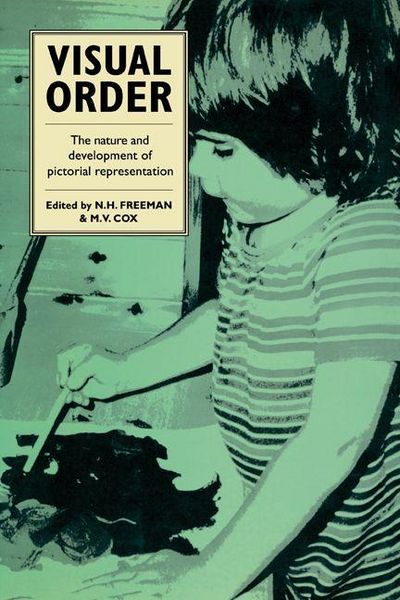
Visual Order The Nature and Development of Pictorial Representation

63,99 €

inkl. gesetzl. MwSt., Versandkostenfrei

Lieferung nach Hause

Beschreibung

Produktdetails

Einband

Taschenbuch

Erscheinungsdatum

31.10.2009

Herausgeber

N. H. Freeman + weitere

Verlag

Cambridge Academic

Seitenzahl

412

Maße (L/B/H)

22,9/15,2/2,4 cm

Gewicht

600 g

Sprache

Englisch

ISBN

978-0-521-12709-7

Beschreibung

Produktdetails

Einband

Taschenbuch

Erscheinungsdatum

31.10.2009

Herausgeber

Verlag

Cambridge Academic

Seitenzahl

412

Maße (L/B/H)

22,9/15,2/2,4 cm

Gewicht

600 g

Sprache

Englisch

ISBN

978-0-521-12709-7

Kundinnen und Kunden meinen

0 Bewertungen

Informationen zu Bewertungen

Zur Abgabe einer Bewertung ist eine Anmeldung im Konto notwendig. Die Authentizität der Bewertungen wird von uns nicht überprüft. Wir behalten uns vor, Bewertungstexte, die unseren Richtlinien widersprechen, entsprechend zu kürzen oder zu löschen.

Die Bewertungen sind nach Format, Anzahl Sterne und Datum sortiert.

Verfassen Sie die erste Bewertung zu diesem Artikel

Helfen Sie anderen Kund*innen durch Ihre Meinung

Kundinnen und Kunden meinen

0 Bewertungen filtern

  • Produktbild: Visual Order
  • Produktbild: Visual Order
  • List of contributors; Preface; Introduction N. H. Freeman and M. V. Cox; 1. How meaning covers the traces Alan Costall; Commentary N. H. Freeman and M. V. Cox; 2. A perspective on traditional artistic practices Francis Pratt; 3. There is no development in art Margaret A. Hagen; 4. Drawing systems revisited: the role of denotation systems in children's figure drawings John Willats; 5. The adolescent's point of view: studies of forms in conflict R. K. Duthie; Commentary N. H. Freeman and M. V. Cox; 6. On the discovery, storage and use of graphic descriptions W. A. Phillips, M. Inall and E. Lauder; 7. Anomalous drawing development: some clinical studies Lorna Selfe; Commentary N. H. Freeman and M. V. Cox; 8. Young children's representational drawings of solid objects: a comparison of drawing and copying May Jane Chen; 9. Some children do sometimes do what they have been told to do: task demands and verbal instructions in children's drawing M. D. Barrett, A. V. Beaumont and M. S. Jennett; 10. One object behind another: young children's use of array-specific or view-specific representations M. V. Cox; 11. The canonical bias: young children's drawings of familiar objects Alyson M. Davies; 12. The development of view-specific representation considered from a socio-cognitive standpoint Paul Light; 13. Three into two won't go: symbolic and spatial coding processes in young children's drawings Nigel Ingram; 14. Knowledge and appearance Charles Crook; 15. The head is smaller than the body: but how does it join on? Juri Allik and Tiia Laak; Commentary N. H. Freeman and M. V. Cox; 16. Geometrical foundations of children's drawing Michael C. Mitchelmore; 17. Figural biases and young children's drawings J. Gavin Bremner; 18. Cross-cultural analysis of drawing errors Ruvide Bayraktar; 19. The perceptual-motor skill of drawing Judith I. Laszlo and Pia A. Broderick; 20. The transition from construction to sketching in children's drawings Larry Fenson; Conclusions N. H. Freeman and M. V. Cox; Indexes.