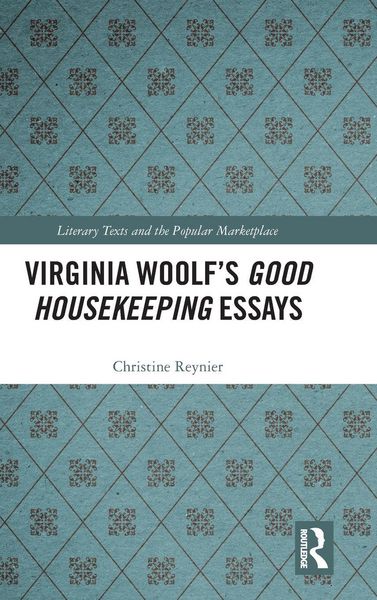
Contents
Introduction
Woolf’s essays and their critical appraisal.
Woolf’s essays in Good Housekeeping magazine. Composition, publication, reception
The purpose of the book
Part I: The Good Housekeeping Essays as Intermedial essays
Chapter One
The humble art of description in the ‘Six Articles on London life’
Introduction
The documentary impulse
Practicing the art of description in ‘The Docks of London’ and ‘Oxford Street Tide’
Renewing the art of description in Good Housekeeping magazine
Developing the ‘critical attitude’
Conclusion
Chapter Two
The Art of photography in the Good Housekeeping essays
‘The Docks of London’ as an apparatus for the other essays
The photographic method in ‘Great Men’s Houses’
The photographic method in ‘Abbeys and Cathedrals’
Chapter Three
The art of architecture in the Good Housekeeping essays
Redefining architecture as democracy in ‘This is the House of Commons’ and ‘Portrait of a Londoner’
Intermediality and Woolf’s ethics of doubt
Constructing the essay as an intermedial form
Part II: ‘The Common Pool’
Chapter Four
Woolf’s ghosts in the Good Housekeeping essays
Woolf’s plea for democracy: a dialogue with her forebears
The intermedial dialogue with John Ruskin
‘Adaptive reuse’ and the political debates of the 1930s
Chapter Five
Virginia Woolf and Heritage
Woolf’s survival theory
Poverty as usus: the ‘common pool’
An ethical posture?
Poverty as an economic and aesthetic concept
Woolf and Benjamin
Part III Reassessing the Good Housekeeping essays
Chapter 6
The Good Housekeeping essays as cultural and creative essays
The Good Housekeeping essays as part and parcel of Woolf’s essays
The theoretical thrust of Woolf’s essays
Woolf’s ‘humble’ theory
Chapter Seven
The Good Housekeeping essays at the crossroads
The photographic turn
Implementing the theory of usus
Constructing history as trace
The political turn
Conclusion
The Good Housekeeping essays and The Arcades Project
Straddling the divide between high and low culture