Gutscheinbedingungen

**Gültig vom 15.06.2026 bis 17.06.2026 | Gültig für nicht preisgebundene fremdsprachige Bücher | Einzelne Artikel können ausgeschlossen sein | Maximaler rabattfähiger Warenkorbwert 500 € | Nicht kombinierbar mit weiteren Aktionen | Nur einmal pro Person einlösbar | Nur solange der Vorrat reicht

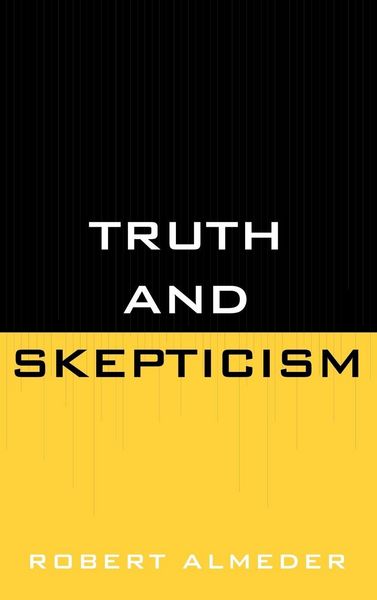
Produktbild: Truth and Skepticism

Truth and Skepticism

178,99 €

inkl. gesetzl. MwSt., Versandkostenfrei

Lieferung nach Hause

Beschreibung

Produktdetails

Einband

Gebundene Ausgabe

Erscheinungsdatum

16.08.2010

Verlag

Rowman & Littlefield

Seitenzahl

264

Maße (L/B/H)

23,5/15,7/2 cm

Gewicht

540 g

Sprache

Englisch

ISBN

978-1-4422-0513-0

Beschreibung

Produktdetails

Einband

Gebundene Ausgabe

Erscheinungsdatum

16.08.2010

Verlag

Rowman & Littlefield

Seitenzahl

264

Maße (L/B/H)

23,5/15,7/2 cm

Gewicht

540 g

Sprache

Englisch

ISBN

978-1-4422-0513-0

Herstelleradresse

Libri GmbH
Europaallee 1
36244 Bad Hersfeld
DE

Email: gpsr@libri.de

Kundinnen und Kunden meinen

0 Bewertungen

Informationen zu Bewertungen

Zur Abgabe einer Bewertung ist eine Anmeldung im Konto notwendig. Die Authentizität der Bewertungen wird von uns nicht überprüft. Wir behalten uns vor, Bewertungstexte, die unseren Richtlinien widersprechen, entsprechend zu kürzen oder zu löschen.

Die Bewertungen sind nach Format, Anzahl Sterne und Datum sortiert.

Verfassen Sie die erste Bewertung zu diesem Artikel

Helfen Sie anderen Kund*innen durch Ihre Meinung

Kundinnen und Kunden meinen

0 Bewertungen filtern

Die Leseprobe wird geladen.
  • Produktbild: Truth and Skepticism
  • Preface
    Part 1: Rejecting Correspondence and All Non-Epistemic Theories of Truth
    Chapter 1: Introduction
    Chapter 2: Minimal Requirements for an Adequate Theory of Truth
    Chapter 3: Justification for Non-Vacuity and Reliability Principles
    Chapter 4: The Core of Correspondence and Other Non-Epistemic Theories of Truth
    Chapter 5: The Main Argument Against Correspondence and Other Non-Epistemic Theories of Truth
    Chapter 6: How the Main Argument Differs From Other Similar Arguments
    Chapter 7: Forestalling Three Predictable Objections to the Main Argument
    Chapter 8: Does the Main Argument Confuse
    Chapter 9: Does the Main Argument Require Abandoning Truth as a Goal?
    Chapter 10: An Objection from Common Sense
    Chapter 11: The Objection from the Paradox of Analysis
    Chapter 12: A Proposed Reduction of the Main Argument
    Part 2: In Defense of the Epistemic Theory of Truth
    Chapter 1: Preliminary Objections to the Epistemic Theory of Truth
    Chapter 2: Other Objections to the Epistemic Theory of Truth
    Chapter 3: Conclusion
    Part 3: Defeating Skepticism
    Chapter 1: Introduction
    Chapter 2: The Moral of the Above Taxonomy
    Chapter 3: Self-Defeating Skepticisms and the Strength of Global Weak Skepticism
    Chapter 4: The Canonical Argument for Global Weak Skepticism and the Contextualist Response
    Chapter 5: Other Critiques of Contextualism
    Chapter 6: The Asymmetry Objection to the Argument from Ignorance
    Chapter 7: Global Weak Skepticism as an Inference to the Best Explanation
    Chapter 8: Is the Global Skepticism here Refuted Implied by the Main Argument?
    Part 4:Conclusions
    Chapter 1: The Main Problem and Future Prospects
    Chapter 2: Blind realism and the Non-Vacuity Objection
    Chapter 3: Does Blind Realism Presuppose Non-Epistemic Truth?
    Chapter 4: The Fitch Objection
    Bibliography
    Index