• Produktbild: The World’s Challenge
  • Produktbild: The World’s Challenge
- 13%

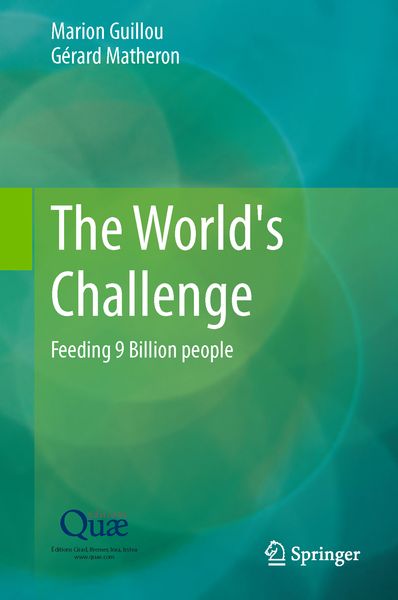
The World’s Challenge Feeding 9 Billion people

13% sparen

92,99 € UVP 106,99 €

inkl. gesetzl. MwSt., Versandkostenfrei

Lieferung nach Hause

Beschreibung

Produktdetails

Einband

Gebundene Ausgabe

Erscheinungsdatum

24.03.2014

Abbildungen

XV, 10 illus., 9 illus. in color., schwarz-weiss Illustrationen, farbige Illustrationen

Verlag

Springer Netherland

Seitenzahl

226

Maße (L/B/H)

24,1/16/1,9 cm

Gewicht

535 g

Auflage

2014

Sprache

Englisch

ISBN

978-94-017-8568-6

Beschreibung

Produktdetails

Einband

Gebundene Ausgabe

Erscheinungsdatum

24.03.2014

Abbildungen

XV, 10 illus., 9 illus. in color., schwarz-weiss Illustrationen, farbige Illustrationen

Verlag

Springer Netherland

Seitenzahl

226

Maße (L/B/H)

24,1/16/1,9 cm

Gewicht

535 g

Auflage

2014

Sprache

Englisch

ISBN

978-94-017-8568-6

Herstelleradresse

Springer-Verlag KG
Sachsenplatz 4-6
1201 Wien
AT

Email: [email protected]

Kundinnen und Kunden meinen

0 Bewertungen

Informationen zu Bewertungen

Zur Abgabe einer Bewertung ist eine Anmeldung im Konto notwendig. Die Authentizität der Bewertungen wird von uns nicht überprüft. Wir behalten uns vor, Bewertungstexte, die unseren Richtlinien widersprechen, entsprechend zu kürzen oder zu löschen.

Die Bewertungen sind nach Format, Anzahl Sterne und Datum sortiert.

Verfassen Sie die erste Bewertung zu diesem Artikel

Helfen Sie anderen Kund*innen durch Ihre Meinung

Kundinnen und Kunden meinen

0 Bewertungen filtern

Die Leseprobe wird geladen.
  • Produktbild: The World’s Challenge
  • Produktbild: The World’s Challenge
  • Acknowledgements

    Introduction

    1. Setting the stage

    Science enters the equation

    A closer look at the issue

    Why nine billion?

    Food for all: two different scenarios

    Agrimonde: the results

    Lessons learned from the Agrimonde study: change is in order

    2. Eat well, eat better

    Changes at the root of nutritional imbalances

    Getting to the root of profound changes

    Over nutrition and health

    Taking action: a how to

    3. Reducing losses and waste at consumption, distribution and processing levels

    The scope of the issue

    Losses at different stages and technical solutions currently implemented

    Change is in the order

    4. Reducing post-harvest losses in developing nations

    Harvest-related losses: a reality in developed nations as well

    Why post-harvest losses in developing countries matter

    The challenge of quantifying post-harvest losses

    Despite difficulties in quantifying losses, one thing is clear: post-harvest losses are significant

    Post-harvest losses and when they occur

    Next steps

    Annex

    5. Producing other goods

    What is biomass?

    High expectations for energy

    New possibilities for green chemistry

    Meeting these new needs by choosing the right biomass

    How these prospects change the hunger equation

    The world’s challenge. Feeding 9 billion people

    6. Managing ecosystem services

    Agriculture and ecosystem services

    Biodiversity’s key role in ecological regulating services

    Using and managing ecosystem services

    7. Will there be enough land?

    Agricultural land: a look at the current situation

    The impact of climate change on agricultural production potential

    Non-food uses for biomass: an excessive need for land?

    Economic, policy and social factors affecting land use conversion

    8. The need to strive for productive yet ecological agriculture

    Optimised productivity of arable land

    Environmental degradation

    Increased, improved production: a realistic goal?

    Intensive, capital-poor agriculture: the case of South-East Asia

    Agricultural systems with productivity reserves

    Is sub-Saharan agriculture in need of new development?

    Thinking and acting globally

    9. Feeding the world starts with fighting poverty

    Mapping hunger

    The usual suspect: blaming malnutrition on a lack of available food

    The link between food and poverty: common assumptions and misconceptions

    Charting a course of action

    10. Towards a global governance of food

    Re-examining the food riots

    We must step back from agriculture in order to understand it

    Diets: a factor of future need

    Reinvesting in agriculture: an urgent necessity

    Fighting poverty

    Regulation: rules as a safety net

    The need for global governance of food security as a “public good”

    Dedicated agronomic research

    Conclusion

    Preventing catastrophe

    References

    Glossary