Beschreibung
Produktdetails
Einband
Taschenbuch
Erscheinungsdatum
30.07.2024
Verlag
Europa Edizioni srlSeitenzahl
230
Maße (L/B/H)
21/14/1,4 cm
Gewicht
321 g
Sprache
Englisch
EAN
9791220149983
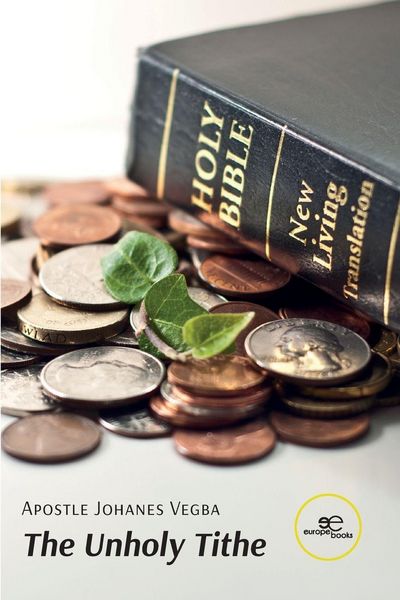
The Unholy Tithe looks at how tithing has become topical in the church in these latter days. The argument is that tithing was an Old Testament practice and is part of the law from which Jesus Christ freed Christians. Consequently, the view of some is that tithing has become anachronistic and should not be practiced in Christian Churches. The purpose of this book is, therefore, to look at the subject of tithes from the biblical perspective with the goal of establishing the mind of God for tithing among His people. The aim of the author is to resolve the conundrum of tithing, that had plagued the Church before the Council of Tours in the year 567 AD, and remained unresolved till date. This Book looks at how tithing originated and how it became instituted as law in the nation of Israel and why. The conundrum facing Christianity with regards to the applicability or otherwise, of tithes to Christian churches, received an in-depth discussion. The ultimate question here is, does God deserve the tithe of Christians? Johanes Vegba is an Apostle in the Body of Christ and the Superintendent of the La Area of The Apostolic Church-GH. He is a passionate student of the Bible, and a transformative teacher of the gospel. He is a charismatic and great conference speaker. The author, a studious servant of God, has been endowed with commendable and supernatural insight into the gospel of Jesus Christ and God. He has been a legal practitioner since 1996 and a minister of the gospel for the past 16 years, impacting lives and changing destinies. He enjoys reading the Bible and meditating on the word of God. Furthermore, due to his earlier background, as a teaching and research assistant at the Law faculty of the University of Ghana and tutor at the Ghana School of Law, he is able to break down complex issues to the level of understanding of people with low understanding, thus ensuring that the underprivileged can also benefit from the available scarce mental resources.
Kundinnen und Kunden meinen
Verfassen Sie die erste Bewertung zu diesem Artikel
Helfen Sie anderen Kund*innen durch Ihre Meinung
Kurze Frage zu unserer Seite
Vielen Dank für dein Feedback
Wir nutzen dein Feedback, um unsere Produktseiten zu verbessern. Bitte habe Verständnis, dass wir dir keine Rückmeldung geben können. Falls du Kontakt mit uns aufnehmen möchtest, kannst du dich aber gerne an unseren Kund*innenservice wenden.
zum Kundenservice