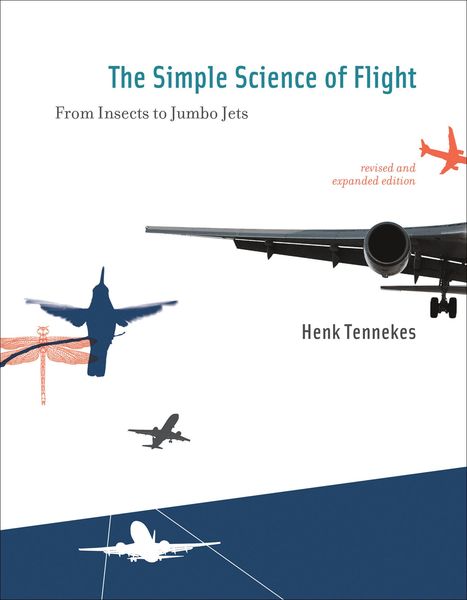
The Simple Science of Flight From Insects to Jumbo Jets
-
- Taschenbuch ausgewählt
- eBook
-
Sprache:Englisch
24,99 €
inkl. MwSt,
Lieferung nach Hause
Beschreibung
Details
Einband
Taschenbuch
Altersempfehlung
ab 18 Jahr(e)
Erscheinungsdatum
01.10.2009
Verlag
University PressesSeitenzahl
216
Maße (L/B/H)
23/17,7/2,2 cm
Gewicht
358 g
Auflage
2nd Revised, Expanded edition
Sprache
Englisch
ISBN
978-0-262-51313-5
From the smallest gnat to the largest aircraft, all things that fly obey the same aerodynamic principles. In The Simple Science of Flight, Henk Tennekes investigates just how machines and creatures fly: what size wings they need, how much energy is required for their journeys, how they cross deserts and oceans, how they take off, climb, and soar. Fascinated by the similarities between nature and technology, Tennekes offers an introduction to flight that teaches by association. Swans and Boeings differ in numerous ways, but they follow the same aerodynamic principles. Biological evolution and its technical counterpart exhibit exciting parallels. What makes some airplanes successful and others misfits? Why does the Boeing 747 endure but the Concorde now seem a fluke? Tennekes explains the science of flight through comparisons, examples, equations, and anecdotes. The new edition of this popular book has been thoroughly revised and much expanded. Highlights of the new material include a description of the incredible performance of bar-tailed godwits (7,000 miles nonstop from Alaska to New Zealand), an analysis of the convergence of modern jetliners (from both Boeing and Airbus), a discussion of the metabolization of energy featuring Lance Armstrong, a novel treatment of the aerodynamics of drag and trailing vortices, and an emphasis throughout on evolution, in nature and in engineering. Tennekes draws on new evidence on bird migration, new wind-tunnel studies, and data on new airliners. And his analysis of the relative efficiency of planes, trains, and automobiles is newly relevant. (On a cost-per-seat scale, a 747 is more efficient than a passenger car.)
Unsere Kundinnen und Kunden meinen
Verfassen Sie die erste Bewertung zu diesem Artikel
Helfen Sie anderen Kund*innen durch Ihre Meinung
Kurze Frage zu unserer Seite
Vielen Dank für dein Feedback
Wir nutzen dein Feedback, um unsere Produktseiten zu verbessern. Bitte habe Verständnis, dass wir dir keine Rückmeldung geben können. Falls du Kontakt mit uns aufnehmen möchtest, kannst du dich aber gerne an unseren Kund*innenservice wenden.
zum Kundenservice