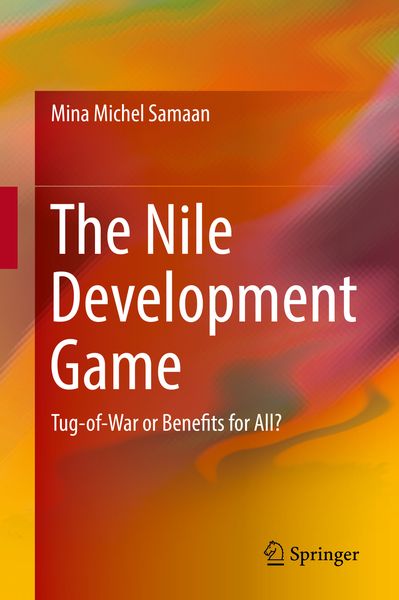
The Nile Development Game Tug-of-War or Benefits for All?
97,99 €
inkl. gesetzl. MwSt.,
Lieferung nach Hause
Beschreibung
Produktdetails
Einband
Gebundene Ausgabe
Erscheinungsdatum
18.01.2019
Abbildungen
XXXIII, 55 illus., 52 illus. in color., schwarz-weiss Illustrationen, farbige Illustrationen
Verlag
SpringerSeitenzahl
277
Maße (L/B/H)
24,1/16/2,3 cm
Gewicht
635 g
Auflage
1st ed. 2019
Sprache
Englisch
ISBN
978-3-030-02664-6
This book introduces an analytic framework constructed upon the iterated Prisoners' Dilemma game to model and analyze transboundary water interactions along the Nile River. It presents a thorough and in-depth analysis of the historical path through which conflict and cooperation have been generated among the Nile riparians over large-scale developmental schemes. This is done through modeling water interactions in the basin as an iterated Prisoners' Dilemma game and employing process-tracing method to compare four distinguishable rounds of the game: the colonial round, the Cold War round, the post-Cold War round, and the post-2011 round. The book examines the influences of the changing political contexts at the domestic, regional, and global levels on the game outcomes.
This framework is initially applied on several cases of international rivers worldwide, while the rest of the book is devoted to the Nile case. The book's central argument is that the riparians' interests, capabilities, and beliefs are heterogeneous in varying degrees and that the changing multilevel political contexts influence the level of such heterogeneities among the riparians, which ultimately drive the equilibrium dynamics in the Nile game to generate different conflictive and cooperative outcomes over time. Although the book's main conclusion indicates that the absence of economic interdependence and regional integration will transfer the game into tug-of-war, which will impose harsh punishment on the basin communities and ecosystems on the long term, the final chapter lists a group of recommendations addressed to the riparian states and international donors, exploring the way for boosting cooperation and preventing conflicts in the basin. Presenting clear theoretical, methodological, and policy implications, this book is appropriate for students and scholars of international relations, hydrology, and development studies.
Kundinnen und Kunden meinen
Verfassen Sie die erste Bewertung zu diesem Artikel
Helfen Sie anderen Kund*innen durch Ihre Meinung
Kurze Frage zu unserer Seite
Vielen Dank für dein Feedback
Wir nutzen dein Feedback, um unsere Produktseiten zu verbessern. Bitte habe Verständnis, dass wir dir keine Rückmeldung geben können. Falls du Kontakt mit uns aufnehmen möchtest, kannst du dich aber gerne an unseren Kund*innenservice wenden.
zum Kundenservice