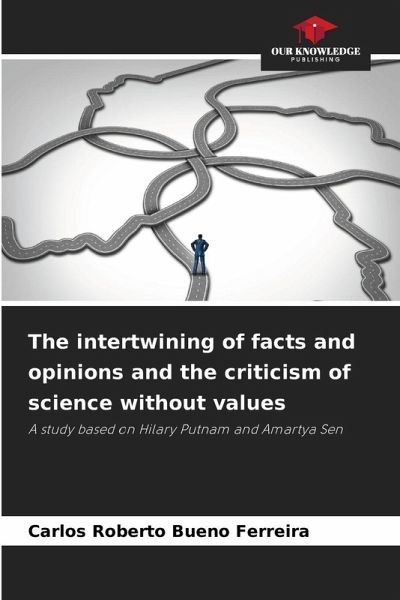
The intertwining of facts and opinions and the criticism of science without values
A study based on Hilary Putnam and Amartya Sen
Versandkostenfrei!
Versandfertig in 6-10 Tagen
27,99 €
inkl. MwSt.

PAYBACK Punkte
14 °P sammeln!

The set of lenses through which we observe human knowledge does not have a definitive property that allows for a clear separation between what we consider to be "facts" and what we judge to be their consequent "values". This is the point of this work. However, observing the historical evolution of the scientific approach, we can see the opposite phenomenon: the tendency to separate facts from values, creating an insurmountable chasm - a dichotomy - between purely factual observations and value judgements. The position of logical positivists, for example, has always been to draw a clear line be...
The set of lenses through which we observe human knowledge does not have a definitive property that allows for a clear separation between what we consider to be "facts" and what we judge to be their consequent "values". This is the point of this work. However, observing the historical evolution of the scientific approach, we can see the opposite phenomenon: the tendency to separate facts from values, creating an insurmountable chasm - a dichotomy - between purely factual observations and value judgements. The position of logical positivists, for example, has always been to draw a clear line between factual propositions and value judgements. Such an attitude implies the necessary factorisation of the predicates we use to describe any and all sensitive and relevant human observations. Based on these discussions, this work addresses the theme of the fact-value dichotomy based on the thinking of Putnam and Sen, pointing out the possible consequences generated by the arguments raised for the philosophical perception of political science and the notions of reason applicable to normative issues. This research was developed with the support of CAPES.
Andere Kunden interessierten sich für