
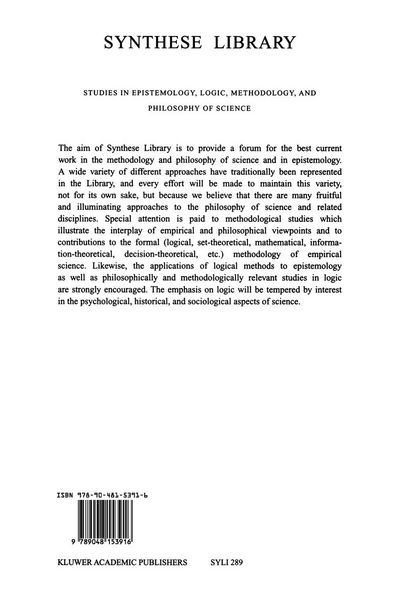
The Growth of Mathematical Knowledge
-
- Hardcover
- Taschenbuch ausgewählt
- eBook
-
Sprache:Englisch
206,99 €
UVP
235,39 €
inkl. MwSt,
Lieferung nach Hause
Beschreibung
Details
Einband
Taschenbuch
Erscheinungsdatum
09.12.2010
Herausgeber
Emily Grosholz + weitereVerlag
Springer NetherlandSeitenzahl
416
Maße (L/B/H)
23,5/15,5/2,6 cm
Auflage
1. Auflage
Sprache
Englisch
ISBN
978-90-481-5391-6
Weitere Bände von Synthese Library
-
Medieval Philosophy and Modern Times von Ghita Holmström-Hintikka
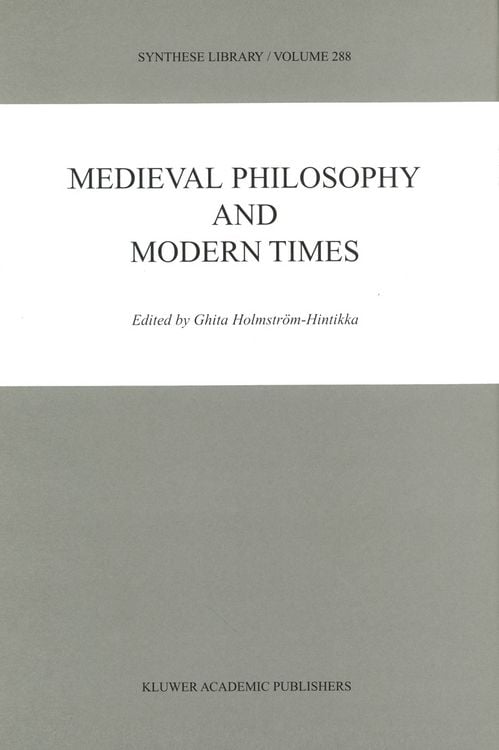 Band 288
Ghita Holmström-Hintikka
Medieval Philosophy and Modern TimesBuch
48,99 €
-
The Growth of Mathematical Knowledge von Emily Grosholz
 Band 289 - 12%
Emily Grosholz
The Growth of Mathematical KnowledgeBuch
206,99 €
235,39 €* -
History and Philosophy of Constructive Type Theory von Giovanni Sommaruga
 Band 290 - 13%
Giovanni Sommaruga
History and Philosophy of Constructive Type TheoryBuch
138,99 €
160,49 €* -
A Boole Anthology von James Gasser
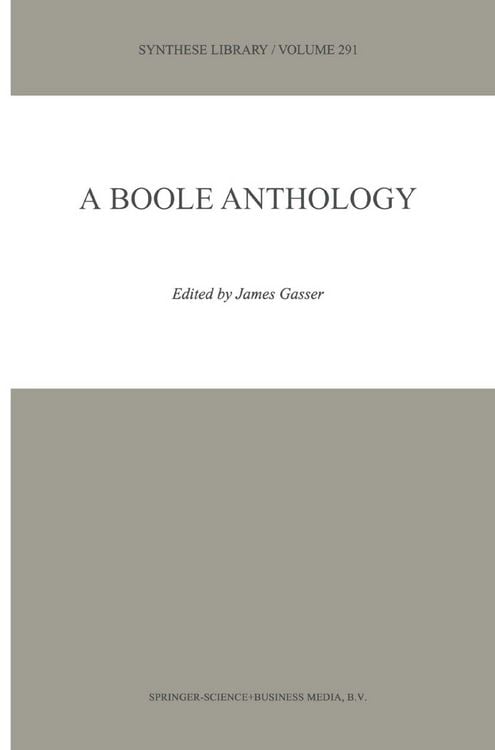 Band 291 - 12%
James Gasser
A Boole AnthologyBuch
139,99 €
160,49 €* -
Proof Theory von Vincent F. Hendricks
 Band 292 - 13%
Vincent F. Hendricks
Proof TheoryBuch
92,99 €
106,99 €* -
The Tensed Theory of Time von W.L. Craig
 Band 293 - 13%
W.L. Craig
The Tensed Theory of TimeBuch
231,99 €
267,49 €* -
The Tenseless Theory of Time von W.L. Craig
 Band 294 - 13%
W.L. Craig
The Tenseless Theory of TimeBuch
138,99 €
160,49 €* -
The Dawn of Cognitive Science von L. Albertazzi
 Band 295 - 12%
L. Albertazzi
The Dawn of Cognitive ScienceBuch
139,99 €
160,49 €* -
Reference, Truth and Conceptual Schemes von G. Forrai
 Band 296 - 13%
G. Forrai
Reference, Truth and Conceptual SchemesBuch
92,99 €
106,99 €* -
Probability Theory von Vincent F. Hendricks
 Band 297 - 12%
Vincent F. Hendricks
Probability TheoryBuch
93,99 €
106,99 €* -
Holism in Philosophy of Mind and Philosophy of Physics von M. Esfeld
 Band 298 - 12%
M. Esfeld
Holism in Philosophy of Mind and Philosophy of PhysicsBuch
139,99 €
160,49 €* -
The Logic of Metaphor von Eric Steinhart
 Band 299 - 13%
Eric Steinhart
The Logic of MetaphorBuch
92,99 €
106,99 €*
Unsere Kundinnen und Kunden meinen
Verfassen Sie die erste Bewertung zu diesem Artikel
Helfen Sie anderen Kund*innen durch Ihre Meinung
Kurze Frage zu unserer Seite
Vielen Dank für dein Feedback
Wir nutzen dein Feedback, um unsere Produktseiten zu verbessern. Bitte habe Verständnis, dass wir dir keine Rückmeldung geben können. Falls du Kontakt mit uns aufnehmen möchtest, kannst du dich aber gerne an unseren Kund*innenservice wenden.
zum Kundenservice