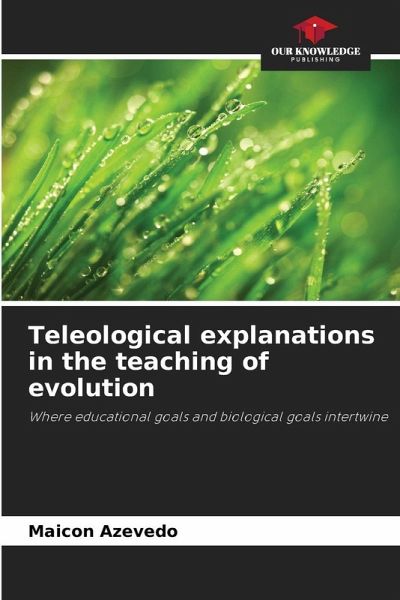
Teleological explanations in the teaching of evolution
Where educational goals and biological goals intertwine
Versandkostenfrei!
Versandfertig in 6-10 Tagen
36,99 €
inkl. MwSt.

PAYBACK Punkte
18 °P sammeln!

"Plants grow toward light to obtain more energy." "Darwin's greatest contribution was to reincorporate teleology into the natural sciences." Asa Gray, prominent 19th-century botanist. "Teleology is like a woman whom the biologist could not do without, but with whom he did not want to be seen in public." Ernest Brüke, renowned 19th-century German physiologist. Teleological explanations in the teaching of evolution discusses teleology in its implications for the teaching and training of science and biology teachers. It focuses on how biology teachers use teleological arguments in developing exp...
"Plants grow toward light to obtain more energy." "Darwin's greatest contribution was to reincorporate teleology into the natural sciences." Asa Gray, prominent 19th-century botanist. "Teleology is like a woman whom the biologist could not do without, but with whom he did not want to be seen in public." Ernest Brüke, renowned 19th-century German physiologist. Teleological explanations in the teaching of evolution discusses teleology in its implications for the teaching and training of science and biology teachers. It focuses on how biology teachers use teleological arguments in developing explanations of evolutionary themes in biology teaching. It problematizes the solutions presented by teachers to various teaching situations in which teleological thinking arises in the daily classroom. The theoretical basis for studying teleological thinking in schools links the philosophical meanings that teleology has historically assumed in the biological sciences with the specific forms of knowledge that circulate in schools, i.e., school knowledge.
Andere Kunden interessierten sich für