Gutscheinbedingungen

**Gültig vom 15.06.2026 bis 17.06.2026 | Gültig für nicht preisgebundene fremdsprachige Bücher | Einzelne Artikel können ausgeschlossen sein | Maximaler rabattfähiger Warenkorbwert 500 € | Nicht kombinierbar mit weiteren Aktionen | Nur einmal pro Person einlösbar | Nur solange der Vorrat reicht

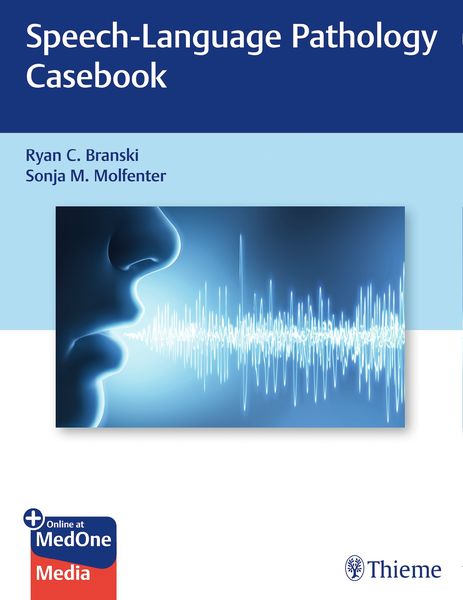
Produktbild: Speech-Language Pathology Casebook
- 13%

Speech-Language Pathology Casebook Plus Online at MedOne Videos

13% sparen

86,99 € UVP 100,00 €

inkl. gesetzl. MwSt., Versandkostenfrei

Lieferung nach Hause

Beschreibung

Produktdetails

Einband

Set mit diversen Artikeln

Erscheinungsdatum

06.05.2020

Abbildungen

140 Abbildungen

Herausgeber

Ryan C. Branski + weitere

Verlag

Thieme Medical Publishers

Seitenzahl

342

Maße (L/B/H)

27,9/21,7/2 cm

Gewicht

1120 g

Auflage

1

Sprache

Englisch

ISBN

978-1-62623-487-1

Beschreibung

Produktdetails

Einband

Set mit diversen Artikeln

Erscheinungsdatum

06.05.2020

Abbildungen

140 Abbildungen

Herausgeber

Verlag

Thieme Medical Publishers

Seitenzahl

342

Maße (L/B/H)

27,9/21,7/2 cm

Gewicht

1120 g

Auflage

1

Sprache

Englisch

ISBN

978-1-62623-487-1

EU-Ansprechpartner

Georg Thieme Verlag KG
Oswald-Hesse-Straße 50
70469 Stuttgart
DE
info@thieme.de

Herstelleradresse

Thieme Medical Publishers
333 Seventh Avenue, 18th Floor
10001 New York
US
customerservice@thieme.com

Kundinnen und Kunden meinen

0 Bewertungen

Informationen zu Bewertungen

Zur Abgabe einer Bewertung ist eine Anmeldung im Konto notwendig. Die Authentizität der Bewertungen wird von uns nicht überprüft. Wir behalten uns vor, Bewertungstexte, die unseren Richtlinien widersprechen, entsprechend zu kürzen oder zu löschen.

Die Bewertungen sind nach Format, Anzahl Sterne und Datum sortiert.

Verfassen Sie die erste Bewertung zu diesem Artikel

Helfen Sie anderen Kund*innen durch Ihre Meinung

Kundinnen und Kunden meinen

0 Bewertungen filtern

Die Leseprobe wird geladen.
  • Produktbild: Speech-Language Pathology Casebook
  • Case 1. Completely Normal Speech Is the Goal for a Child Born with Cleft Palate

    Case 2. Assessment and Treatment of Preschool Fluency

    Case 3. Working Collaboratively with a Young Child with Autism Spectrum Disorder

    Case 4. Clinical Decision Making for a Bilingual Child: Using Converging Information

    Case 5. Language Delay in a Bilingual Child

    Case 6. The Application of Dynamic Assessment of Narratives in an English Language Learner

    Case 7. Stuttering in Young Children

    Case 8. Evaluation and Intervention for a Young Child with Severe Intellectual Disability

    Case 9. Assessment and Treatment of a School-Aged Speech Sound Disorder

    Case 10. Assessment and Treatment of Pediatric Dysphonia with a Complex Medical History

    Case 11. Augmentative and Alternative Communication in a Child with Congenital Porencephaly

    Case 12. The Importance of Reassessment following a School-Based Individualized Education Plan (IEP) Referral: A Case of Cluttering

    Case 13. Prioritizing Communication Supports for an Adolescent with Intellectual Disability

    Case 14. Language Impairment in a Child with Suspected Fetal Alcohol Spectrum Disorder

    Case 15. Speech Rehabilitation Following Cleft Palate Repair

    Case 16. Disorder, Difference, or Gap? A School-Age Disability Evaluation

    Case 17. Social Communication Intervention for a Child with Autism Spectrum Disorder

    Case 18. Reading Comprehension Difficulties in an Elementary-School Student

    Case 19. Childhood Apraxia of Speech

    Case 20. Severe Speech-Sound Disorder with Motor Involvement

    Case 21. Treatment of Childhood-Onset Fluency Disorder in a High-School Student

    Case 22. Language-Based Learning Disability and Literacy in a School-Aged Student

    Case 23. Global Language Impairment in a Preschooler with Autism

    Case 24. Voice Care for the Child Who Is Post–Airway Reconstruction: Special Challenges

    Case 25. Autism Spectrum Disorders and Word Associations

    Case 26. Combined Modality Fluency Therapy in a Teenager with Severe Stuttering

    Case 27. Pediatric Feeding and Swallowing Impairment in a Child with a Craniofacial Disorder

    Case 28. Selective Mutism: A Pragmatic Approach

    Case 29. School-Based Swallowing and Feeding Treatment: Oral Phase Dysphagia Secondary to Cerebral Palsy and Moebius Syndrome

    Case 30. Early Identification and Early Intervention in the Birth-to-Three Population

    Case 31. Treatment of Pragmatic Language Disorders in Preschool and School-Age Children

    Case 32. Cognitive Linguistic Deficits in Pediatric Acquired Brain Injury

    Case 33. A Holistic Approach to Treating a Preschool-Aged Child Who Stutters

    Case 34. Language and Cognitive Deficits Associated with Landau–Kleffner Syndrome

    Case 35. Feeding and Language Therapy in a Child with Congenital Cytomegalovirus and Traumatic Brain Injury

    Case 36. Psycholinguistic Approach to Assessment and Treatment of Complex Speech-Language Impairment in a School-Age Child

    Case 37. Treatment of Communication and Feeding Disorders in a Complex Pediatric Patient with a Neurogenic Disorder

    Case 38. Language Assessment in a Child with Minimal Verbal Skills

    Case 39. A Profound Phonological Disorder in a Preschooler

    Case 40. Childhood Motor Speech Disorders in a Child with 7q11.23 Duplication Syndrome

    Case 41. Prioritizing Clinical Decisions in a Complex Medical Case

    Case 42. Transfeminine Voice Training

    Case 43. Cognitive Rehabilitation following a Severe Traumatic Brain Injury

    Case 44. Multiple Unmanaged Concussions in a Collegiate Rugby Athlete

    Case 45. Management of Swallow Function in a Patient with an Orocutaneous Fistula

    Case 46. Evidence-Based Intervention for Dysarthria in a Patient with Amyotrophic Lateral Sclerosis

    Case 47. Rehabilitation of Right Hemisphere Disorder in the Chronic Phase of Recovery

    Case 48. Reading as Intervention for a Skilled Nursing Facility Resident with Dementia

    Case 49. Speech-Language and Dysphagia Assessment in a Bilingual Female Post Cerebrovascular Accident

    Case 50. Accent Modification in a 30-Year-Old L1 Ukrainian Speaker

    Case 51. Influence of Cognitive Status on AAC Intervention in a Case of Amyotrophic Lateral Sclerosis

    Case 52. Dysarthria Associated with Parkinson's Disease

    Case 53. Stroke-Induced, Moderate, Acquired Apraxia of Speech and Nonfluent Aphasia

    Case 54. Compensatory and Restorative Application of AAC in Chronic, Severe Aphasia

    Case 55. Functional Language Rehabilitation in Nonfluent Aphasia

    Case 56. Differential Diagnosis in Spasmodic Dysphonia versus Muscle-Tension Dysphonia

    Case 57. Aphasia and Dysphagia in a Resident of a Skilled Nursing Facility

    Case 58. Multiple Cranial Neuropathies and Posterior–Inferior Cerebellar Artery Aneurysm following a Traumatic Brain Injury

    Case 59. Script Training in Nonfluent/Agrammatic-Primary Progressive Aphasia

    Case 60. Hyperkinetic Dysarthria: Dystonic Features in a Patient with a History of Brainstem Encephalitis

    Case 61. Exploring Clinician Readiness for Interstate Telepractice

    Case 62. Paradoxical Vocal Fold Motion in a High-Level Athlete

    Case 63. Accent Modification in a Thai Speaking Graduate Student

    Case 64. Conversation Training Therapy for a Professional Voice User

    Case 65. Psychogenic Stuttering in an Adult

    Case 66. Aural Rehabilitation of a Sequential Bilateral Cochlear Implant User

    Case 67. Benign VF Lesions: The Role of Stimulability Testing and Voice Therapy

    Case 68. Dystussia and Dysphasia in Parkinson's Disease

    Case 69. Injury Prevention for a Touring Professional Singer with Phonotrauma

    Case 70. Dysphagia in Generalized Dystonia following Deep Brain Stimulation

    Case 71. Speech Therapy Telepractice Program for a Client with Aphasia

    Case 72. Linguistic and Cognitive Deficits in Autoimmune Encephalopathy

    Case 73. Stroke-Induced Aphasia and Dysphagia: Acute and Long-Term Implications

    Case 74. Cognitive Rehabilitation for a Combat-Injured Veteran with Mild TBI and Comorbid Conditions

    Case 75. Interdisciplinary Collaboration for Alzheimer's Disease

    Case 76. Efficacy of Transcranial Direct Current Stimulation in Posttraumatic Stress Disorder

    Case 77. Management of Patients at End of Life

    Case 78. Augmentative and Alternative Communication for Broca's Aphasia

    Case 79. Utilization of Self-Help Activities for an Adult Who Stutters

    Case 80. Targeting Social Communication Skills for an Adult with Autism Spectrum Disorder