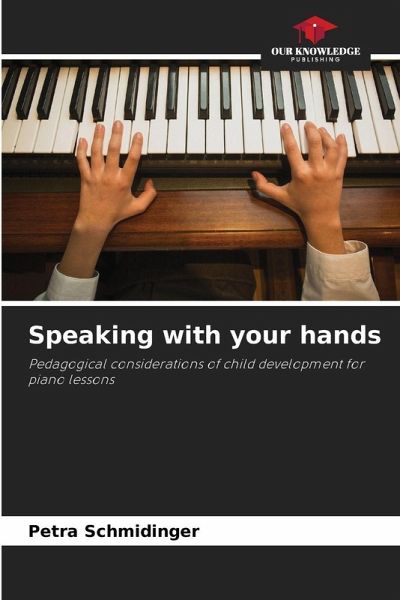
Speaking with your hands
Pedagogical considerations of child development for piano lessons
Versandkostenfrei!
Versandfertig in 6-10 Tagen
33,99 €
inkl. MwSt.

PAYBACK Punkte
17 °P sammeln!

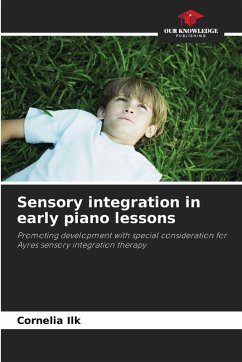
When playing the piano, people speak with their hands, or more precisely, with their entire body. The perception of music and the learning process begin in the womb. How people learn, how synapses form and how the human brain is structured are topics covered in a chapter on neurobiology. Newborn reflexes form the basis for the development of locomotion and the maturation of gross and fine motor skills. A child's motor and language development are closely linked from birth. This connection is particularly evident in the acquisition of baby sign language. Finally, a special area of speech therap...
When playing the piano, people speak with their hands, or more precisely, with their entire body. The perception of music and the learning process begin in the womb. How people learn, how synapses form and how the human brain is structured are topics covered in a chapter on neurobiology. Newborn reflexes form the basis for the development of locomotion and the maturation of gross and fine motor skills. A child's motor and language development are closely linked from birth. This connection is particularly evident in the acquisition of baby sign language. Finally, a special area of speech therapy raises awareness of the connection between the tongue and the fingertips, and emotions also play an important role in this master's thesis. Many educational implications for instrumental instruction, especially piano instruction, can be derived from all these developmental processes. The pedagogical conclusions are incorporated directly into the individual chapters.
Andere Kunden interessierten sich für