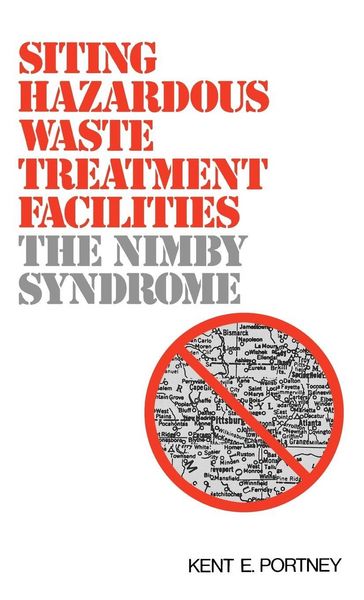
Siting Hazardous Waste Treatment Facilities The Nimby Syndrome
-
- Englisch ausgewählt
87,99 €
inkl. MwSt,
Lieferung nach Hause
Beschreibung
Details
Einband
Gebundene Ausgabe
Altersempfehlung
7 - 17 Jahr(e)
Erscheinungsdatum
28.02.1991
Verlag
Bloomsbury AcademicSeitenzahl
200
Maße (L/B/H)
22,2/14,5/1,4 cm
Gewicht
390 g
Sprache
Englisch
ISBN
978-0-86569-016-5
Since the 1960s and 70s, a wave of environmental awareness has swept the United States. News reports of oil spills, DDT damage to wildlife, and the nuclear near-disaster at Three Mile Island have, along with other incidents, contributed to a widespread distrust of industry and a collective fear of all chemical processing facilities. This fear has been translated, according to Kent Portney, into local political opposition to the siting of much needed hazardous waste treatment plants--the NIMBY (not in my backyard) syndrome. The failure of federal, state, and local governments to effectively control improper hazardous waste disposal has further strengthened the NIMBY syndrome. Portney argues that once it is understood what motivates the array of local attitudes toward hazardous waste treatment facilities, and the political constraints placed on the search for solutions, effective compromises can be reached.
The book begins by focusing on the facility siting dilemma and what can be done to find new policies that work. Chapter two analyzes what does and does not work in easing the effects of the NIMBY syndrome. Democratic political processes are investigated in chapter three, especially those that contribute to the development of NIMBY opposition. Chapters four and five present empirical correlates of changes in peoples' attitudes and explain how people can ultimately be convinced to support local hazardous waste treatment facilities. Social, cultural, and psychological construction of opposition to facility siting is studied in chapter six. Portney presents viable solutions to the facility siting problem, in light of the NIMBY syndrome, in the concluding chapter. This important book will be of great value to practitioners facing actual siting decisions, members of statewide siting boards, private sector parties wishing to site facilities, and those teaching courses in environmental policy or politics.
Unsere Kundinnen und Kunden meinen
Verfassen Sie die erste Bewertung zu diesem Artikel
Helfen Sie anderen Kund*innen durch Ihre Meinung
Kurze Frage zu unserer Seite
Vielen Dank für dein Feedback
Wir nutzen dein Feedback, um unsere Produktseiten zu verbessern. Bitte habe Verständnis, dass wir dir keine Rückmeldung geben können. Falls du Kontakt mit uns aufnehmen möchtest, kannst du dich aber gerne an unseren Kund*innenservice wenden.
zum Kundenservice