Gutscheinbedingungen

**Gültig vom 15.06.2026 bis 17.06.2026 | Gültig für nicht preisgebundene fremdsprachige Bücher | Einzelne Artikel können ausgeschlossen sein | Maximaler rabattfähiger Warenkorbwert 500 € | Nicht kombinierbar mit weiteren Aktionen | Nur einmal pro Person einlösbar | Nur solange der Vorrat reicht

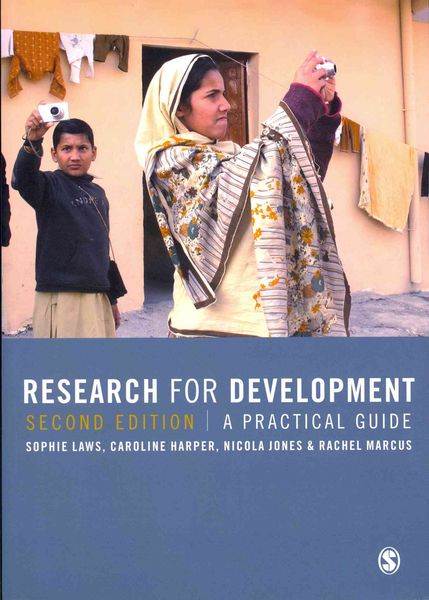
  • Produktbild: Research for Development
  • Produktbild: Research for Development
- 47%

Research for Development A Practical Guide

47% sparen

51,99 € UVP 98,90 €

inkl. gesetzl. MwSt., Versandkostenfrei

Lieferung nach Hause

Beschreibung

Produktdetails

Einband

Taschenbuch

Erscheinungsdatum

08.02.2013

Verlag

Sage Publications

Seitenzahl

440

Maße (L/B/H)

24,4/17/2,4 cm

Gewicht

761 g

Auflage

2. Auflage

Sprache

Englisch

ISBN

978-1-4462-5237-6

Beschreibung

Rezension

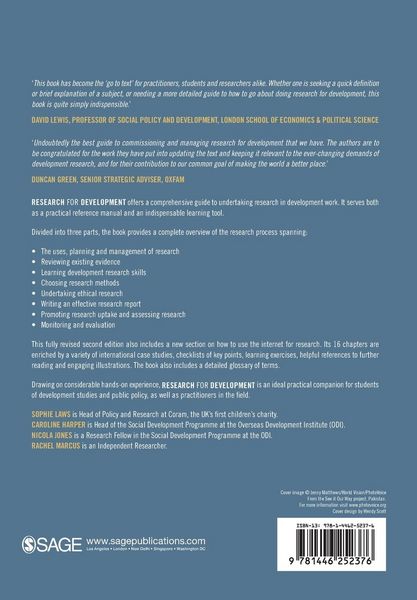
In the decade since it was first published, Research for Development has become the 'go to' text for development practitioners, students and researchers alike. This substantially revised second edition is even better: brought fully up to date with many new topics and chapters, this book is comprehensive, authoritative and highly informative. Whether one is seeking a quick definition or brief explanation of a subject, or needing a more detailed guide to how to go about doing research for development, this book is quite simply indispensible.
David Lewis
Professor of Social Policy and Development, London School of Economics & Political Science

Research for Development is undoubtedly the best guide to its subject that we have. The first edition has become an indispensable work of reference for development researchers and practitioners engaged in commissioning and managing research. Oxfam staff around the world have benefitted from its use, and all of us are looking forward to the publication of the new edition. Sophie Laws, Caroline Harper, Nicola Jones and Rachel Marcus are to be congratulated for the work they have put into updating the text and keeping it relevant to the ever-changing demands of development research, and for their contribution to our common goal of making the world a better place..
Duncan Green
Senior Strategic Adviser, Oxfam

Produktdetails

Einband

Taschenbuch

Erscheinungsdatum

08.02.2013

Verlag

Sage Publications

Seitenzahl

440

Maße (L/B/H)

24,4/17/2,4 cm

Gewicht

761 g

Auflage

2. Auflage

Sprache

Englisch

ISBN

978-1-4462-5237-6

EU-Ansprechpartner

Zeitfracht Medien GmbH
Ferdinand-Jühlke-Straße 7|99095|Erfurt|DE

Herstelleradresse

SAGE Publications
1 Oliver's Yard 55 City Road|EC1Y 1SP|London|GB

Kundinnen und Kunden meinen

0 Bewertungen

Informationen zu Bewertungen

Zur Abgabe einer Bewertung ist eine Anmeldung im Konto notwendig. Die Authentizität der Bewertungen wird von uns nicht überprüft. Wir behalten uns vor, Bewertungstexte, die unseren Richtlinien widersprechen, entsprechend zu kürzen oder zu löschen.

Die Bewertungen sind nach Format, Anzahl Sterne und Datum sortiert.

Verfassen Sie die erste Bewertung zu diesem Artikel

Helfen Sie anderen Kund*innen durch Ihre Meinung

Kundinnen und Kunden meinen

0 Bewertungen filtern

Die Leseprobe wird geladen.
  • Produktbild: Research for Development
  • Produktbild: Research for Development
  • How to use this book
    PART ONE: INTRODUCTION AND PLANNING YOUR RESEARCH
    Introduction: Why Research for Development Matters
    So What Is Research?
    ¿But I¿m not a Researcher¿: The Contribution of the Development Worker
    Who Should Do Research for Development Work? The Broader Issues
    Research and Social Change
    How to Tell When Research is the Best Approach to a Problem
    Using Research in Development Work
    So What is the Right Approach to Research for Development Work?
    Two Major Research Approaches
    Types of Research in Development Work
    Programme-Focused and Issue-Focused Research
    Using Research for Programme Development
    Using Research to Influence Policy
    Planning for Effective Research
    Quality in Research
    Choosing a Research Focus
    Defining the Research Questions
    Writing a Research Brief
    Managing Research
    Attracting and Engaging with Funders
    Deciding Who Should Do The Research
    Selecting and Appointing External Researchers
    Managing Costs and Time
    Supervising Researchers
    Reviewing Existing Evidence
    How to Look
    Where to Look
    How to Use the Internet for Research
    Learning Development Research Skills
    Where to Start?
    Some Ways of Learning Research Skills
    Supporting Southern Researchers
    PART TWO: COLLECTING DATA
    Choosing Methods
    Choosing a Research Approach
    Choosing Research Techniques
    Triangulation: Using More Than One Technique
    Collecting and Managing Quality Data
    Introduction
    Three Characterisics of Good-quality Data
    Ways to Improve Quality in Data Collection
    Improving Communication with Respondents
    Collecting, Recording and Managing Data
    Ensuring ¿Trustworthiness¿
    Thinking about Ethics in Research
    Codes of Ethics
    Responsibilities Towards Respondents: Some Ethical Issues to Consider
    Wider Accountability
    Responsibilities to Colleagues
    Choosing a Sample
    What Does Sampling Mean?
    Quantitative or Qualitative Sampling?
    Probability or Random Sampling
    Purposive or Non-Random Sampling
    How to Sample For Cases, Location, Time and Events
    Including ¿Hard-To-Reach¿ People
    Incentives: What Are The Issues?
    Collecting Data
    How to Ask Questions
    Interviews
    Focus Groups
    Questionnaires
    Use of Documentary Sources and Secondary Data Analysis
    Observation
    Participatory Research
    Participation for...?
    Participation by...?
    Participation in...?
    Some Participatory Research Methods
    Practical Challenges in Participatory Research
    Critical Perspectives on Participatory Research
    PART THREE: ANALYSIS AND RESEARCH COMMUNICATION
    Undertaking Research Analysis
    Getting Organized
    What is Analysis?
    Interpretation
    The Process of Data Analysis
    Participation in the Analysis Process
    Methods of Analysis
    Qualitative Analysis
    Quantitative Analysis
    So What Does It All Mean?
    Writing Effectively
    What to Write
    What Not to Write
    What Must Be Included
    How to Write: The Process
    Writing Press Releases, Policy Briefs or Journal Articles
    Promoting Research Uptake
    Building a Successful Communications Strategy
    Promotion for Implementation: Influencing Programmes
    Promotion for Policy Influence
    Some Tools for Communication
    Dealing with the Media
    Capacity Building
    Assessing Research for Development Work
    What, Who and When?
    Assessing Research Output
    Assessing Research Uptake
    Assessing Research Impact
    Appendix 1: On Monitoring and Evaluation
    Appendix 2: Useful Websites
    Glossary
    References