Gutscheinbedingungen

**Gültig vom 15.06.2026 bis 17.06.2026 | Gültig für nicht preisgebundene fremdsprachige Bücher | Einzelne Artikel können ausgeschlossen sein | Maximaler rabattfähiger Warenkorbwert 500 € | Nicht kombinierbar mit weiteren Aktionen | Nur einmal pro Person einlösbar | Nur solange der Vorrat reicht

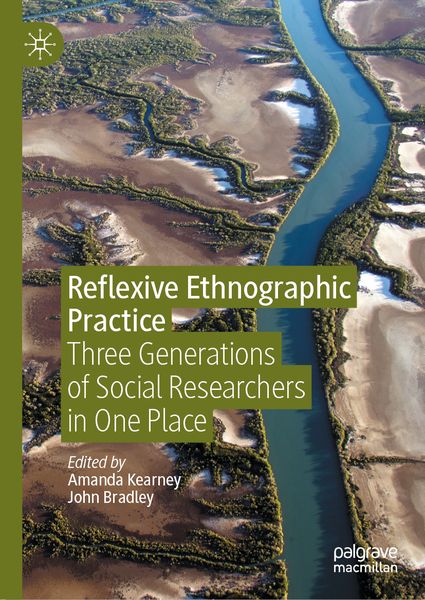
  • Produktbild: Reflexive Ethnographic Practice
  • Produktbild: Reflexive Ethnographic Practice

Reflexive Ethnographic Practice Three Generations of Social Researchers in One Place

116,99 €

inkl. gesetzl. MwSt., Versandkostenfrei

Lieferung nach Hause

Beschreibung

Produktdetails

Einband

Gebundene Ausgabe

Erscheinungsdatum

22.01.2020

Herausgeber

Amanda Kearney + weitere

Verlag

Springer

Seitenzahl

219

Maße (L/B/H)

21,6/15,3/1,8 cm

Gewicht

433 g

Auflage

1st ed. 2020

Sprache

Englisch

ISBN

978-3-030-34897-7

Beschreibung

Portrait

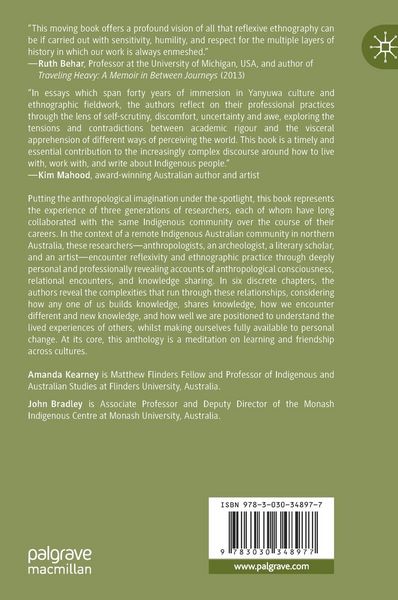
Amanda Kearney is Matthew Flinders Fellow and Professor of Indigenous and Australian Studies at Flinders University, Australia.           

John Bradley is Associate Professor and Deputy Director of the Monash Indigenous Centre at Monash University, Australia.


Produktdetails

Einband

Gebundene Ausgabe

Erscheinungsdatum

22.01.2020

Herausgeber

Verlag

Springer

Seitenzahl

219

Maße (L/B/H)

21,6/15,3/1,8 cm

Gewicht

433 g

Auflage

1st ed. 2020

Sprache

Englisch

ISBN

978-3-030-34897-7

Herstelleradresse

Springer-Verlag GmbH
Tiergartenstr. 17
69121 Heidelberg
DE

Email: ProductSafety@springernature.com

Kundinnen und Kunden meinen

0 Bewertungen

Informationen zu Bewertungen

Zur Abgabe einer Bewertung ist eine Anmeldung im Konto notwendig. Die Authentizität der Bewertungen wird von uns nicht überprüft. Wir behalten uns vor, Bewertungstexte, die unseren Richtlinien widersprechen, entsprechend zu kürzen oder zu löschen.

Die Bewertungen sind nach Format, Anzahl Sterne und Datum sortiert.

Verfassen Sie die erste Bewertung zu diesem Artikel

Helfen Sie anderen Kund*innen durch Ihre Meinung

Kundinnen und Kunden meinen

0 Bewertungen filtern

  • Produktbild: Reflexive Ethnographic Practice
  • Produktbild: Reflexive Ethnographic Practice
  • Foreword Chapter 1: Introduction - The Scene for a Reflexive Practice

    The start of a story

    Collaboration and change

    Our approach to the book

    Yanyuwa families, country and Law

    On becoming reflexive

    Overview

    References

    Chapter 2: Writing From the Edge: Writing What Was Never Meant to be Written

    Introduction

    Living on the edge: Suffering and loss

    Field notes and reflections: Transitioning into the academy

    Writing of knowledge

    Songs, stories and relationships

    Knowing loss and finding words

    Final thoughts

    Contributor Response, by Philip Adgemis

    References

    Chapter 3: Mobility of Mind: Can We Change our Epistemic Habit Through Sustained Ethnograpic Encounters?

    Introduction

    What do I know?

    How did this happen?

    Mobility of mind: Epistemic habit in the context of fieldwork encounters

    Sustained ethnographic encounters as acts of testimony and witnessing

    Did I always know?

    Why have Yanyuwa taught me?

    Am I permitted to know an Indigenous epistemology in a settler colonial context?

    Final thoughts

    Contributor Response, by John Bradley

    References 

    Chapter 4: Mapping the Route to the Yanyuwa Atlas

    Introduction and orientation

    Changes, shifts and paradoxes

    On the road to Borroloola

    Getting lost: The idea of a map

    Moving in from the edges

    Art as ways to express

    Creased maps and field jottings

    Jijijirla that comes around again

    Country and loss

    Publishing and what next?

    Contributor Response, by Liam Brady

    References

    Chapter 5: "Invisible Things in Nature": A Reflexive Reading of Alexis Wright's Carpentaria

    Introduction

    Carpentaria’s unexpectedness

    The many strands that make up Carpentaria

    Reading Carpentaria in the light of an apprenticeship in Yanyuwa Cosmology

    Reading Wright’s Rainbow Serpent

    Final reflection

    Contributor Response, by Amanda Kearney

    References

    Chapter 6: Encounters with Yanyuwa Rock Art: Reflexivity, Multivocality, and the 'Archaeological Record' in Northern Australia's Southwest Gulf Country

    Introduction

    Reflexivity in archaeology practice

    Archaeology and the southwest Gulf country

    Research questions and entering the field

    Looking for a donkey

    Kurrmurrnyini and sorcery rock art

    Discussion and final thoughts

    Contributor Response, by Nona Cameron

    References 

    Chapter 7: So Did You Find Any Culture Up Here Mate?: Young Men, 'Deficit' and Change.

    Introduction

    Realisations and motivations

    Discourse and deficit framings: ‘Some people just hate us’

    Expectations and intersubjective connections

    Change and the shame in not knowing

    Reflections

    Contributor Response, by Frances Devlin-Glass

    References