Nicht lieferbar
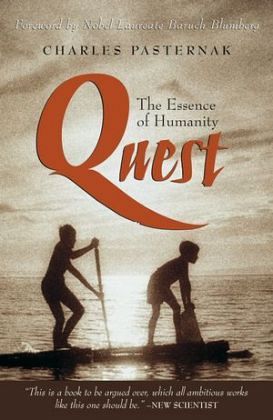
Quest
The Essence of Humanity
Versandkostenfrei!
Nicht lieferbar

Scientists continually look for the genetic factors that make humans so very different in appearance and behavior from most animals-the genes that are uniquely human. Respected biochemist and author Charles Pasternak argues that such genes do not exist. In this intriguing work of history, philosophy, and popular science, Pasternak asserts that it is the human desire to quest--combined with our unique physical abilities to do so--that have controlled human evolution and led us to develop away from closely related animals.
An intriguing work of history, philosophy, and popular science that explores the human desire to quest.
Scientists continually look for the genetic factors that make humans so very different in appearance and behaviour from most animals - the genes that are uniquely human. Respected biochemist and author Charles Pasternak argues that such genes do not exist. Instead, he suggests that it is our desire to quest - for food and shelter, for knowledge, for wealth, for adventure - coupled with our unique physical abilities to do so that have controlled our evolution and have led humans to develop away from closely related animals.
In this intriguing work of history, philosophy, and popular science, Pasternak uses his extensive biological knowledge to discuss man's nature and achievements, his genetic makeup, and his evolution.
Scientists continually look for the genetic factors that make humans so very different in appearance and behaviour from most animals - the genes that are uniquely human. Respected biochemist and author Charles Pasternak argues that such genes do not exist. Instead, he suggests that it is our desire to quest - for food and shelter, for knowledge, for wealth, for adventure - coupled with our unique physical abilities to do so that have controlled our evolution and have led humans to develop away from closely related animals.
In this intriguing work of history, philosophy, and popular science, Pasternak uses his extensive biological knowledge to discuss man's nature and achievements, his genetic makeup, and his evolution.