Gutscheinbedingungen

**Gültig vom 15.06.2026 bis 17.06.2026 | Gültig für nicht preisgebundene fremdsprachige Bücher | Einzelne Artikel können ausgeschlossen sein | Maximaler rabattfähiger Warenkorbwert 500 € | Nicht kombinierbar mit weiteren Aktionen | Nur einmal pro Person einlösbar | Nur solange der Vorrat reicht

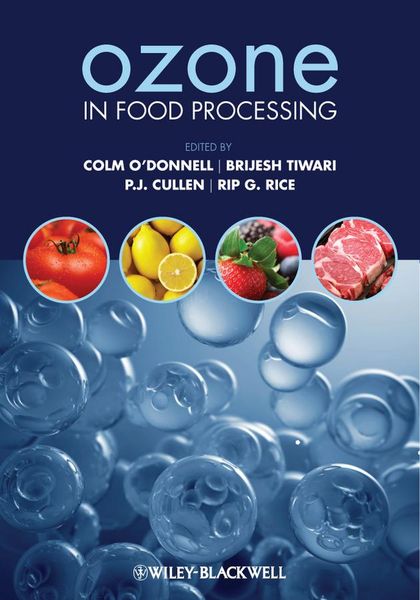
Produktbild: Ozone in Food Processing

Ozone in Food Processing

285,99 €

inkl. gesetzl. MwSt., Versandkostenfrei

Lieferung nach Hause

Beschreibung

Produktdetails

Einband

Gebundene Ausgabe

Erscheinungsdatum

23.04.2012

Herausgeber

Rip G. Rice + weitere

Verlag

John Wiley & Sons

Seitenzahl

320

Maße (L/B/H)

25/17,7/2,3 cm

Gewicht

771 g

Auflage

1. Auflage

Sprache

Englisch

ISBN

978-1-4443-3442-5

Beschreibung

Produktdetails

Einband

Gebundene Ausgabe

Erscheinungsdatum

23.04.2012

Herausgeber

Verlag

John Wiley & Sons

Seitenzahl

320

Maße (L/B/H)

25/17,7/2,3 cm

Gewicht

771 g

Auflage

1. Auflage

Sprache

Englisch

ISBN

978-1-4443-3442-5

Herstelleradresse

Libri GmbH
Europaallee 1
36244 Bad Hersfeld
DE

Email: gpsr@libri.de

Kundinnen und Kunden meinen

0 Bewertungen

Informationen zu Bewertungen

Zur Abgabe einer Bewertung ist eine Anmeldung im Konto notwendig. Die Authentizität der Bewertungen wird von uns nicht überprüft. Wir behalten uns vor, Bewertungstexte, die unseren Richtlinien widersprechen, entsprechend zu kürzen oder zu löschen.

Die Bewertungen sind nach Format, Anzahl Sterne und Datum sortiert.

Verfassen Sie die erste Bewertung zu diesem Artikel

Helfen Sie anderen Kund*innen durch Ihre Meinung

Kundinnen und Kunden meinen

0 Bewertungen filtern

Die Leseprobe wird geladen.
  • Produktbild: Ozone in Food Processing
  • Contributors xi

    1 Status and Trends of Ozone in Food Processing 1
    Colm O'Donnell, B.K. Tiwari, P.J. Cullen and Rip G. Rice

    1.1 Why ozone? 1

    1.2 Drivers of ozone in the food industry 1

    1.2.1 Regulation 1

    1.2.2 Surface cleaning and disinfection 2

    1.2.3 Food safety and shelf life extension 2

    1.2.4 Nutrient and sensory aspects 3

    1.2.5 Consumer and processor acceptability 3

    1.2.6 Technology advances 3

    1.2.7 Environmental impact 4

    1.3 The hurdle concept 4

    1.4 Challenges 5

    1.5 Objective 5

    References 5

    2 Regulatory and Legislative Issues 7
    B.K. Tiwari and Rip G. Rice

    2.1 Introduction 7

    2.2 History of ozone application and regulation 9

    2.3 Ozone regulation 9

    2.3.1 Overview of US regulations 9

    2.3.2 Overview of European regulations 11

    2.3.3 Overview of Canadian regulations 13

    2.3.4 Overview of Australian and New Zealand regulations 15

    2.3.5 Overview of Japanese regulations 15

    2.4 Global harmonisation of food safety regulations 16

    References 16

    3 Chemical and Physical Properties of Ozone 19
    Annel K. Greene, Zeynep B. Güzel-Seydim and At1f Can Seydim

    3.1 Introduction 19

    3.2 The molecular structure of ozone 19

    3.3 The chemical and physical properties of ozone 20

    3.3.1 The chemical mechanisms of ozonation 22

    3.3.2 Ozone reaction pathways in water 22

    3.4 Ozone action on macromolecules 25

    3.5 Mechanisms of microbial inactivation 26

    3.6 Ozone reactions against virus 28

    3.7 Ozone reaction on biofilms 29

    Acknowledgments 29

    References 29

    4 Generation and Control of Ozone 33
    Cameron Tapp and Rip G. Rice

    4.1 Introduction 33

    4.2 Ozone generation 33

    4.2.1 Ozone generation by corona discharge (CD) 34

    4.2.2 Ultraviolet (UV) (photochemical) ozone generation 36

    4.3 Feed gas preparation systems 36

    4.3.1 Need for feed gas treatment 36

    4.3.2 Air preparation systems 37

    4.3.3 Oxygen feed gas systems 39

    4.4 Solubility of ozone in water 41

    4.5 Contacting ozone with water: physical means of transferring ozone into water 44

    4.5.1 Venturi injection method 44

    4.5.2 Fine bubble diffuser method 46

    4.6 Measuring and monitoring ozone in water 46

    4.6.1 Colourimetric method 47

    4.6.2 Electronic method - for dissolved ozone 47

    4.6.3 Electronic method - for ORP 48

    4.7 Measuring and monitoring ozone in air 48

    4.7.1 Ozone measurement equipment for food processing plant air 49

    4.8 Ozonation equipment for food storage rooms 50

    4.9 Ozone generator output control 50

    4.10 Some recent novel applications for ozone generation in food processing plants 51

    4.11 Helpful calculations 53

    4.11.1 Gallons per minute 53

    4.11.2 Metric equivalent 53

    References 53

    5 Ozone in Fruit and Vegetable Processing 55
    B.K. Tiwari and K. Muthukumarappan

    5.1 Introduction 55

    5.2 Applications in fruit and vegetable processing 56

    5.2.1 Surface decontamination 56

    5.2.2 Storage in ozone-rich atmospheres 61

    5.2.3 Ozone in fruit and vegetable juice processing 65

    5.3 Efficacy of ozone 65

    5.4 Synergistic effects with ozone 68

    5.5 Effect of ozone on product quality and nutrition 69

    5.5.1 Chemical attributes 69

    5.5.2 Visual quality 70

    5.5.3 Texture 72

    5.5.4 Sensory quality 73

    5.6 Conclusion 74

    References 74

    6 Ozone in Grain Processing 81
    V. Lullien-Pellerin

    6.1 Introduction 81

    6.2 Ozone application in grain storage and effects on grain components 82

    6.2.1 Insect control 82

    6.2.2 Microorganism control 84

    6.2.3 Reduction of toxic chemical levels 86

    6.2.4 Effects of ozone on grain components, metabolism and physiological status 88

    6.3 Effects of ozone on grain processing, flour and product quality 90

    6.4 Industrial applications and scale-up 93

    6.5 Conclusions 95

    Acknowledgments 96

    References 96

    7 Ozonation of Hydrocolloids 103
    Joan M. King, Hee-Jung An, Seung-wook Seo and Alfredo Prudente

    7.1 Introduction 103

    7.2 Application of ozone in hydrocolloid processing 104

    7.2.1 Starch 104

    7.2.2 Chitosan 105

    7.2.3 Gelatin 107

    7.2.4 Other hydrocolloids 108

    7.3 Effects of ozone on the physiochemical properties of hydrocolloids 108

    7.3.1 Structural composition 108

    7.3.2 Swelling power 109

    7.3.3 Molecular weight 110

    7.3.4 Viscosity 111

    7.3.5 Thermal properties 115

    7.4 Mechanism and structural effects of ozone action on hydrocolloids 115

    References 118

    8 Ozone in Meat Processing 123
    Fred W. Pohlman

    8.1 Introduction 123

    8.2 Application of ozone in meat processing 125

    8.2.1 Surface decontamination of red meat 125

    8.2.2 Surface decontamination of poultry 128

    8.2.3 Other meat applications 129

    8.3 Effect on meat quality 130

    References 133

    9 Ozone in Seafood Processing 137
    Shigezou Naito

    9.1 Introduction 137

    9.2 Application of ozone in fish and storage of processed seafood products 138

    9.2.1 Fresh fish and seafood 138

    9.2.2 Dried and smoked products 145

    9.3 Application of ozone in seafood plant sanitation 149

    9.4 Effects of ozone on microbial safety 153

    9.5 Effects of ozone on fish and seafood quality and shelf life 155

    9.6 Current status and future trends for ozone and seafood 157

    References 160

    10 Ozone Sanitisation in the Food Industry 163
    P.J. Cullen and Tomás Norton

    10.1 Introduction 163

    10.2 Ozone as a sanitising agent 165

    10.3 Health and safety issues 168

    10.4 Using ozone in industrial cleaning procedures 168

    10.5 Ozone applications in food processing 170

    10.5.1 Dairy industry 170

    10.5.2 Wine industry 172

    10.5.3 Brewing industry 173

    References 174

    11 Ozone for Water Treatment and its Potential for Process Water Reuse in the Food Industry 177
    Tomás Norton and Paula Misiewicz

    Nomenclature 177

    11.1 Introduction 177

    11.2 Water in the food industry 179

    11.2.1 Fresh produce processing 180

    11.2.2 Dairy processing 181

    11.2.3 Meat and poultry processing 185

    11.3 Ozonation as a water treatment process 185

    11.4 The kinetics of ozonation 187

    11.4.1 The kinetics of mass transfer 188

    11.4.2 Determining the chemical reaction kinetics 189

    11.4.3 Hydrodynamics 191

    11.4.4 Applications of hydrodynamic modelling to investigate ozone water treatment 193

    11.5 Conclusion 195

    References 195

    12 Ozone for Food Waste and Odour Treatment 201
    Ioannis S. Arvanitoyannis

    12.1 Introduction 201

    12.2 Application of ozonation to waste treatment 205

    12.2.1 Wastewater of plant origin 205

    12.2.2 Wastewater of animal origin 209

    12.3 Application of ozonation to odour removal 211

    12.3.1 Odours originating from food industry processes 213

    12.3.2 Odours originating from agricultural operations 213

    12.4 Conclusions 216

    References 216

    13 Efficacy of Ozone on Pesticide Residues 223
    Gilbert Y.S. Chan and J.G. Wu

    13.1 Introduction 223

    13.2 Types of pesticides 225

    13.3 Fates of pesticides 225

    13.3.1 Degradation processes of pesticides 225

    13.3.2 Ozonation of pesticides 227

    13.4 Degradation mechanisms 227

    13.4.1 Kinetics 227

    13.4.2 Intermediates and oxidation products 229

    13.5 Ozone application for pesticide residues in fruits and vegetables 231

    13.6 Current status and opportunities 234

    13.6.1 Ozone concentrations 234

    13.6.2 Physical nature of plants affects degradation efficacy 235

    13.6.3 Future trends 235

    References 236

    14 Modelling Approaches for Ozone Processing 241
    Vasilis P. Valdramidis, P.J. Cullen and B.K. Tiwari

    Nomenclature 241

    14.1 Introduction 242

    14.2 Modelling approaches for microbial inactivation 242

    14.3 Chemical reaction kinetics 250

    14.4 Modelling ozonation processes 255

    14.4.1 Modelling ozone bubble columns 255

    14.4.2 Overall mass transfer coefficient 257

    14.5 Conclusions 259

    References 259

    15 Health and Safety Aspects of Ozone Processing 265
    Rip G. Rice

    15.1 Introduction 265

    15.2 Points of application of ozone during food processing 266

    15.2.1 Aqueous phase ozone applications 266

    15.2.2 Gas phase ozone applications 267

    15.3 Health and safety issues with ozone for food plant workers 267

    15.3.1 Ozone exposure regulations 267

    15.3.2 Potential fire hazards from high-purity oxygen use 271

    15.3.3 Safety history of ozone in commercial/industrial applications 272

    15.4 Avoiding worker exposure to ozone in food processing plants 273

    15.4.1 General considerations 273

    15.4.2 Specific plant safety measures 274

    15.4.3 Controlling off-gas ozone at Fresher Than Fresh fish processing/packaging plant 275

    15.4.4 Third-party evaluation of aqueous ozone spray wash equipment 277

    15.5 Safety of foods processed with ozone 280

    15.5.1 Nutrient impacts of ozone contact with foods 280

    15.5.2 Impacts of ozone processing of foods on vitamin contents 281

    15.5.3 Impacts of ozone processing of foods on protein contents 282

    15.5.4 Impacts of ozone processing of foods on lipid contents 283

    15.5.5 Toxicology aspects of ozone processing of foods 283

    15.6 Conclusions 285

    Acknowledgments 286

    References 286

    Index 289

    A colour plate section falls between pages 180 and 181