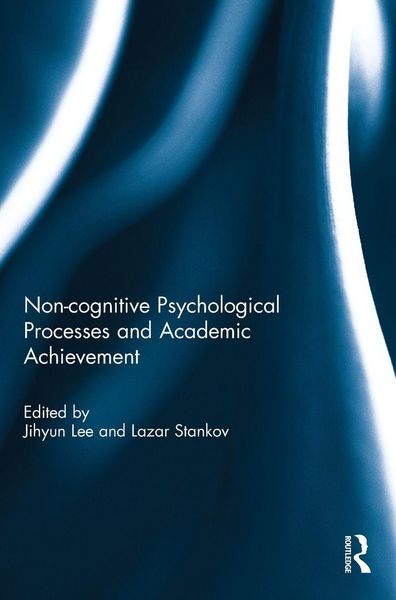
Noncognitive psychological processes and academic achievement
-
- Hardcover ausgewählt
- Taschenbuch
- eBook
-
Sprache:Englisch
232,99 €
inkl. MwSt,
Lieferung nach Hause
Beschreibung
Details
Einband
Gebundene Ausgabe
Erscheinungsdatum
22.12.2015
Herausgeber
Lee Jihyun + weitereVerlag
Taylor and FrancisSeitenzahl
132
Maße (L/B/H)
25/17,5/1,2 cm
Gewicht
385 g
Sprache
Englisch
ISBN
978-1-138-19084-9
It is becoming increasingly clear that non-cognitive psychological processes are important for students’ school achievement, even to the point where their influence may be stronger than that exerted by the parents, teachers, or the school atmosphere itself. Non-cognitive psychological variables refer to varieties of self-beliefs and goal orientations – such as anxiety, confidence, self-efficacy, and self-concept – which are often seen as dispositional and motivational in nature. It is particularly important to highlight the role that confidence and self-efficacy play in school achievement, as these two self-beliefs are related to metacognitive processing – the awareness of what you know and what you do not know. Self-concept, meanwhile, tends to exert its influence on an individual’s choice of tertiary level courses.
This book suggests that by focusing on students’ self-beliefs, the education system may be in a position to improve cognitive performance, since individual students’ self-beliefs may be more malleable than the cognitive processes involved in acquiring academic knowledge. Focusing on these non-cognitive psychological processes is also likely to be more effective in improving performance than system-wide interventions involving changes in policy for both public and private sector educators. This book will be useful to educational researchers, school leaders, administrators, counsellors, and teachers, in guiding students’ attitudes towards learning and school performance. It will also provide students in psychology and education with broad and nuanced insights into the drivers of school achievement. This book was originally published as a special issue of Educational Psychology.
Unsere Kundinnen und Kunden meinen
Verfassen Sie die erste Bewertung zu diesem Artikel
Helfen Sie anderen Kund*innen durch Ihre Meinung
Kurze Frage zu unserer Seite
Vielen Dank für dein Feedback
Wir nutzen dein Feedback, um unsere Produktseiten zu verbessern. Bitte habe Verständnis, dass wir dir keine Rückmeldung geben können. Falls du Kontakt mit uns aufnehmen möchtest, kannst du dich aber gerne an unseren Kund*innenservice wenden.
zum Kundenservice