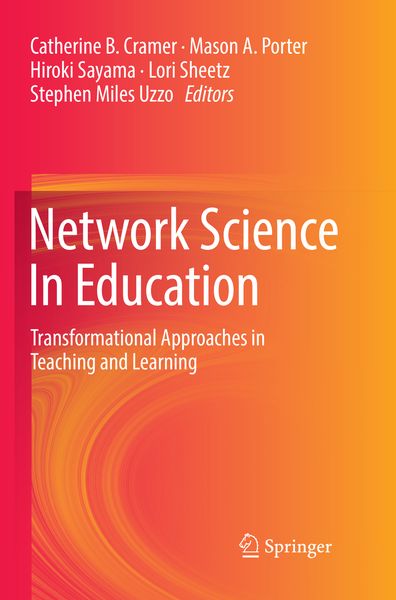
Network Science In Education Transformational Approaches in Teaching and Learning
-
- Hardcover
- Taschenbuch ausgewählt
- eBook
-
Sprache:Englisch
87,99 €
inkl. gesetzl. MwSt.,
Lieferung nach Hause
Beschreibung
Produktdetails
Einband
Taschenbuch
Erscheinungsdatum
21.12.2018
Herausgeber
Catherine B. Cramer + weitereVerlag
SpringerSeitenzahl
205
Maße (L/B/H)
23,5/15,5/1,2 cm
Gewicht
335 g
Auflage
Softcover reprint of the original 1st ed. 2018
Sprache
Englisch
ISBN
978-3-030-08407-3
Around the globe, there is an increasingly urgent need to provide opportunities for learners to embrace complexity; to develop the many skills and habits of mind that are relevant to today's complex and interconnected world; and to make learning more connected to our rapidly changing workplace and society. This presents an opportunity to (1) leverage new paradigms for understanding the structure and function of teaching and learning communities, and (2) to promote new approaches to developing methods, curricular materials, and resources. Network science - the study of connectivity - can play an important role in these activities, both as an important subject in teaching and learning and as a way to develop interconnected curricula.
Since 2010, an international community of network science researchers and educators has come together to raise the global level of network literacy by applying ideas from network science to teaching and learning. Network Science in Education -which refers to both this community and to its activities - has evolved in response to the escalating activity in the field of network science and the need for people to be able to access the field through education channels.Network Science In Education: Transformational Approaches in Teaching and Learning appeals to both instructors and professionals, while offering case studies from a wide variety of activities that have been developed around the globe: the creation of entirely new courses and degree programs; tools for K-20 learners, teachers, and the general public; and in-depth analysis of selected programs. As network-based pedagogy and the community of practice continues to grow, we hope that the book's readers will join this vibrant network education community to build on these nascent ideas and help deepen the understanding of networks for all learners.
Kundinnen und Kunden meinen
Verfassen Sie die erste Bewertung zu diesem Artikel
Helfen Sie anderen Kund*innen durch Ihre Meinung
Kurze Frage zu unserer Seite
Vielen Dank für dein Feedback
Wir nutzen dein Feedback, um unsere Produktseiten zu verbessern. Bitte habe Verständnis, dass wir dir keine Rückmeldung geben können. Falls du Kontakt mit uns aufnehmen möchtest, kannst du dich aber gerne an unseren Kund*innenservice wenden.
zum Kundenservice