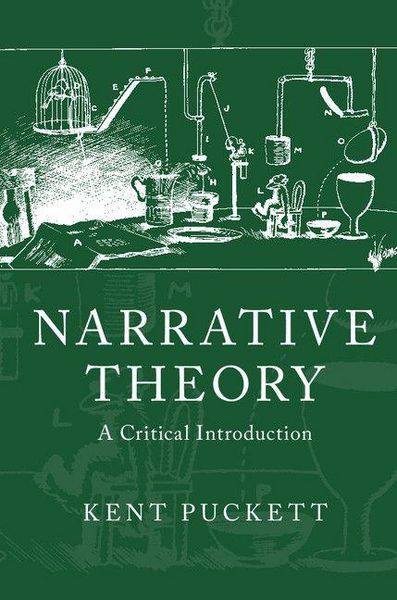
Narrative Theory A Critical Introduction
-
- Hardcover ausgewählt
- Taschenbuch
- eBook
-
Sprache:Englisch
129,99 €
inkl. gesetzl. MwSt.,
Lieferung nach Hause
Beschreibung
Produktdetails
Einband
Gebundene Ausgabe
Erscheinungsdatum
02.02.2017
Verlag
Cambridge AcademicSeitenzahl
360
Maße (L/B/H)
23,5/15,7/2,4 cm
Gewicht
630 g
Sprache
Englisch
ISBN
978-1-107-03366-5
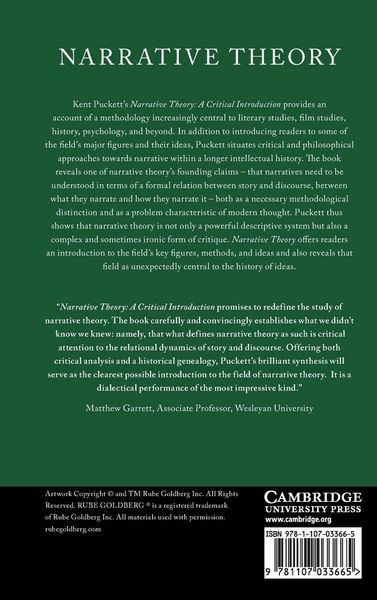
Kent Puckett's Narrative Theory: A Critical Introduction provides an account of a methodology increasingly central to literary studies, film studies, history, psychology and beyond. In addition to introducing readers to some of the field's major figures and their ideas, Puckett situates critical and philosophical approaches towards narrative within a longer intellectual history. The book reveals one of narrative theory's founding claims - that narratives need to be understood in terms of a formal relation between story and discourse, between what they narrate and how they narrate it - both as a necessary methodological distinction and as a problem characteristic of modern thought. Puckett thus shows that narrative theory is not only a powerful descriptive system but also a complex and sometimes ironic form of critique. Narrative Theory offers readers an introduction to the field's key figures, methods and ideas, and it also reveals that field as unexpectedly central to the history of ideas.
Kundinnen und Kunden meinen
Verfassen Sie die erste Bewertung zu diesem Artikel
Helfen Sie anderen Kund*innen durch Ihre Meinung
Kurze Frage zu unserer Seite
Vielen Dank für dein Feedback
Wir nutzen dein Feedback, um unsere Produktseiten zu verbessern. Bitte habe Verständnis, dass wir dir keine Rückmeldung geben können. Falls du Kontakt mit uns aufnehmen möchtest, kannst du dich aber gerne an unseren Kund*innenservice wenden.
zum Kundenservice