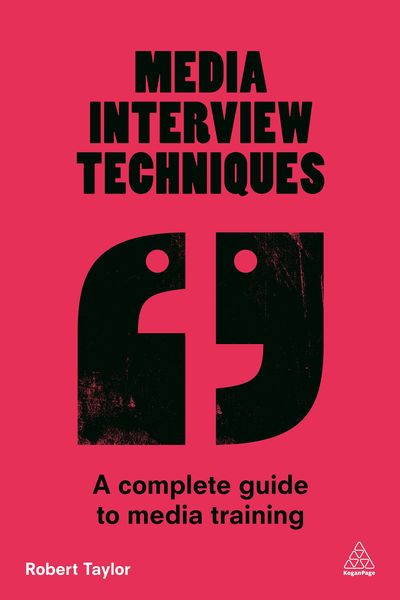
Media Interview Techniques A Complete Guide to Media Training
-
- Taschenbuch ausgewählt
- eBook
-
Sprache:Englisch
51,99 €
inkl. gesetzl. MwSt.,
Lieferung nach Hause
Beschreibung
Produktdetails
Einband
Taschenbuch
Erscheinungsdatum
03.11.2015
Verlag
Kogan Page LtdSeitenzahl
224
Maße (L/B/H)
23,4/15,6/1,3 cm
Gewicht
345 g
Auflage
1
Sprache
Englisch
ISBN
978-0-7494-7472-0
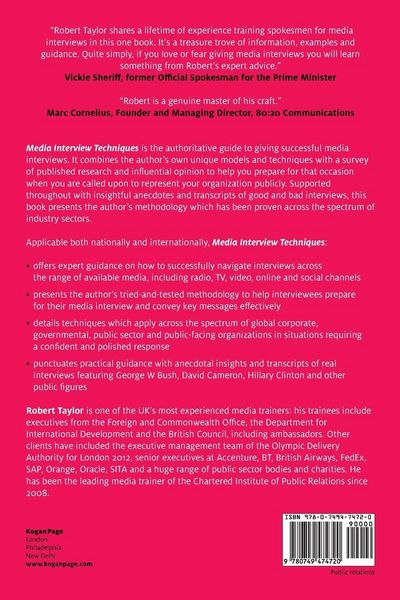
Never has media training been more relevant, or in-demand. Confidently deliver a key message, even in crisis conditions, and represent yourself or your organization using this unique collection of models and techniques. Featuring insightful anecdotes of interviews from the likes of George W. Bush, HRH Prince Philip, and more, this is a must-read for any PR executive, press officer or communications professional. Any individual preparing for an interview with the media, however practised or well-rehearsed they are, worries about failing to convey the essential points, or encountering that awkward question in the glare of public scrutiny. As media channels multiply by the day, offering ever more opportunities for exposure, so they also present a growing probability of finding oneself in front of the camera, webcam, or microphone in a make-or-break encounter where every word, gesture or expression counts. Media Interview Techniques is the authoritative guide to giving successful media interviews, combining the author's own unique models and techniques with a survey of published research and influential opinion, to help the reader prepare for any occasion when called upon to represent an organization publicly. Supported throughout with insightful anecdotes and transcripts of good and bad interviews given by George W. Bush, HRH Prince Philip, David Cameron and numerous public figures, this book presents a methodology which has been proven across the spectrum of industry sectors both nationally and internationally. Written for those who speak on behalf of commercial companies, public services, charities, NGOs, or as a subject expert (or for those briefing clients prior to interviews), no communications professional can afford to be without a copy. The book is also supported by online resources, including web links to relevant media interviews for each chapter and high-profile news stories.
Kundinnen und Kunden meinen
Verfassen Sie die erste Bewertung zu diesem Artikel
Helfen Sie anderen Kund*innen durch Ihre Meinung
Kurze Frage zu unserer Seite
Vielen Dank für dein Feedback
Wir nutzen dein Feedback, um unsere Produktseiten zu verbessern. Bitte habe Verständnis, dass wir dir keine Rückmeldung geben können. Falls du Kontakt mit uns aufnehmen möchtest, kannst du dich aber gerne an unseren Kund*innenservice wenden.
zum Kundenservice