Gutscheinbedingungen

**Gültig bis 10.06.2026 / Gültig für gebrauchte Bücher / Mindestbestellwert 20,00 € / Einzelne Artikel können ausgeschlossen sein / Online auf www.bücher.de.de / Nicht kombinierbar mit anderen Gutscheinen oder Preisaktionen / Nur einmal pro Einkauf einlösbar / Gutschein wird auf max. 500€ Bestellwert angerechnet / Keine Barauszahlung / Nicht gültig für Versandkosten und Services

  • Produktbild: Materials in World Perspective
  • Produktbild: Materials in World Perspective

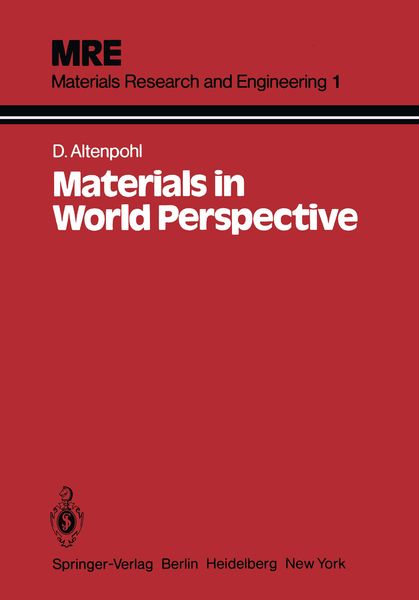
Materials in World Perspective Assessment of Resources, Technologies and Trends for Key Materials Industries

97,99 €

inkl. gesetzl. MwSt., Versandkostenfrei

Lieferung nach Hause

Beschreibung

Produktdetails

Einband

Taschenbuch

Erscheinungsdatum

22.12.2011

Verlag

Springer Berlin

Seitenzahl

220

Maße (L/B/H)

24,4/17/1,4 cm

Gewicht

422 g

Auflage

Softcover reprint of the original 1st ed. 1980

Sprache

Englisch

ISBN

978-3-642-81455-6

Beschreibung

Produktdetails

Einband

Taschenbuch

Erscheinungsdatum

22.12.2011

Verlag

Springer Berlin

Seitenzahl

220

Maße (L/B/H)

24,4/17/1,4 cm

Gewicht

422 g

Auflage

Softcover reprint of the original 1st ed. 1980

Sprache

Englisch

ISBN

978-3-642-81455-6

Herstelleradresse

Springer-Verlag KG
Sachsenplatz 4-6
1201 Wien
AT

Email: ProductSafety@springernature.com

Kundinnen und Kunden meinen

0 Bewertungen

Informationen zu Bewertungen

Zur Abgabe einer Bewertung ist eine Anmeldung im Konto notwendig. Die Authentizität der Bewertungen wird von uns nicht überprüft. Wir behalten uns vor, Bewertungstexte, die unseren Richtlinien widersprechen, entsprechend zu kürzen oder zu löschen.

Die Bewertungen sind nach Format, Anzahl Sterne und Datum sortiert.

Verfassen Sie die erste Bewertung zu diesem Artikel

Helfen Sie anderen Kund*innen durch Ihre Meinung

Kundinnen und Kunden meinen

0 Bewertungen filtern

  • Produktbild: Materials in World Perspective
  • Produktbild: Materials in World Perspective
  • I Role of Materials in the World Economy.- 1 Materials and Man’s Needs.- 2 Definition of Involved Materials.- 3 Setting the Stage.- 3.1 The Total Materials Cycle.- 3.2 The Problem Triangle.- 3.3 The Limits to Growth Syndrome.- 3.4 Resulting Trends in OECD Countries.- 3.5 Materials Consumption and Economic Growth.- 3.6 Shift of Basic Materials Industries to Developing Countries.- 3.7 Concluding Remarks.- II Present Structure and Future Trends in Key Materials Industries.- 1 Introduction.- 1.1 Overview of 5 Major Metals and Their Reserves.- 1.2 Profiles of 12 Important Metals.- 1.3 Africa as a Regional Raw Material Source.- 1.4 Disruption in Mineral Supplies.- 2 Iron and Steel.- 2.1 Consumption and Perspectives.- 2.2 Geographical Distribution.- 2.3 Production of Iron and Steel.- Raw Materials.- 2.4 Beneficiation and Transport of Iron Ores.- 2.5 Utilization of Ores for the Production of Iron.- Direct Reduction Process.- Iron Ore Outlook.- 2.6 Iron and Steel Processing.- 2.6.1 Investment and Production Costs.- 2.6.2 Energy.- 2.6.3 Environment and Pollution Control.- 2.6.4 Recycling.- 2.7 Description of Steelmaking Processes and Finishing Operations.- 2.7.1 Definition of Different Types of Steel.- 2.7.2 Conventional Steelmaking Processes.- 2.7.3 Special Steels.- 2.7.4 Finishing Operations.- 2.8 Perspectives for New or Improved Technologies.- 3 Aluminium.- 3.1 Geographical Distribution.- 3.2 Aluminium’s Important Application Sectors.- 3.3 Mineral Availability.- 3.4 Primary Aluminium Production.- 3.4.1 Ecology.- 3.4.2 Energy.- 3.5 Secondary Aluminium Production - Recycling and Scrap.- 3.6 Description of Aluminium Processing.- 3.6.1 Alumina Extraction.- 3.6.2 Aluminium Electrolysis.- 3.6.3 Aluminium Fabrication.- 3.7 Perspectives for Improved and New Reduction Technologies.- 3.8 Industry Outlook.- 4 Copper.- 4.1 Geographical Distribution.- 4.2 The Main Fields of Application.- 4.3 Mineral Availability.- 4.3.1 Reserves and Resources.- 4.3.2 Perspectives.- 4.4 Extractive Metallurgy.- 4.4.1 State of Art.- 4.4.2 Investment and Production Costs.- 4.4.3 Outlook.- 4.5 Semifinishing.- 4.6 Recycling and Scrap.- 4.7 North-South Dialogue.- 4.8 Summary.- 4.8.1 Supply Pattern and Price.- 4.8.2 Present and Future Problems.- 4.8.3 Industry Outlook.- 5 Cement and Concrete.- 5.1 Components of Concrete.- 5.2 Energy and Environmental Aspects.- 5.3 Today’s Cement-concrete.- 5.4 Possibilities and Restrictions of Growth.- 5.4.1 Economic and Technical Developments.- 5.4.2 Practical Restrictions.- 5.5 Outlook.- 5.5.1 Construction Methods and Equipment.- 5.5.2 Binders.- 5.5.3 Aggregates.- 5.5.4 Reinforcements.- 5.5.5 Conclusion.- 6 Plastics.- 6.1 General Survey.- 6.2 Consumption and Perspectives: Overview.- 6.3 Geographical Distribution.- 6.4 Main Application Sectors.- 6.5 Production of Bulk Plastics.- 6.5.1 Raw Materials.- 6.5.2 Manufacturing.- 6.5.3 Preparation and Forming of Plastics.- 6.5.4 Post-forming Techniques.- 6.6 Special Plastics.- 6.7 Engineering Plastics.- 6.8 Substitution.- 6.9 Investment and Production Costs.- 6.9.1 Energy in the Plastic Industry.- 6.9.2 Environment and Pollution Control.- 6.9.3 Recycling.- 6.10 The Role of Developing Countries.- 6.11 Perspectives for New and Improved Technology.- 6.12 Industry Outlook.- 7 Wood and Wood Products.- 7.1 Utilization of World Forests.- 7.2 Consumption and Production of Wood Products.- 7.3 The Manufacture of Wood and Wood Derived Products.- 7.3.1 Sawmilling.- 7.3.2 Veneer and Plywood Production.- 7.3.3 Particleboard Production.- 7.3.4 Machining of Solid Wood and Wood Derived Products.- 7.4 Wood and Competing Materials.- 7.5 The Role of Developing Countries.- 7.5.1 Increasing Wood Yield.- 7.5.2 Outlook on World Forestry.- 7.6 Use of Wood for the Production of Chemicals, Pulp and Paper.- 7.6.1 Pulp and Paper.- 7.6.2 Environment and Pollution Control.- 7.6.3 Recycling of Paper and Paperboard.- 7.6.4 Precycling.- 7.6.5 Composting.- 7.7 Perspectives for Improved Properties and Products.- 8 Advanced Materials.- 8.1 Three Main Target Areas for Advanced Materials.- 8.2 Typical Examples of Ongoing Innovations.- 8.2.1 Fiber Reinforced Materials (Composites).- 8.2.2 Ceramics in Competition with Metals.- 8.2.3 Advanced Use of Metals and Alloys.- 8.3 Conclusion and Outlook.- 9 Where are the Basic Materials Industries Heading?.- III Technology Planning as Part of Industry’s Planning Process.- 1 Why Technology Planning?.- 2 Technology Assessment as a Main Element of Technology Planning.- 3 Main Criteria and Sequence of Technology Planning.- 4 Technology Planning Using an Aluminium Producer as an Example.- 5 Importance of Technology Planning for the Materials Industry.- IV Key Issues for Technology Planning and Assessment.- 1 National Materials Policies versus Market Forces.- 2 Energy as a Critical Constraint.- 2.1 Energy Saving in the Basic Metals Industry.- 2.2 Energy Policy and the Materials Industry.- 3 Energy Accounting of Materials.- 3.1 Aluminium in the Energy Accounting Game.- 3.2 Some Basic Rules for Approaching Energy Accounting.- 3.3 Comparison of Aluminium and Steel Applications in Transportation.- 3.4 Why Could Plastics Survive the Quadrupling of Oil Prices?.- 3.5 Some Energy Issues in Packaging.- 3.5.1 One-way versus Returnable Beverage Containers.- 3.5.2 Recycling — Does It Save Energy?.- 3.5.3 How Packaging Saves Energy.- 3.6 Materials in Energy Supply Units.- 4 Substitution and Conservation of Materials.- 4.1 Selection and Substitution of Materials.- 4.2 Substitution in the Focus of Technology Planning.- 4.3 Seven Levels of Substitution.- 4.4 Introduction to Materials Recycling.- 4.4.1 Recycling in the Production-Consumption System.- 4.4.2 Industrial Recycling.- 4.4.3 The Contributions of Industrial Recycling to Supplies.- 4.4.4 Resource Recovery from Municipal Solid Waste.- 4.5 Assessment of Recovery Technologies.- 4.6 Materials Conservation and Economics.- 4.7 Longer Lifetime of Consumer Goods.- 4.7.1 Redesigning for Recyclability.- 4.7.2 Remanufacturing and Reuse.- 5 Materials and the Automobile Industry.- 5.1 Materials Substitution Possibilities.- 5.2 Materials Substitution Problems.- 6 Materials in Packaging.- 6.1 The Main Groups of Materials.- 6.2 Assessment of Trends in Beverage Cans and Sterilizable Food Containers.- 6.3 Recycling of Packaging Materials.- 6.4 Summary and Outlook.- V Research and Development Opportunities.- 1 Exploration and Discovery.- 2 Mining and Extraction.- 3 Mineral Processing.- 4 Manufacturing Processing.- 5 Materials Design.- 6 Production and Product Design.- VI Outlook.- 1 Resources for the Materials Industry.- 2 Materials and Ecology.- 3 Materials and Energy.- 4 Sophisticated Use of Materials.- 5 An Integrated Approach.- 6 Trends and Issues.- Co-author and Contributors.- Acknowledgements.- The Author.