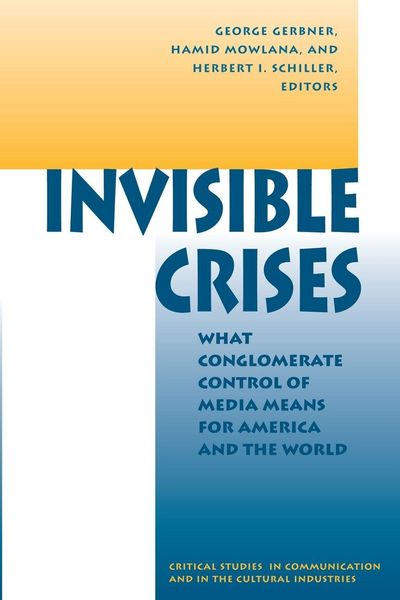
Invisible Crises What Conglomerate Control Of Media Means For America And The World
-
- Hardcover
- Taschenbuch ausgewählt
- eBook
-
Sprache:Englisch
89,99 €
inkl. gesetzl. MwSt.,
Lieferung nach Hause
Beschreibung
Produktdetails
Einband
Taschenbuch
Erscheinungsdatum
05.07.1996
Verlag
Little, Brown and CompanySeitenzahl
304
Maße (L/B/H)
22,9/15,2/1,6 cm
Gewicht
453 g
Sprache
Englisch
ISBN
978-0-8133-2072-4
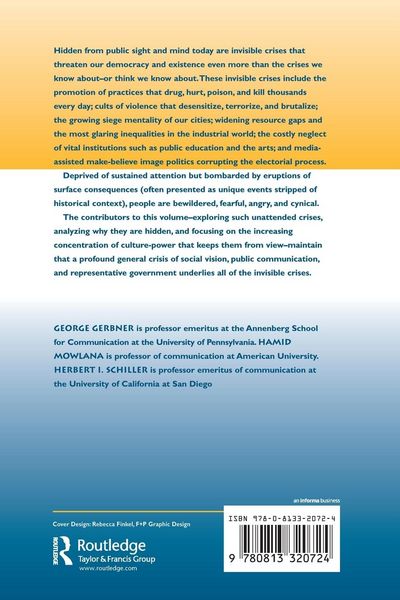
Imagine that automotive engineers deliberately designed the blind spot, and to this day perpetuate its existence, in order to terrorize and kill human beings. In so imagining you are actually visualizing a phenomenon perpetrated by the dominant mass media--that of deliberately blanking out critical conditions and developments whose imagery would pose an unacceptable challenge to the dominant structures of culture-power. Such "invisible crises" are the subject of this book.
Kundinnen und Kunden meinen
Verfassen Sie die erste Bewertung zu diesem Artikel
Helfen Sie anderen Kund*innen durch Ihre Meinung
Kurze Frage zu unserer Seite
Vielen Dank für dein Feedback
Wir nutzen dein Feedback, um unsere Produktseiten zu verbessern. Bitte habe Verständnis, dass wir dir keine Rückmeldung geben können. Falls du Kontakt mit uns aufnehmen möchtest, kannst du dich aber gerne an unseren Kund*innenservice wenden.
zum Kundenservice