Gutscheinbedingungen

**Gültig vom 15.06.2026 bis 17.06.2026 | Gültig für nicht preisgebundene fremdsprachige Bücher | Einzelne Artikel können ausgeschlossen sein | Maximaler rabattfähiger Warenkorbwert 500 € | Nicht kombinierbar mit weiteren Aktionen | Nur einmal pro Person einlösbar | Nur solange der Vorrat reicht

  • Produktbild: Integrated Science
  • Produktbild: Integrated Science

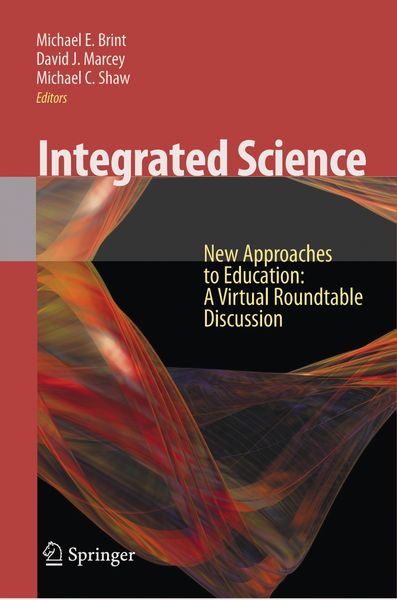
Integrated Science New Approaches to Education A Virtual Roundtable Discussion

43,99 €

inkl. gesetzl. MwSt., Versandkostenfrei

Lieferung nach Hause

Beschreibung

Produktdetails

Einband

Taschenbuch

Erscheinungsdatum

24.11.2008

Herausgeber

Michael E. Brint + weitere

Verlag

Springer Us

Seitenzahl

148

Maße (L/B/H)

23,5/15,5/1 cm

Gewicht

260 g

Auflage

2009

Sprache

Englisch

ISBN

978-0-387-84852-5

Beschreibung

Produktdetails

Einband

Taschenbuch

Erscheinungsdatum

24.11.2008

Herausgeber

Verlag

Springer Us

Seitenzahl

148

Maße (L/B/H)

23,5/15,5/1 cm

Gewicht

260 g

Auflage

2009

Sprache

Englisch

ISBN

978-0-387-84852-5

Herstelleradresse

Springer-Verlag KG
Sachsenplatz 4-6
1201 Wien
AT

Email: ProductSafety@springernature.com

Kundinnen und Kunden meinen

0 Bewertungen

Informationen zu Bewertungen

Zur Abgabe einer Bewertung ist eine Anmeldung im Konto notwendig. Die Authentizität der Bewertungen wird von uns nicht überprüft. Wir behalten uns vor, Bewertungstexte, die unseren Richtlinien widersprechen, entsprechend zu kürzen oder zu löschen.

Die Bewertungen sind nach Format, Anzahl Sterne und Datum sortiert.

Verfassen Sie die erste Bewertung zu diesem Artikel

Helfen Sie anderen Kund*innen durch Ihre Meinung

Kundinnen und Kunden meinen

0 Bewertungen filtern

  • Produktbild: Integrated Science
  • Produktbild: Integrated Science
  • Integrated Sciences: New Approaches to Education A Virtual Roundtable Discussion Springer Publications Edited by Michael Brint, David Marcey, Michael Shaw Preface PART ONE: THE PROMISES AND CHALLENGES OF INTEGRATED SCIENCE Question 1: In what ways can or should science and government be integrated? Al Gore, Vice-President, United States of America (1993-2001); Nobel Laureate copyright forthcoming) Bruce Alberts, Former President (1993 – 2005), U.S. National Academy of Sciences Question 2: What are the promises and challenges of scientific integration? Elias A. Zerhouni, M.D., Director, National Institutes of Health. James J. Duderstadt, President Emeritus and University Professor of Science and Engineering at the University of Michigan. PART TWO: THE INTEGRATION OF ACADEMIC SCIENCE AND INDUSTRY Question 3: Should business and industry create integrative partnerships with academic science? Stanley Aronowitz, Distinguished Professor of Sociology and Director of the Cultural Studies Program at the Graduate Center, City University of New York. David L. Kirp, Professor, Goldman School of Public Policy, University of California, Berkeley. Question 4: What are the institutional obstacles to the integration of academic science and industry? Hank Riggs, Founding President and Trustee, Keck Graduate Institute William A. Haseltine, President, William A. Haseltine Foundation PART THREE: THE IMPLICATIONS OF INTERDISCIPLINARY SCIENCE ON EDUCATION AND TRAINING Question 5: What are the long term implications of integration/interdisciplinary science on traditional disciplines and their professional associations (turf wars)? Steven Brint, Associate Dean and Professorof Sociology at the University of California, Riverside Paul Grobstein, Eleanor A. Bliss Professor ofBiology, Bryn Mawr College Question 6: What are the implications of integrated science for liberal arts education and pedagogy at the undergraduate level? William Wulf, University Professor, University of Virginia, President Emeritus, National Academy of Engineering Donald Kennedy, President Emeritus at Stanford University. Question 7: Do the new directions in scientific training have an impact on developing a more diverse workforce? Rita R. Colwell, University of Maryland and 11th Director of the National Science Foundation Donald Kennedy, Bing Professor of Environmental Science and President emeritus at Stanford University. Question 8: What are the implications for training at the Master’s level? Rita R. Colwell, University of Maryland and 11th Director of the National Science Foundation Sheila Tobias, National Outreach Coordinator for the Professional Science Master’s (1997-2005) Question 9: What are the implications for training at the doctoral level? David Baltimore, Robert A. Millikan Professor of Biology at California Institute of Technology Chris M. Golde, Associate Vice Provost for Graduate Education, Stanford University H. Alix Gallagher, Senior Researcher, SRI International Thomas Cech, Nobel Laureate; President of the Howard Hughes Medical Institute, Distinguished Professor of Chemistry and Biochemistry, University of Colorado Gerald Rubin, Vice President and Director, Janelia Farm Research Campus, Howard Hughes Medical Institute Question 10: What are the architectural implications of integration? Robert Venturi, Pritzker Prize winner in Architecture and founding principal of the firm Venturi, Scott Brown and Associates. Claire M.