Gutscheinbedingungen

**Gültig vom 15.06.2026 bis 17.06.2026 | Gültig für nicht preisgebundene fremdsprachige Bücher | Einzelne Artikel können ausgeschlossen sein | Maximaler rabattfähiger Warenkorbwert 500 € | Nicht kombinierbar mit weiteren Aktionen | Nur einmal pro Person einlösbar | Nur solange der Vorrat reicht

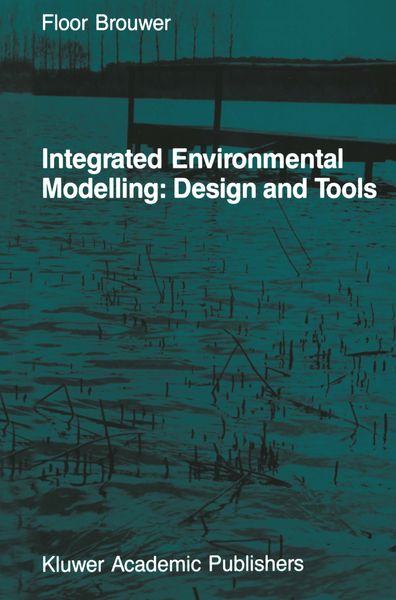
  • Produktbild: Integrated Environmental Modelling: Design and Tools
  • Produktbild: Integrated Environmental Modelling: Design and Tools
Band 2

Integrated Environmental Modelling: Design and Tools

48,99 €

inkl. gesetzl. MwSt., Versandkostenfrei

Lieferung nach Hause

Beschreibung

Produktdetails

Einband

Taschenbuch

Erscheinungsdatum

08.10.2011

Verlag

Springer Netherland

Seitenzahl

223

Maße (L/B/H)

23,5/15,5/1,3 cm

Gewicht

365 g

Auflage

Softcover reprint of the original 1st ed. 1987

Sprache

Englisch

ISBN

978-94-010-8117-7

Beschreibung

Produktdetails

Einband

Taschenbuch

Erscheinungsdatum

08.10.2011

Verlag

Springer Netherland

Seitenzahl

223

Maße (L/B/H)

23,5/15,5/1,3 cm

Gewicht

365 g

Auflage

Softcover reprint of the original 1st ed. 1987

Sprache

Englisch

ISBN

978-94-010-8117-7

Herstelleradresse

Springer-Verlag KG
Sachsenplatz 4-6
1201 Wien
AT

Email: ProductSafety@springernature.com

Kundinnen und Kunden meinen

0 Bewertungen

Informationen zu Bewertungen

Zur Abgabe einer Bewertung ist eine Anmeldung im Konto notwendig. Die Authentizität der Bewertungen wird von uns nicht überprüft. Wir behalten uns vor, Bewertungstexte, die unseren Richtlinien widersprechen, entsprechend zu kürzen oder zu löschen.

Die Bewertungen sind nach Format, Anzahl Sterne und Datum sortiert.

Verfassen Sie die erste Bewertung zu diesem Artikel

Helfen Sie anderen Kund*innen durch Ihre Meinung

Kundinnen und Kunden meinen

0 Bewertungen filtern

  • Produktbild: Integrated Environmental Modelling: Design and Tools
  • Produktbild: Integrated Environmental Modelling: Design and Tools
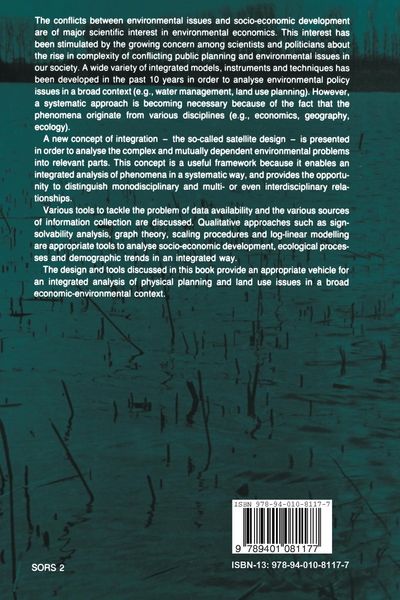
  • 1. Introduction.- 1.1. Regional economic modelling.- 1.2. Environmental issues in regional economic modelling.- 1.3. Integrated environmental modelling.- 1.4. Outline of the study.- A. Introduction to Integrated Environmental Modelling: A Survey and an Evaluation.- 2. Integrated Environmental Models: A Survey.- 2.1 Introduction.- 2.2. Multi-objective control of nutrient loadings into a lake.- 2.3. Simulation of regional development and fishery activities.- 2.4. Policy analysis of water management for the Netherlands.- 2.5. Policy analysis to protect an estuary from floods.- 2.6. Economic-environmental-ecological impact analysis of flood plain models.- 2.7. An economic-ecological model for land-marine integrated development.- 2.8. An environmental ecosystem quality management model.- 2.9. A triple layer approach to a national-regional economic- environmental- employment model.- 2.10. Systems approach of economic-environmental-energy analysis.- 2.11. Simulation of the impacts of herbicides on the environment and agriculture.- 2.12. Economic-ecological analysis by simulation and optimization.- 2.13. Urbanization and environmental planning and design.- 2.14. An integrated regional environmental model for physical planning.- 2.15. Interactions between economic-social-ecological systems in a region of intense agriculture.- 2.16. Concluding remarks.- 3. Evaluation of Integrated Environmental Modelling Approaches.- 3.1. Introduction.- 3.2. The objective of study and the objective of analysis.- 3.3. The modules and the mathematical tools.- 3.4. Dimensions of space and time in integrated environmental models.- 3.5. The availability of information in integrated environmental models.- 3.6. Concluding remarks.- B. Methodology and Tools to Operationalize an Integrated Environmental Model.- 4. A Systems Approach to an Integrated Environmental Model.- 4.1. Introduction.- 4.2. Systems theory.- 4.3. Two designs of integration.- 4.3.1. Introduction.- 4.3.2. A horizontal model approach and a vertical model approach.- 4.4. Towards a satellite design of an integrated environmental model.- 4.5. The spatial aggregation level and spatial scale level in regional environmental modelling.- 4.6. Concluding remarks.- 5. Statistical and Econometric Tools to Operationalize an Integrated Environmental Model.- 5.1. Introduction.- 5.2. Systems with binary, qualitative and quantitative information.- 5.2.1. Introduction.- 5.2.2. Interpretation of systems with binary information.- 5.2.3. Interpretation of systems with qualitative information.- 5.2.4. Interpretation of systems with quantitative information.- 5.3. Statistical models with qualitative and quantitative data.- 5.3.1. Introduction.- 5.3.2. Classification and integration of statistical approaches.- 5.3.3. Log-linear models and logit models for contingency table analysis.- 5.3.4. Estimation, assessment and selection for qualitative statistical models.- 5.3.5. A graph approach to multidimensional contingency tables.- 5.4. Multivariate analysis for non-metric data.- 5.4.1. Introduction.- 5.4.2. Multidimensional scaling for ordinal information.- 5.4.3. Homogeneous scaling for nominal information.- 5.5. Concluding remarks.- C. An Integrated Environmental Modelling Approach.- 6. Towards an Integrated Environmental Model For the Biesbosch Area.- 6.1. Introduction.- 6.2 Design of an integrated systems model and the treatment of key phenomena.- 6.3. Causality analysis of an integrated environmental model.- 6.4. Analysis of an integrated environmental model with qualitative information.- 6.5. Concluding remarks.- 7. Outdoor Recreation in the Biesbosch Area.- 7.1. Introduction.- 7.2. A spatial characterization of outdoor recreation.- 7.3. The multivariate nature of outdoor recreation.- 7.3.1. Introduction.- 7.3.2. Homogeneous scaling of outdoor recreation.- 7.3.3. Multidimensional scaling of outdoor recreation.- 7.4. Path analysis and recreational activities.- 7.5. Concluding remarks.- 8. Conclusion.- 8.1. Reflection of the study.- 8.2. Outlook of the study.- References.- Author Index.