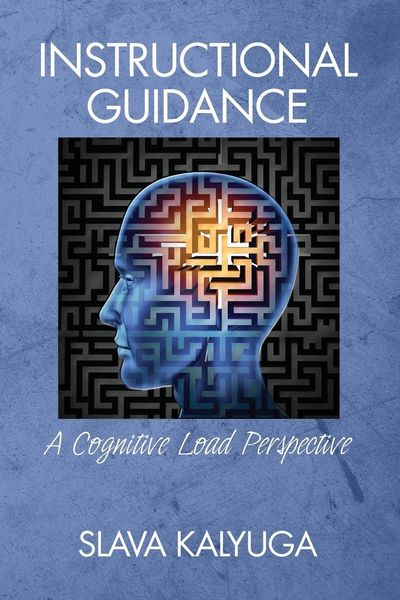
Instructional Guidance A Cognitive Load Perspective
-
- Hardcover
- Taschenbuch ausgewählt
- eBook
-
Sprache:Englisch
77,99 €
inkl. gesetzl. MwSt.,
Lieferung nach Hause
Beschreibung
Produktdetails
Einband
Taschenbuch
Erscheinungsdatum
13.05.2015
Verlag
Information Age PublishingSeitenzahl
268
Maße (L/B/H)
23,4/15,6/1,5 cm
Gewicht
412 g
Sprache
Englisch
ISBN
978-1-68123-134-1
The book explores a cognitive load perspective on instructional guidance. Cognitive load theory is focused on instructional design implications and prescriptions that flow from human cognitive architecture, and it has become one of the leading theories of instructional design. According to this theoretical perspective, the purpose of instructional guidance is to reduce learner potential cognitive overload by providing appropriate information in the right time and in a suitable format. As the learner's level of prior knowledge is considered as the main factor influencing this decision, the effect of learner prior knowledge on effectiveness of instructional methods (the expertise reversal effect in cognitive load theory) provides the basic framework for the book. The fully-guided explicit instruction and minimally-guided inquiry (discovery or exploratory) learning are often discussed in instructional psychology literature as examples of approaches with opposed degrees of guidance provided to the learners. This book considers the whole range of the levels of guidance (including intermediate levels) and approaches the problem of balancing learner guidance from a cognitive load perspective. The significance of this approach is in applying our current knowledge of human cognitive architecture to develop an integrated instructional approach bringing together the best features and advantages of explicit instruction and inquiry learning. Both explicit instruction and inquiry learning approaches have been around for long time, and their proponents can produce evidence of their effectiveness. This evidence needs to be treated within the context of appropriate learning goals in specific instructional settings for specific types of learners. This book provides an unbiased theoretical framework for managing learner instructional guidance and working principles for selecting appropriate levels and methods of instructional guidance (e.g., sequences of exploratory problems and explicit instruction; forms and levels of embedded guidance; and adapting methodologies) optimal for learners at different levels of prior knowledge.
Kundinnen und Kunden meinen
Verfassen Sie die erste Bewertung zu diesem Artikel
Helfen Sie anderen Kund*innen durch Ihre Meinung
Kurze Frage zu unserer Seite
Vielen Dank für dein Feedback
Wir nutzen dein Feedback, um unsere Produktseiten zu verbessern. Bitte habe Verständnis, dass wir dir keine Rückmeldung geben können. Falls du Kontakt mit uns aufnehmen möchtest, kannst du dich aber gerne an unseren Kund*innenservice wenden.
zum Kundenservice