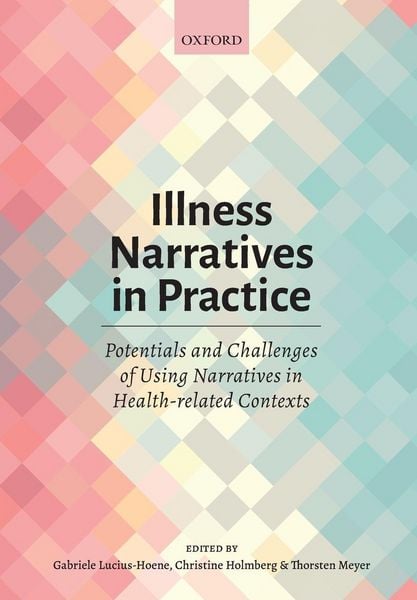
Illness Narratives in Practice Potentials and Challenges of Using Narratives in Health-Related Contexts
-
- Taschenbuch ausgewählt
- eBook
-
Sprache:Englisch
77,99 €
inkl. gesetzl. MwSt.,
Lieferung nach Hause
Beschreibung
Produktdetails
Einband
Taschenbuch
Erscheinungsdatum
19.12.2018
Herausgeber
Lucius-Hoene Gabriele + weitereVerlag
Oxford University PressSeitenzahl
380
Maße (L/B/H)
24,4/17/2 cm
Gewicht
666 g
Sprache
Englisch
ISBN
978-0-19-880666-0
What is it like to live with an illness? How do diagnostic procedures, treatments, and other encounters with medical institutions affect a patient's private and social life? By asking these types of questions, illness narratives have gained a reputation as a scientific domain in medicine in the last thirty years. Today, a patient's story plays an important role in doctor-patient communication and the development of a healing relationship. However, whereas patient experiences have been well acknowledged, methodologically reflected upon and widely collected as research data, less consideration has been invested in exploring how they work in practice. Used in the context of diagnosis, treatment, and teaching, patient stories give us a new perspective on how healthcare could be improved. Illness Narratives in Practice: Potentials and Challenges of Using Narratives in Health-related Contexts highlights the problems, challenges, and opportunities we face when using patient perspectives in practice and research in a clear format to provide readers with a comprehensive overview of this field. It investigates the epistemological foundations and communicational properties of illness narratives, as well as the pragmatic effects of using them as clinical and educational instruments. Significantly, it presents new examples from patient intakes and interviews that illustrate the disparity in communication between patients and medical professionals. The studies in this book also evaluate the experiences of medical practitioners and students who consciously use patient narratives as a tool for improved communication and diagnosis. Divided into eight sections with practical examples for medical teaching and practice, this book covers the use of patient narratives in communication training and decision making across medicine and psychotherapy. In addition, it reflects on the ethical aspects of working with a patient's personal experience of their illness, reports on cultural differences across the globe, and analyses how patients' stories are used in politics and the media. Written by scholars from multiple disciplines across clinical and theoretical fields, this rich resource provides a critical stance on the use of narratives in medical research, education, and practice.
Kundinnen und Kunden meinen
Verfassen Sie die erste Bewertung zu diesem Artikel
Helfen Sie anderen Kund*innen durch Ihre Meinung
Kurze Frage zu unserer Seite
Vielen Dank für dein Feedback
Wir nutzen dein Feedback, um unsere Produktseiten zu verbessern. Bitte habe Verständnis, dass wir dir keine Rückmeldung geben können. Falls du Kontakt mit uns aufnehmen möchtest, kannst du dich aber gerne an unseren Kund*innenservice wenden.
zum Kundenservice