Gutscheinbedingungen

**Gültig vom 15.06.2026 bis 17.06.2026 | Gültig für nicht preisgebundene fremdsprachige Bücher | Einzelne Artikel können ausgeschlossen sein | Maximaler rabattfähiger Warenkorbwert 500 € | Nicht kombinierbar mit weiteren Aktionen | Nur einmal pro Person einlösbar | Nur solange der Vorrat reicht

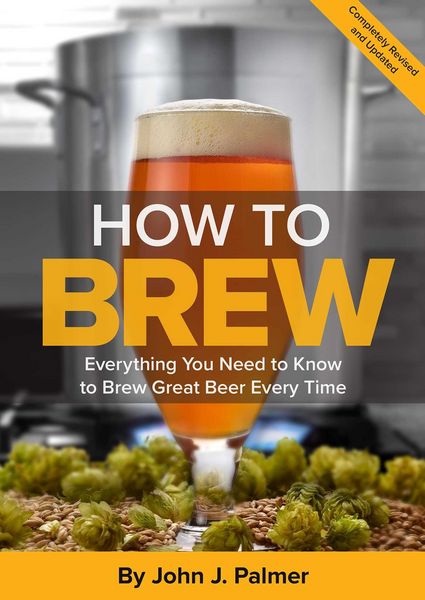
Produktbild: How to Brew

How to Brew Everything You Need to Know to Brew Great Beer Every Time

22,99 €

inkl. gesetzl. MwSt., Versandkostenfrei

Lieferung nach Hause

Beschreibung

Produktdetails

Einband

Taschenbuch

Erscheinungsdatum

01.06.2017

Verlag

Brewers Publications

Maße (L/B/H)

25,3/18/3,5 cm

Gewicht

1005 g

Auflage

4th edition

Sprache

Englisch

ISBN

978-1-938469-35-0

Beschreibung

Produktdetails

Einband

Taschenbuch

Erscheinungsdatum

01.06.2017

Verlag

Brewers Publications

Maße (L/B/H)

25,3/18/3,5 cm

Gewicht

1005 g

Auflage

4th edition

Sprache

Englisch

ISBN

978-1-938469-35-0

Herstelleradresse

Libri GmbH
Europaallee 1
36244 Bad Hersfeld
DE

Email: gpsr@libri.de

Kundinnen und Kunden meinen

0 Bewertungen

Informationen zu Bewertungen

Zur Abgabe einer Bewertung ist eine Anmeldung im Konto notwendig. Die Authentizität der Bewertungen wird von uns nicht überprüft. Wir behalten uns vor, Bewertungstexte, die unseren Richtlinien widersprechen, entsprechend zu kürzen oder zu löschen.

Die Bewertungen sind nach Format, Anzahl Sterne und Datum sortiert.

Verfassen Sie die erste Bewertung zu diesem Artikel

Helfen Sie anderen Kund*innen durch Ihre Meinung

Kundinnen und Kunden meinen

0 Bewertungen filtern

Weitere Artikel findest du in

Die Leseprobe wird geladen.
  • Produktbild: How to Brew
  • Table of Contents
    Acknowledgments
    Table of Contents
    List of Tips, Tables, & Significant Figures
    Introduction
    Section I—Brewing Beer Kits
    Chapter 1 – A Crash Course in Brewing
    What Do I Do?
    Brew Day
    Equipment Needed
    Preparation
    Making Wort
    Fermentation Week(s)
    Bottling Day
    Serving Day
    But Wait! There's More!
    Chapter Two – Sanitation
    The Road to Good Brewing
    Preparation
    Sanitation
    Cleaning Products
    Cleaning Your Equipment
    Sanitizing Products
    Heat
    Cleaning and Sanitizing Final Thoughts
    Record Keeping
    Example Recipe Form
    Chapter 3 – A Short Discourse on Malting and Brewing
    A Brief Discussion of Barley and Malt
    The Production of Malt Extract
    Cooking the Wort
    Full Boil vs. Partial Boil
    Building a Beer
    Chapter 4 – Malt Extract and Beer Kits
    Choosing a Good Kit
    Shopping for Extracts
    How Much Extract to Use
    Gravity vs. Fermentability
    Steeping Specialty Grains
    Chapter 5– Hops
    What Are They?
    Why Are Hops Bitter?
    How Are They Used?
    First Wort Hopping
    Bittering
    Flavoring
    Finishing (Whirlpool Hops)
    Dry Hopping
    Hop Forms - Pellets, Plug and Whole
    Hop Variety Types
    Bittering Hop Varieties
    Dual Purpose Hop Varieties
    Aroma Hop Varieties
    How to Measure Hops
    Hop Bitterness (IBU) Calculations
    Gravity of the Boil
    Utilization
    Hop IBU Nomograph
    Chapter 6 – Yeast and Fermentation
    How Yeast Work
    Defining Fermentation ...................... 99
    Lagtime or Adaptation Phase ..... 100
    High growth or Attenuative Phase 101
    Conditioning Phase...................... 102
    Cold Conditioning / Lagering...... 103
    Building a Better Fermentation ........ 104
    Oxygen and Aeration ................. 105
    Nitrogen ...................................... 106
    Necessary Minerals...................... 107
    Nutritional Supplements ............. 108
    Open vs. Closed Fermentation ........ 109
    Chapter 7 –Managing Your Yeast
    Yeast Types
    Yeast Forms
    Yeast Strains
    Dry Yeast Strains
    Liquid Yeast Strains
    Yeast Nutritional Needs
    Nutritional Supplements
    Oxygen
    Aeration is Good, Oxidation is Bad
    Preparing Yeast and Yeast Starters
    Preparing Dry Yeast
    Preparing Liquid Yeast
    When Is My Yeast Starter Ready to Pitch?
    Using Yeast From Commercial Beers
    Support Your Local Micro
    Simple Yeast Ranching
    Chapter 8 – Water For Extract Brewing
    Two Things
    What is Good Brewing Water?
    How to Read a Water Quality Report
    Adding Brewing Salts
    Chapter 9 – Brewing Your Second Batch
    First Recipe
    Beginning the Boil
    The Hot Break
    Hop Additions
    Kettle Fining
    Cooling the Wort
    Water Bath
    Ice
    Copper Wort Chillers
    Choosing Your Fermentor
    Buckets vs. Carboys
    Airlocks vs. Blowoffs
    Transferring the Wort
    Conducting Your Fermentation
    Pitching the Yeast
    Fermentation Location
    Fermentation
    Racking
    Estimating the Alcohol Content
    Chapter 10 – Priming, Bottling, and Kegging
    When to Bottle
    Bottle Cleaning
    Fining
    What Sugar Should I Prime With?
    Commercial Priming Agents
    Bottle Filling
    Storage
    Kegging
    Chapter 11 – Brewing Lager Beer
    Yeast Differences
    Additional Time
    Lower Temperatures
    Autolysis
    Lager Yeast Fermentation
    When to Begin Lagering
    Aagh!! It Froze!!
    Should I Add More Yeast?
    Maintaining Lager Temperature
    Priming and Bottling of Lager Beer
    Bottling
    Brewing American Lager Beer
    Recipe—Typical American Lager
    Chapter 12 – Brewing Strong Beers
    Chapter 13 – Brewing Fruit Beers
    Chapter 14 – Brewing Sour Beers
    Section II—All-Grain Brewing
    Chapter 15 – Understanding Malted Barley & Adjuncts
    What is Malting?
    Maillard Reactions and Flavor Development
    Malt Types and Usages
    Base Malts
    Kilned Malts
    Caramel Malts
    Roasted Malts
    Other Grains and Adjuncts
    How To Read a Malt Analysis Sheet
    Chapter 16 – How the Mash Works
    An Allegory
    Defining the Mash
    The Acid Rest
    Doughing-In and Beta Glucanase
    The Protein Rest and Modification
    Starch Conversion/Saccharification Rest
    Other Factors for Starch Conversion
    Chapter 17 – Residual Alkalinity, Malt Acidity and Mash pH
    The six concepts
    Source Water
    The Usual Suspects
    Residual Alkalinity is the Cornerstone of Mash pH
    Water Chemistry + Malt Chemistry = Mash Chemistry
    Mash pH Sets up the Beer pH
    Chapter 18 – Adjusting Water for Style
    Famous Waters and their Beers
    The dogma of Virgin Water
    Adjusting water for Style
    Sulfate to Chloride Ratio
    Total Dissolved Solids
    Adjustment Examples
    Chapter 19 – The Methods of Mashing
    Single Temperature Infusion
    Multi-Rest Mashing
    Infusion Calculations
    Multiple Rest Infusion Example
    Decoction Mashing
    Summary
    Chapter 20 – What to Expect When You are Extracting
    Extraction and Maximum Yield
    Efficiency and Typical Yield
    Calculating Your Efficiency
    Water to Grist Ratio and First Runnings
    Planning Recipe Malt Quantities
    Chapter 21 – Getting the Wort Out (Lautering)
    A Good Crush Means Good Lautering
    Lautering
    What is Mashout?
    What is Recirculation?
    What is Sparging?
    Rinsing Versus Draining
    Water to Grist Ratio and First Runnings
    Sparging Calculations
    Chapter 22 – Your First All-Grain Batch
    Additional Equipment
    Suggested Recipe
    Partial Mash Option
    Brew In A Bag Option
    Starting the Mash
    Conducting the Mash
    Conducting the Lauter
    Variations on a Common Theme
    Section III—Recipes, Experiment'g, and Troubleshoot'g
    Chapter 23 – Some of My Favorite Styles and Recipes
    Style Descriptions
    The Ale Styles
    Wheat
    Pale Ales
    English Special Bitter
    India Pale Ale
    American Pale Ale
    American Amber Ale
    Brown Ales
    Oud Bruin
    Porter
    Stout
    Barleywine
    The Lager Styles
    Pilsner
    Classic American Pilsner
    California Common (Steam-type)
    Bock
    Vienna
    Oktoberfest
    Chapter Summary
    Chapter 24 – Developing Your Own Recipes
    Developing Your Own Recipes
    Discretion Is the Better Part of Flavor
    Smash
    Increasing the Body
    Changing Flavors
    Brewing Sugars
    Toasting Your Own Malt
    Chapter 25 – Is My Beer Ruined?
    Common Problems
    Common Off-Flavors
    Section IV—Appendices
    Appendix A
    Using Hydrometers
    Appendix B
    Beer Color
    Basis of Color Rating
    Other Color Factors
    Estimating Beer Color
    Appendix C
    Beer Clarity
    What is Haze?
    Fixing Haze in the Recipe
    Fixing Haze With Clarifiers
    Appendix D
    Building Wort Chillers
    Immersion Chillers
    Counterflow Chillers
    Plate Chillers
    Appendix E
    Lauter Tun Design For Batch Sparging
    Choosing A Cooler
    Rinsing vs. Draining—A Re-Cap
    False Bottom, Manifold, Or Screen?
    Siphon Or Bulkhead?
    Building Copper Pipe Manifolds
    Building A Stainless Steel Braided Ring
    Home Mashing Setups
    Appendix F
    Lauter Tun Design for Continuous Sparging
    Fluid Mechanics
    Designing Pipe Manifolds
    Designing Ring Manifolds
    How To Continuous Sparge
    Continuous Sparging Procedure
    Appendix G
    Brewing Metallurgy
    General Information and Cleaning
    Aluminum
    Copper
    Brass
    Carbon Steel
    Stainless Steel
    Galvanic Corrosion
    Soldering, Brazing, and Welding
    Toxicity of Metals
    Aluminum
    Cadmium
    Chromium
    Copper
    Iron
    Lead
    Zinc
    Appendix H
    Metric Conversions
    References
    Glossary
    Index