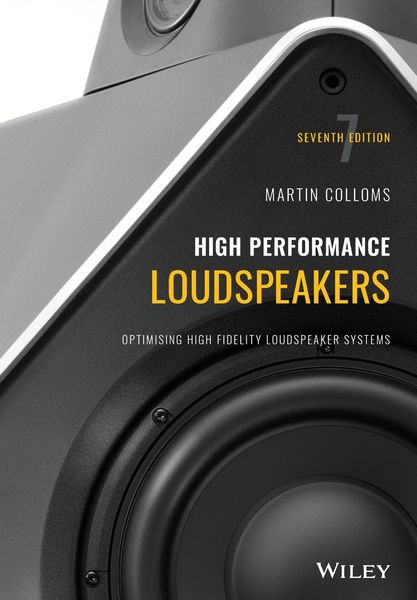
High Performance Loudspeakers Optimising High Fidelity Loudspeaker Systems
-
- Taschenbuch ausgewählt
- eBook
-
Sprache:Englisch
109,99 €
inkl. gesetzl. MwSt.,
Lieferung nach Hause
Beschreibung
Produktdetails
Einband
Taschenbuch
Erscheinungsdatum
24.09.2018
Verlag
WileySeitenzahl
704
Maße (L/B/H)
24,4/17/3,8 cm
Gewicht
1043 g
Auflage
7th edition
Sprache
Englisch
ISBN
978-1-118-41353-1
A technology overview of what goes into the design and evaluation of a high performance loudspeaker and covers all the latest advances in the field The design of high performance loudspeakers requires a mix of developed skills in electroacoustics, high fidelity sound reproduction and subjective evaluation. Taking a designer's view of the subject, this new edition of High Performance Loudspeakers, Seventh Edition provides a comprehensive, timely and practical knowledge base to aid the design of superior loudspeaker systems fit for purpose. It is updated throughout with the latest progress in research and technology, synthesis and analysis, digital signal processing incorporated products, automated production test systems and compact designs. This Seventh Edition of the highly successful guide to the design and specification of high quality loudspeakers and loudspeaker systems addresses the issue of where higher performance is required and shows how the numerous considerations -- including application, target price, size, aspiration and particular market -- lead to a complex mix of design and engineering decisions. The book has also been substantially revised to reflect the many changes in the technology of loudspeakers and includes two brand new chapters -- one covering ultra-compact systems and DSP integration, and the second providing details of the loudspeaker systems design process beginning with the target function. * Offers a complete overview of the technology * Thoroughly updated with new content to reflect the latest sound quality advances in the field while retaining the firm theoretical foundation of previous editions * Presents a designer's point of view of the field, helping to equip both amateur enthusiasts and academically trained graduates with the finer points of industry practice * Covers all the newest developments in the field of high performance loudspeakers * Offers a critical and objective approach to all subjects covered directed to sound quality, rather than a simple spelling out of theory and facts * Appeals to both amateur speaker builders as a source of ideas, and to professional speaker designers as a critical review of competitive technologies and features Acknowledged industry-wide as the definitive work on speaker design and analysis, High Performance Loudspeakers, Seventh Edition is essential reading for audio engineers, speaker designers, equipment designers and students of acoustic engineering, electronics and electro-acoustics. It will also prove invaluable to students of audio electronics, broadcasting and sound recording, and be of interest to amateur loudspeaker builders, and including authors and journalists in audio.
Kundinnen und Kunden meinen
Verfassen Sie die erste Bewertung zu diesem Artikel
Helfen Sie anderen Kund*innen durch Ihre Meinung
Kurze Frage zu unserer Seite
Vielen Dank für dein Feedback
Wir nutzen dein Feedback, um unsere Produktseiten zu verbessern. Bitte habe Verständnis, dass wir dir keine Rückmeldung geben können. Falls du Kontakt mit uns aufnehmen möchtest, kannst du dich aber gerne an unseren Kund*innenservice wenden.
zum Kundenservice