Beschreibung
Details
Einband
Gebundene Ausgabe
Erscheinungsdatum
02.03.2000
Verlag
University Press Of KentuckySeitenzahl
160
Maße (L/B/H)
22,2/14,5/1,1 cm
Gewicht
333 g
Sprache
Englisch
ISBN
978-0-8131-2147-5
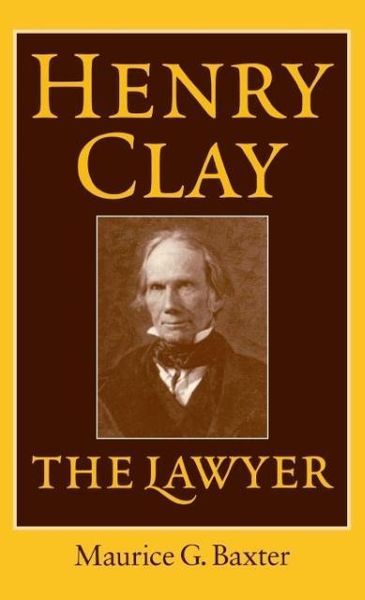
Though he was best known as a politician, Henry Clay (1777-1852) maintained an active legal practice for more than fifty years. He was a leading contributor both to the early development of the U.S. legal system and to the interaction between law and politics in pre-Civil War America. During the years of Clay's practice, modern American law was taking shape, building on the English experience but working out the new rules and precedents that a changing and growing society required. Clay specialized in property law, a natural choice at a time of entangled land claims, ill-defined boundaries, and inadequate state and federal procedures. He argued many precedent-setting cases, some of them before the U.S. Supreme Court. Maurice Baxter contends that Clay's extensive legal work in this area greatly influenced his political stances on various land policy issues. During Clay's lifetime, property law also included questions pertaining to slavery. With Daniel Webster, he handled a very significant constitutional case concerning the interstate slave trade. Baxter provides an overview of the federal and state court systems of Clay's time. After addressing Clay's early legal career, he focuses on Clay's interest in banking issues, land-related economic matters, and the slave trade. The portrait of Clay that emerges from this inquiry shows a skilled lawyer who was deeply involved with the central legal and economic issues of his day.
Unsere Kundinnen und Kunden meinen
Verfassen Sie die erste Bewertung zu diesem Artikel
Helfen Sie anderen Kund*innen durch Ihre Meinung
Kurze Frage zu unserer Seite
Vielen Dank für dein Feedback
Wir nutzen dein Feedback, um unsere Produktseiten zu verbessern. Bitte habe Verständnis, dass wir dir keine Rückmeldung geben können. Falls du Kontakt mit uns aufnehmen möchtest, kannst du dich aber gerne an unseren Kund*innenservice wenden.
zum Kundenservice