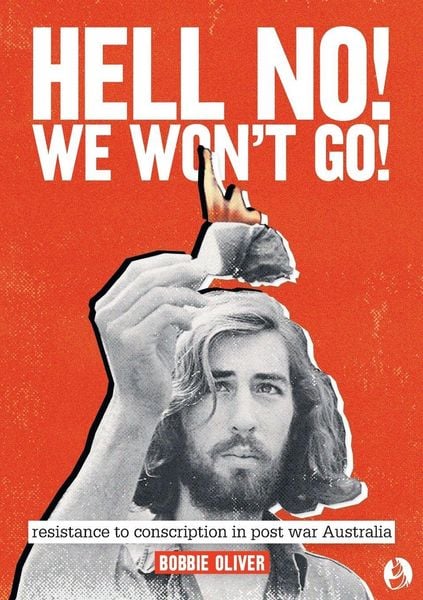
Hell No! We Won't Go! Resistance to Conscription in Postwar Australia
-
- Englisch ausgewählt
32,99 €
inkl. gesetzl. MwSt.,
Lieferung nach Hause
Beschreibung
Produktdetails
Einband
Taschenbuch
Erscheinungsdatum
07.02.2022
Verlag
Interventions IncSeitenzahl
300
Maße (L/B/H)
21/14,8/1,6 cm
Gewicht
391 g
Sprache
Englisch
ISBN
978-0-645-25341-2
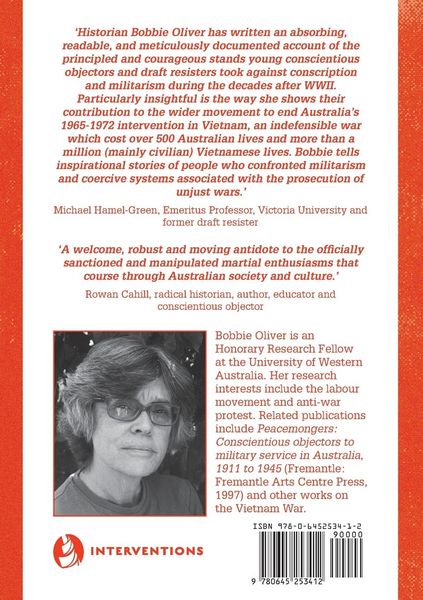
'I am nearly insane .... I cannot take much more.' Dennis O'Donnell enlisted when he was balloted into National Service in 1967, but, like others, was sickened by the training. When his application for exemption as a conscientious objector was rejected he went absent without leave, was arrested, court martialled and imprisoned. Treatment of military prisoners included solitary confinement, and deprivation of sleep, light, food and bathing facilities. Another resister, Simon Townsend, was detained in a tiny cell and woken by guards every half hour. What crimes did Simon and Dennis commit? They did not want to be trained to kill people with whom they had no quarrel. Their experiences sparked questions in federal parliament about the treatment of military prisoners, and helped the change the law. Using court transcripts, private correspondence and other unpublished records, Hell no! We won't go! records the stories of many young men and their supporters who opposed military conscription in Australia during two National Service schemes: 1950 to 1959 and 1964 to 1972. While resistance to military conscription during Australia's involvement in the Vietnam War is better known, the 1950s scheme also had many opponents. Hundreds of young men applied for exemption as conscientious objectors. While some were successful, others experienced similar treatment to O'Donnell and Townsend when they refused to enlist. Some stories feature household names: Bill White, a teacher, who was dragged from his home by police; the Mowbray triplets, who were not balloted in but chose to make a stand on behalf of others; Michael Matteson who remained underground for 14 months while 'making a monkey out of cops' with public appearances on TV and at university campuses. Others were almost unknown. They had many different reasons for their resistance, but they all had one thing in common: they refused to be conscripted, whether or not Australia was involved in a war. Ultimately, their resistance, culminating in massive protests during the Vietnam War, changed public opinion and changed Australia forever.
Kundinnen und Kunden meinen
Verfassen Sie die erste Bewertung zu diesem Artikel
Helfen Sie anderen Kund*innen durch Ihre Meinung
Kurze Frage zu unserer Seite
Vielen Dank für dein Feedback
Wir nutzen dein Feedback, um unsere Produktseiten zu verbessern. Bitte habe Verständnis, dass wir dir keine Rückmeldung geben können. Falls du Kontakt mit uns aufnehmen möchtest, kannst du dich aber gerne an unseren Kund*innenservice wenden.
zum Kundenservice