Gutscheinbedingungen

**Gültig vom 15.06.2026 bis 17.06.2026 | Gültig für nicht preisgebundene fremdsprachige Bücher | Einzelne Artikel können ausgeschlossen sein | Maximaler rabattfähiger Warenkorbwert 500 € | Nicht kombinierbar mit weiteren Aktionen | Nur einmal pro Person einlösbar | Nur solange der Vorrat reicht

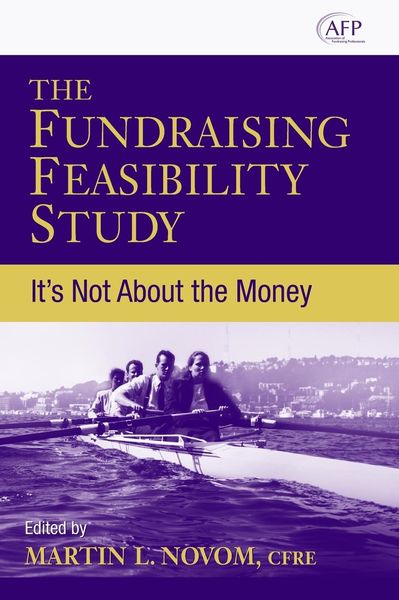
Produktbild: The Fundraising Feasibility Study

The Fundraising Feasibility Study It's Not About the Money (AFP Fund Development Series)

97,99 €

inkl. gesetzl. MwSt., Versandkostenfrei

Lieferung nach Hause

Beschreibung

Produktdetails

Einband

Gebundene Ausgabe

Erscheinungsdatum

12.03.2007

Herausgeber

Martin L. Novom

Verlag

John Wiley & Sons Inc

Seitenzahl

312

Maße (L/B/H)

26/18,3/2,1 cm

Gewicht

790 g

Auflage

1. Auflage

Sprache

Englisch

ISBN

978-0-470-12074-3

Beschreibung

Rezension

"If you want to learn as much as possible in one publication about precampaign feasibility studies, this is the book for you." ( CharityChannel.com , 7/28/08)

Produktdetails

Einband

Gebundene Ausgabe

Erscheinungsdatum

12.03.2007

Herausgeber

Martin L. Novom

Verlag

John Wiley & Sons Inc

Seitenzahl

312

Maße (L/B/H)

26/18,3/2,1 cm

Gewicht

790 g

Auflage

1. Auflage

Sprache

Englisch

ISBN

978-0-470-12074-3

Herstelleradresse

Libri GmbH
Europaallee 1
36244 Bad Hersfeld
DE

Email: gpsr@libri.de

Kundinnen und Kunden meinen

0 Bewertungen

Informationen zu Bewertungen

Zur Abgabe einer Bewertung ist eine Anmeldung im Konto notwendig. Die Authentizität der Bewertungen wird von uns nicht überprüft. Wir behalten uns vor, Bewertungstexte, die unseren Richtlinien widersprechen, entsprechend zu kürzen oder zu löschen.

Die Bewertungen sind nach Format, Anzahl Sterne und Datum sortiert.

Verfassen Sie die erste Bewertung zu diesem Artikel

Helfen Sie anderen Kund*innen durch Ihre Meinung

Kundinnen und Kunden meinen

0 Bewertungen filtern

Die Leseprobe wird geladen.
  • Produktbild: The Fundraising Feasibility Study
  • ABOUT THE EDITOR XV

    ABOUT THE AUTHORS XVII

    PREFACE XXI

    CHAPTER 1 Stepping Up to the Challenge-Philanthropic Program Effectiveness 1
    Martin L. Novom, CF RE

    Important Trends 1

    An Increase in Requests for Charitable Contributions 1

    Intensification of Public Scrutiny on the Nonprofit Sector 2

    Greater Attention by Donors on Improving Fundraising Effectiveness 2

    Increased Emphasis on Improving the Quality of Relationships with Donors 3

    How Nonprofit Organizations Are Responding to These Trends 3

    Increasing Philanthropic Program Budgets 3

    Renewed Emphasis on Ethics and Ethical Behavior 4

    Greater Focus on Strategic Thinking in Philanthropic Programs 4

    Increasing Sophistication of Trustees and Staff 4

    Is This Enough? 5

    Paying Attention to Risk 5

    Minimizing Risk and Maximizing Effectiveness 6

    CHAPTER 2 Looking in the Mirror-What Is a Precampaign Planning Study? 7
    Elliot S. Oshry, CF RE

    Introduction 7

    Planning or Feasibility? 7

    Benefits of a Well-Crafted Study 8

    Case for Support 9

    Gift Table 9

    Quality Control 10

    Educational Organizations 12

    Healthcare Organizations 12

    Areas of Inquiry 13

    Objectives and Deliverables 14

    Process 14

    Timing 15

    When to Do a Study 16

    Summary 17

    CHAPTER 3 Standing at the Threshold-It Takes More Than a Feasibility Study to Get Ready for a Capital Campaign 19
    Betty Ann Copley Harris, FA HP

    Introduction 19

    Are You Ready to Undertake a Capital Campaign? 20

    Why Conduct a Study? 21

    Two Years before Starting a Campaign 21

    One Year before the Campaign 21

    Six Months before the Campaign 22

    Form a Precampaign Planning Committee 22

    You Know You're Ready When . . . 23

    What You Want from Your Feasibility Study 23

    Elements of Campaign Success 24

    Benefits of a Feasibility Study 25

    Gaining Internal Consensus 25

    Board Members Begin Thinking of Their Own Commitments 26

    The Urgency of the Case for Support Is Validated 26

    Top 10 Prospects Are Qualified 26

    Cultivation Value 27

    Donors Are Asked for Advice 27

    The Fundraising Acumen of Leaders and Staff Is Tested 27

    Development Off ice Readiness Is Assessed 27

    Your Image in the Community Is Confirmed 28

    The "Feasibility" of Your Campaign Goal Is Tested 28

    The Best Sources for Campaign Leadership Are Confirmed 29

    Timing for Your Campaign Is Indicated 29

    Other Important Discoveries 30

    Benefits Beyond the Dollars Raised 30

    When a Feasibility Study Is Unnecessary 31

    CHAPTER 4 Development Assessment-Ready! Aim! Fire! 33
    Anne Peyton, CF RE, CF P

    Rocket Science and Magic Bullets 35

    "We Want to Start a Campaign . . . " 36

    Speak Truth in Love to Power 37

    What's in a Development Assessment? 37

    Audit or Assessment ? 38

    Methodology 38

    Recommendations 39

     "You Can Start the Process"-Resources to Help You 40

    "What's in It for Me? So What?" 42

    A Governance Assessment? 43

    Development Assessment and/or Precampaign Planning Study? 45

    "Whew, That's a Lot to Think About" 46

    CHAPTER 5 Ensuring Successful Outcomes-Assignment of the Tasks 49
    Linda Lysakowski, A CF RE

    The Consultant 49

    The Steering Committee 51

    Chief Development Officer 54

    Chief Executive Officer 56

    Administrative Support Staff 57

    The Board 58

    The Interviewees 59

    A Word about the Report 61

    Summary 62

    CHAPTER 6 Listening to the People-Selection of Interviewees 65
    J .A . Tony Myers, CF RE

    Introduction 65

    Choosing the Right Categories of People: Giving Voice to Constituents 66

    Whom Do We Choose? (Concerns about Stacking the Deck) 67

    Listening Deeply 69

    Ensuring Those Who Can Make a Difference Are Heard 70

    Access to Wealth: How Money Is Created and Distributed in Our Culture 70

    Movers and Shakers and the Reputation of Your Organization 71

    Making Sure That Potential and Current Volunteer Leaders Are

    Given an Inside Seat 73

    Creating an Atmosphere and an Opportunity for Leading Contributors to Help in the Development of Potential Campaign Momentum 73

    Finding Room for Critics and Gadflies 74

    Gadflies 75

    Fitting the Design of the Study to the Ethos and Culture of the Organization! 76

    Authentic Leadership 77

    The Attractiveness of Developing Greater Distinctiveness 77

    Summary and Conclusions 78

    CHAPTER 7 Coming from Donors-Conduct of the Interviews 79
    Betty Ann Copley Harris, FA HP

    Introduction 79

    Capturing the Interest of Donors to Participate in Your Study 79

    Letter of Invitation to Participate 79

    Scheduling the Interviews 80

    Anticipating Questions and Objections from Invitees 80

    Preparing for the Interview 81

    Conducting the Interview 81

    CHAPTER 8 Telling Our Story-Use of the Case for Giving 85
    William L. Carlton, A CF RE

    The Statement of Need 85

    Outgrowth of Strategic Plan 85

    Consensus of the "Family" 86

    Distinctiveness of the Document 86

    A Common Guide Outline 87

    Anticipating Concerns 88

    A First and Lasting Impression 89

    CHAPTER 9 Sifting and Sorting-Compiling of the Data 91
    S. Sanae Tokumura, A PR, A CF RE

    Garbage In, Garbage Out 92

    The Next Step 92

    Interpretation 93

    Affinity 94

    Respect 95

    Case for Support 95

    Confidence 96

    Philanthropic Readiness 96

    Issues 96

    CHAPTER 10 Tell Me What I Say-Findings, Conclusions, and Recommendations 99
    Eugene Scanlan, CF RE, PhD

    An End and a Beginning 99

    The Quality Report 99

    The Report Process-It's More Than Paper 102

    The Report and Variations on a Theme 103

    Element 1: The Executive Summary 104

    Element 2: The Consulting Process 106

    Element 3: Findings 107

    Element 4: Analyses (or Conclusions) 109

    Element 5: Recommendations 111

    Element 6: Attachments 114

    Other Considerations 115

    Conclusions 116

    CHAPTER 11 What Strengthens Our Institution-Integrating Results 117
    Linda Lysakowski, A CF RE

    Success Factors 117

    Typical Study Process Issues 119

    Public Relations 119

    Staffing 120

    Donors and Volunteers 120

    Overcoming the Obstacles 121

    The Campaign Plan 122

    Campaign Timeline 123

    Campaign Budget 124

    Scale of Gifts and Numbers of Prospects 124

    Organizational Chart and Position Descriptions for Campaign Cabinet 125

    Study Report Results 126

    Following Up on Recommendations 126

    Validity of the Study 127

    Extenuating Circumstances 127

    CHAPTER 12 Seeking Help-The Benefits and Burdens of Working with a Consultant 129
    Simone P. Joyaux , A CF RE

    What Is a Consultant? 129

    Who Decides That Your Organization Needs a Consultant? 130

    When Does Your Organization Need a Consultant? 131

    Your Organization Needs an Expert 131

    Your Organization Needs Additional Resources 132

    Your Organization Needs Objective Outside Evaluation 132

    But Maybe Your Organization Does Not Need a Consultant! 133

    Is Your Organization Ready for a Consultant? 134

    The Benefits of Working with a Consultant 135

    The Burdens You Face When Working with a Consultant 136

    The Consultant as Change Agent 137

    What Expertise Should You Expect in Your Consultant? 138

    What Kind of Consultant Do You Want? Here's What I Want 139

    Use the Interview to Help You Pick the Right Consultant for Your Organization 141

    Check References! 142

    Summary 143

    CHAPTER 13 Taking It Home-Applying What You Learned 145
    Martin L. Novom, CF RE

    Introduction 145

    Further Exploration-When There Is Little Pressure to Pursue a Study 145

    Why Look Beyond This Book? 146

    Considerations for Consultants 147

    Applying the Subject Matter-When a Study Seems Likely 149

    Green Light, Red Light 150

    The Most Positive Situation 150

    The Most Negative Situation 150

    A Solo Inquiry or One with an Institutional Authority 151

    Utilizing the Information in This Book 151

    Determining Readiness for an Expenditure of Organizational Resources 152

    Moving Slowly or Moving Rapidly 152

    Moving Slowly 152

    Moving Quickly 153

    Who Decides? 153

    Networking with Other Organizations 154

    Summary 154

    My Final Thoughts-We Can Make It Much More Than a Diagnostic Tool 155

    APPENDICES 157

    APPENDIX A Planning Study Action Plan 158

    APPENDIX B Letter Requesting Names of Interviewees 159

    APPENDIX C Potential Participants Form 160

    APPENDIX D Planning Study Interview Schedule 162

    APPENDIX E Letter Requesting an Interview 164

    APPENDIX F Telephone Script 165

    APPENDIX G Letter Confirming Interview Appointment 167

    APPENDIX H Planning Study Appointment Schedule 168

    APPENDIX I Appointment and Personal Data Form 170

    APPENDIX J Interviewer Questionnaire 172

    APPENDIX K Letter Thanking Participant(s) 176

    APPENDIX L Mountain View Waldorf School Feasibility Study Report 177

    APPENDIX M Jersey University of Pennsylvania Planning Study Report 221

    APPENDIX N AFP Code of Ethical Principles and Standards of Professional Practice 273

    APPENDIX O AFP Donor Bill of Rights 274

    BIBLIOGRAPHY 275

    INDEX 281