Beschreibung
Produktdetails
Einband
Gebundene Ausgabe
Erscheinungsdatum
21.06.2001
Verlag
Oxford AcademicSeitenzahl
272
Maße (L/B/H)
24/16,1/1,9 cm
Gewicht
535 g
Sprache
Englisch
ISBN
978-0-19-924378-5
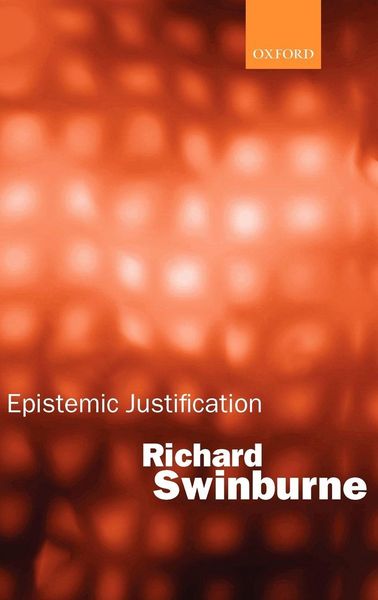
Richard Swinburne offers an original treatment of a question at the heart of epistemology: what makes a belief rational, or justified in holding? He maps the rival accounts of philosophers on epistemic justification ("internalist" and "externalist"), arguing that they are really accounts of different concepts. He distinguishes between synchronic justification (justification at a time) and diachronic justification (synchronic justification resulting from adequate investigation)--both internalist and externalist. He also argues that most kinds of justification are worth having because they are indicative of truth; however, it is only justification of internalist kinds that can guide a believer's actions. Swinburne goes on to show the usefulness of the probability calculus in elucidating how empirical evidence makes beliefs probably true.
Kundinnen und Kunden meinen
Verfassen Sie die erste Bewertung zu diesem Artikel
Helfen Sie anderen Kund*innen durch Ihre Meinung
Kurze Frage zu unserer Seite
Vielen Dank für dein Feedback
Wir nutzen dein Feedback, um unsere Produktseiten zu verbessern. Bitte habe Verständnis, dass wir dir keine Rückmeldung geben können. Falls du Kontakt mit uns aufnehmen möchtest, kannst du dich aber gerne an unseren Kund*innenservice wenden.
zum Kundenservice