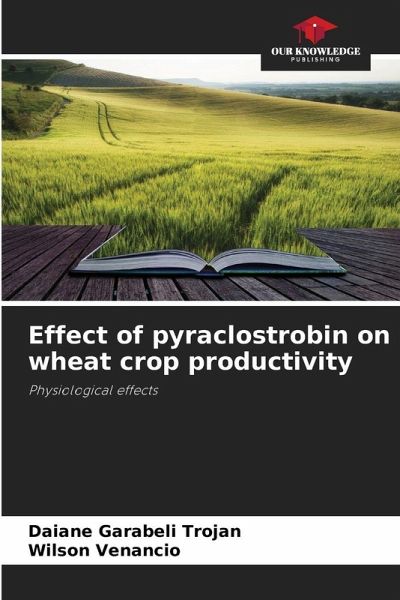
Effect of pyraclostrobin on wheat crop productivity
Physiological effects
Versandkostenfrei!
Versandfertig in 6-10 Tagen
24,99 €
inkl. MwSt.

PAYBACK Punkte
12 °P sammeln!

In 10,000 years, the Earth's population has increased tenfold, from less than 10 million to more than 6 billion people, and will soon reach 10 billion. As the human population increases, so does the demand for food, and to meet this growing need, it is imperative to increase not only the area under cultivation but, above all, productivity (THE ECONOMIST, 2006). One issue that needs to be reevaluated is that, often, yield-promoting factors are left in the background, while yield-protecting factors are privileged. This reversal of priorities has led to a waste of financial resources and unnecess...
In 10,000 years, the Earth's population has increased tenfold, from less than 10 million to more than 6 billion people, and will soon reach 10 billion. As the human population increases, so does the demand for food, and to meet this growing need, it is imperative to increase not only the area under cultivation but, above all, productivity (THE ECONOMIST, 2006). One issue that needs to be reevaluated is that, often, yield-promoting factors are left in the background, while yield-protecting factors are privileged. This reversal of priorities has led to a waste of financial resources and unnecessary environmental impacts. When it comes to agrochemicals, such as fungicides, one immediately thinks of their effectiveness in controlling pathogens. However, with the speed and accuracy of research, it is now possible to extract more than just effectiveness from this tool. The effects promoted in plant physiology by some groups of fungicides, such as strobilurins, are remarkable.
Andere Kunden interessierten sich für

![Cover Ladoga Wheat [microform]](https://bilder.buecher.de/produkte/66/66152/66152804n.jpg "Ladoga Wheat [microform]")