

Diapause in Aquatic Invertebrates Theory and Human Use
-
- Hardcover
- Taschenbuch ausgewählt
- eBook
-
Sprache:Englisch
138,99 €
inkl. MwSt,
Lieferung nach Hause
Beschreibung
Details
Einband
Taschenbuch
Erscheinungsdatum
23.11.2010
Herausgeber
Victor R. Alekseev + weitereVerlag
Springer NetherlandSeitenzahl
260
Maße (L/B/H)
23,5/15,5/1,6 cm
Gewicht
479 g
Auflage
1. Auflage
Sprache
Englisch
ISBN
978-90-481-7425-6
Dormancy is a suspension of the vital functions in an organism to overcome harsh environmental conditions, and sometimes can last for centuries. It is a widespread adaptation in many phyla, ranging from bacteria to vertebrates, and may exert a great influence on aquatic communities.
Contributors to this new book are leaders in the field of diapause studies, and many authors were participants at a recent workshop on diapause in aquatic invertebrates (Pallanza, Italy 2003). The book consists of two major parts, as indicated in its title: Phenomenology of diapause and significance of this adaptation in scientific and practical uses. Application to newly developing areas such as cultivation of live food, like rotifers or Artemia, in modern aquaculture is covered, as are aspects of diapause that promote the colonization of new environments by facilitating the passive transport of resting stages of invasive species. Creation of artificial ecosystems outside of the Earth’s biosphere using dormant propagules becomes an actual possibility as humankind develops plans to colonize our nearest planets. Also, studies on the vertical distribution of resting stages in undisturbed sediment cores yield important ecological and evolutionary information useful in investigations of past environments.
Throughout the book properties of diapause and individual peculiarities of this ancient and well-developed adaptive phenomenon are regarded in evolutionarily distant groups such as Rotifers, Crustaceans and Insects.
Weitere Bände von Monographiae Biologicae
-
The Pantanal of Mato Grosso (Brazil) von F.D. Por
 Band 73
F.D. Por
The Pantanal of Mato Grosso (Brazil)Buch
146,99 €
-
Tropical Rainforest Research — Current Issues von D.S. Edwards
 Band 74
D.S. Edwards
Tropical Rainforest Research — Current IssuesBuch
195,99 €
-
Rocas Alijos von Robert W. Schmieder
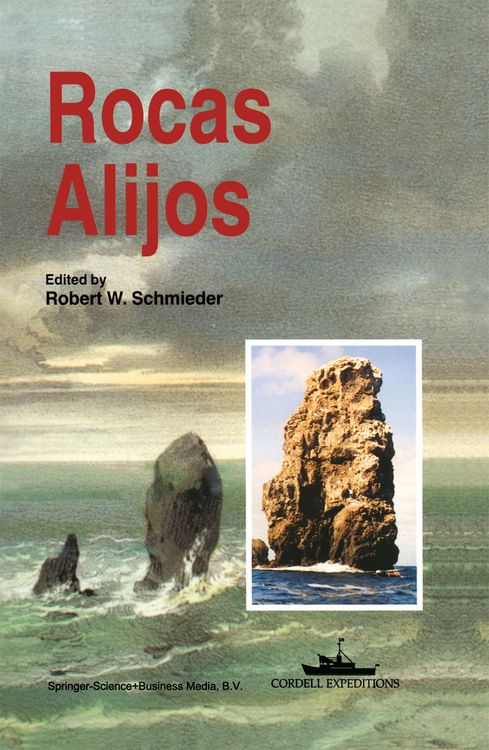 Band 75
Robert W. Schmieder
Rocas AlijosBuch
292,99 €
-
An Introduction to Saline Lakes on the Qinghai—Tibet Plateau von Zheng Mianping
 Band 76
Zheng Mianping
An Introduction to Saline Lakes on the Qinghai—Tibet PlateauBuch
48,99 €
-
The Pantanal of Poconé von Charles W. Heckman
 Band 77 - 12%
Charles W. Heckman
The Pantanal of PoconéBuch
187,99 €
213,99 €* -
Monograph of the Oxytrichidae (Ciliophora, Hypotrichia) von Helmut Berger
 Band 78
Helmut Berger
Monograph of the Oxytrichidae (Ciliophora, Hypotrichia)Buch
281,99 €
-
Environmental Change and Response in East African Lakes von J.T. Lehman
 Band 79
J.T. Lehman
Environmental Change and Response in East African LakesBuch
139,99 €
-
Nouragues von F. Bongers
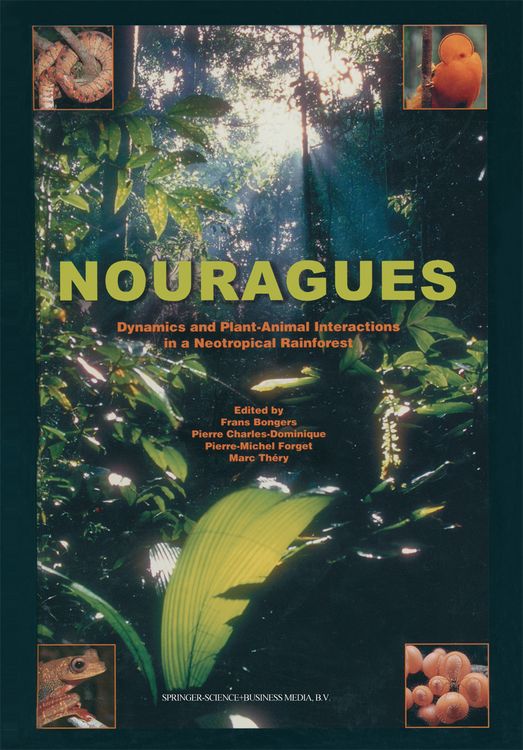 Band 80
F. Bongers
NouraguesBuch
195,99 €
-
Monograph of the Spathidiida (Ciliophora, Haptoria) von Wilhelm Foissner
 Band 81 - 12%
Wilhelm Foissner
Monograph of the Spathidiida (Ciliophora, Haptoria)Buch
187,99 €
213,99 €* -
Biogeography and Ecology of Bulgaria von Victor Fet
 Band 82 - 13%
Victor Fet
Biogeography and Ecology of BulgariaBuch
277,99 €
320,99 €* -
Bridging Divides von Stephan Gollasch
 Band 83 - 13%
Stephan Gollasch
Bridging DividesBuch
138,99 €
160,49 €* -
Diapause in Aquatic Invertebrates von Victor R. Alekseev
 Band 84
Victor R. Alekseev
Diapause in Aquatic InvertebratesBuch
138,99 €
Unsere Kundinnen und Kunden meinen
Verfassen Sie die erste Bewertung zu diesem Artikel
Helfen Sie anderen Kund*innen durch Ihre Meinung
Kurze Frage zu unserer Seite
Vielen Dank für dein Feedback
Wir nutzen dein Feedback, um unsere Produktseiten zu verbessern. Bitte habe Verständnis, dass wir dir keine Rückmeldung geben können. Falls du Kontakt mit uns aufnehmen möchtest, kannst du dich aber gerne an unseren Kund*innenservice wenden.
zum Kundenservice