Gutscheinbedingungen

**Gültig vom 24.08.2026 bis 26.08.2026 | Gültig für nicht preisgebundene fremdsprachige Bücher | Einzelne Artikel können ausgeschlossen sein | Online auf www.bücher.de einlösbar | Click & Collect nur mit Online-Zahlung (Paypal/Kreditkarte) vorab | Nicht kombinierbar mit anderen Gutscheinen oder Preisaktionen | Nur einmal pro Einkauf einlösbar | Gutschein wird auf max. 500€ Bestellwert angerechnet | Keine Barauszahlung | Nicht gültig für Versandkosten und Services

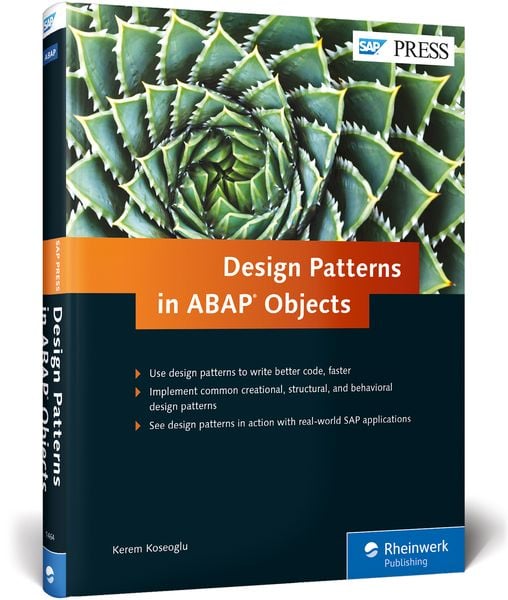
Produktbild: Design Patterns in ABAP Objects

Design Patterns in ABAP Objects

Aus der Reihe SAP PRESS Englisch

79,95 €

inkl. gesetzl. MwSt., Versandkostenfrei


Beschreibung

Produktdetails

Einband

Gebundene Ausgabe

Erscheinungsdatum

28.10.2016

Verlag

Rheinwerk Publishing

Seitenzahl

387

Maße (L/B/H)

24,6/18,7/2,9 cm

Gewicht

877 g

Auflage

1

Sprache

Englisch

ISBN

978-1-4932-1464-8

Beschreibung

Produktdetails

Einband

Gebundene Ausgabe

Erscheinungsdatum

28.10.2016

Verlag

Rheinwerk Publishing

Seitenzahl

387

Maße (L/B/H)

24,6/18,7/2,9 cm

Gewicht

877 g

Auflage

1

Sprache

Englisch

ISBN

978-1-4932-1464-8

Herstelleradresse

Libri GmbH
Europaallee 1
36244 Bad Hersfeld
DE

Email: gpsr@libri.de

Noch keine Bewertungen vorhanden

Verfassen Sie die erste Bewertung zu diesem Artikel

Helfen Sie anderen Kundinnen und Kunden durch Ihre Meinung.

Kundinnen und Kunden meinen

Bewertungen (0)

  • Produktbild: Design Patterns in ABAP Objects

  • ... Preface ... 17


    ... Design Pattern Categories ... 19


    ... How to Learn ... 20


    PART I ... Architectural Design Patterns ... 25


    1 ... MVC ... 27


    1.1 ... Case Study: Read, Process, Display, and Post ... 28


    1.2 ... Passing Select Options ... 33


    1.3 ... Distributing Application Logic ... 34


    1.4 ... Related Patterns ... 34


    1.5 ... Summary ... 35


    PART II ... Creational Design Patterns ... 37


    2 ... Abstract Factory ... 39


    2.1 ... Case Study: Log Analysis ... 40


    2.2 ... Related Patterns ... 47


    2.3 ... Summary ... 47


    3 ... Builder ... 49


    3.1 ... Case Study: Jobs for Text Files ... 49


    3.2 ... When to Use ... 66


    3.3 ... Privacy ... 66


    3.4 ... Summary ... 67


    4 ... Factory ... 69


    4.1 ... Case Study: FI Documents for Parties ... 69


    4.2 ... Advantages ... 75


    4.3 ... Related Patterns ... 75


    4.4 ... Summary ... 76


    5 ... Lazy Initialization ... 77


    5.1 ... Case Study: Logging Errors ... 77


    5.2 ... Advantages ... 81


    5.3 ... Related Patterns ... 81


    5.4 ... Summary ... 82


    6 ... Multiton ... 83


    6.1 ... Case Study: Vendor Balance ... 84


    6.2 ... When to Use ... 88


    6.3 ... When to Avoid ... 88


    6.4 ... State Modification ... 89


    6.5 ... Summary ... 89


    7 ... Prototype ... 91


    7.1 ... Case Study: Item Clone ... 91


    7.2 ... Changing Class Properties ... 95


    7.3 ... Clone Operations ... 96


    7.4 ... Related Patterns ... 96


    7.5 ... Summary ... 97


    8 ... Singleton ... 99


    8.1 ... Case Study: Subcomponents ... 99


    8.2 ... Advantages and Disadvantages ... 106


    8.3 ... Related Patterns ... 106


    8.4 ... Summary ... 106


    PART III ... Structural Design Patterns ... 107


    9 ... Adapter ... 109


    9.1 ... Case Study: Project Management Tools ... 109


    9.2 ... Glue Code ... 118


    9.3 ... Two-Way Adapters ... 118


    9.4 ... Legacy Classes ... 122


    9.5 ... Summary ... 122


    10 ... Bridge ... 123


    10.1 ... Case Study: Messaging Framework ... 123


    10.2 ... Advantages ... 131


    10.3 ... Summary ... 131


    11 ... Composite ... 133


    11.1 ... Recursive Programming: A Refresher ... 133


    11.2 ... Case Study: HR Positions ... 137


    11.3 ... Advantages ... 144


    11.4 ... Disadvantages ... 144


    11.5 ... When to Use ... 145


    11.6 ... Related Patterns ... 145


    11.7 ... Summary ... 146


    12 ... Data Access Object ... 147


    12.1 ... Case Study: Potential Customers ... 147


    12.2 ... Redundant Code Prevention ... 152


    12.3 ... Related Patterns ... 153


    12.4 ... Summary ... 153


    13 ... Decorator ... 155


    13.1 ... Case Study: User Exit ... 155


    13.2 ... Advantages and Challenges ... 161


    13.3 ... Related Patterns ... 162


    13.4 ... Summary ... 162


    14 ... Façade ... 165


    14.1 ... Case Study: Bonus Calculation ... 166


    14.2 ... When and Where to Use ... 168


    14.3 ... Related Patterns ... 170


    14.4 ... Summary ... 170


    15 ... Flyweight ... 171


    15.1 ... Case Study: Negative Stock Forecast ... 171


    15.2 ... Disadvantages ... 181


    15.3 ... When to Use ... 181


    15.4 ... Related Patterns ... 182


    15.5 ... Summary ... 182


    16 ... Property Container ... 185


    16.1 ... Case Study: Enhancing an SAP Program ... 185


    16.2 ... Static vs. Instance Containers ... 194


    16.3 ... Sharing Variables ... 195


    16.4 ... Variable Uniqueness ... 196


    16.5 ... Related Patterns ... 196


    16.6 ... Summary ... 198


    17 ... Proxy ... 199


    17.1 ... Case Study: Sensitive Salary Information ... 199


    17.2 ... When to Use ... 206


    17.3 ... Related Patterns ... 207


    17.4 ... Summary ... 207


    18 ... Chain of Responsibility ... 209


    18.1 ... Case Study: Purchase Order Approver Determination ... 209


    18.2 ... Risks ... 217


    18.3 ... Related Patterns ... 217


    18.4 ... Summary ... 218


    PART IV ... Behavioral Design Patterns ... 219


    19 ... Command ... 221


    19.1 ... Case Study: SD Documents ... 221


    19.2 ... When to Use or Avoid ... 229


    19.3 ... Related Patterns ... 229


    19.4 ... Summary ... 230


    20 ... Mediator ... 231


    20.1 ... Case Study: Stock Movement Simulation ... 232


    20.2 ... When to Use ... 241


    20.3 ... Disadvantages ... 241


    20.4 ... Summary ... 241


    21 ... Memento ... 243


    21.1 ... Case Study: Budget Planning ... 243


    21.2 ... Risks ... 252


    21.3 ... Redo ... 253


    21.4 ... Summary ... 254


    22 ... Observer ... 255


    22.1 ... Case Study: Target Sales Values ... 256


    22.2 ... Advantages ... 261


    22.3 ... Disadvantages ... 261


    22.4 ... Multiple Subjects ... 262


    22.5 ... Related Patterns ... 263


    22.6 ... Summary ... 264


    23 ... Servant ... 265


    23.1 ... Case Study: Address Builder ... 266


    23.2 ... Extensions ... 274


    23.3 ... Related Patterns ... 275


    23.4 ... Summary ... 275


    24 ... State ... 277


    24.1 ... Case Study: Authorization-Based Class Behavior ... 277


    24.2 ... Advantages ... 283


    24.3 ... Related Patterns ... 284


    24.4 ... Summary ... 284


    25 ... Strategy ... 285


    25.1 ... Case Study: Sending Material Master Data ... 286


    25.2 ... Advantages ... 291


    25.3 ... Passing Data to the Strategy Object ... 291


    25.4 ... Optional Strategies ... 293


    25.5 ... Intermediate Abstract Classes ... 297


    25.6 ... Related Patterns ... 302


    25.7 ... Summary ... 302


    26 ... Template Method ... 305


    26.1 ... Case Study: Average Transaction Volume ... 306


    26.2 ... When to Use ... 318


    26.3 ... Advantages and Risks ... 319


    26.4 ... Degree of Abstraction ... 320


    26.5 ... The “Hollywood Principle” ... 320


    26.6 ... Summary ... 321


    27 ... Visitor ... 323


    27.1 ... Case Study: Incoming Invoice Processing ... 323


    27.2 ... When to Use ... 333


    27.3 ... Related Patterns ... 334


    27.4 ... Summary ... 335


    ... Appendices ... 337


    A ... Object-Oriented Programming ... 339


    B ... Subclass Determination ... 361


    C ... Principles ... 371


    D ... The Author ... 383


    ... Index ... 385