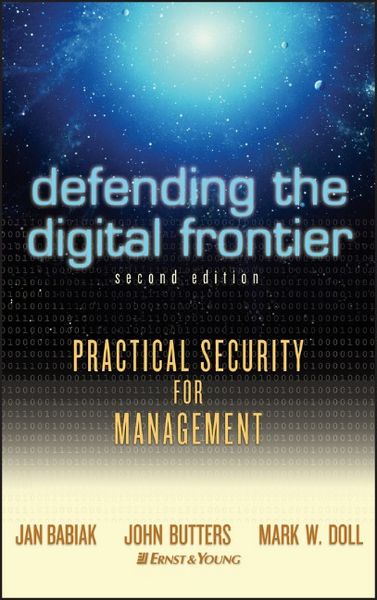
Defending the Digital Frontier An Executive's Guide to Information Security
35,99 €
inkl. gesetzl. MwSt.,
Lieferung nach Hause
Beschreibung
Produktdetails
Einband
Gebundene Ausgabe
Erscheinungsdatum
30.11.2004
Verlag
John Wiley & Sons IncSeitenzahl
272
Maße (L/B/H)
23,5/15,7/1,9 cm
Gewicht
440 g
Auflage
2. Auflage
Sprache
Englisch
ISBN
978-0-471-68087-1
Enhance the digital security knowledge-base within any organization
In today's competitive business environment, information and information technology have become crucial for a company's success. Ensuring the confidentiality of such information-financial, trade secrets, and the like-has become key. Defending the Digital Frontier, Second Edition describes where organizations are vulnerable and identifies protective measures that rely on people and process as much as technology. This book is a practical guide aimed at business leaders and executives, explaining why digital security is not a technical function, but a risk management operation, and illustrates an approach for creating an enterprise-wide security culture based on business-led risk-management principles.
Ernst & Young is a global leader in professional services, providing tax, assurance, and transaction advice to thousands of individuals as well as domestic and global businesses. Ernst & Young provides independent security solutions for some of the world's most information-intensive organizations, including numerous Fortune 500 companies, and the federal government.
In today's competitive business environment, information and information technology have become crucial for a company's success. Ensuring the confidentiality of such information-financial, trade secrets, and the like-has become key. Defending the Digital Frontier, Second Edition describes where organizations are vulnerable and identifies protective measures that rely on people and process as much as technology. This book is a practical guide aimed at business leaders and executives, explaining why digital security is not a technical function, but a risk management operation, and illustrates an approach for creating an enterprise-wide security culture based on business-led risk-management principles.
Ernst & Young is a global leader in professional services, providing tax, assurance, and transaction advice to thousands of individuals as well as domestic and global businesses. Ernst & Young provides independent security solutions for some of the world's most information-intensive organizations, including numerous Fortune 500 companies, and the federal government.
Kundinnen und Kunden meinen
Verfassen Sie die erste Bewertung zu diesem Artikel
Helfen Sie anderen Kund*innen durch Ihre Meinung
Kurze Frage zu unserer Seite
Vielen Dank für dein Feedback
Wir nutzen dein Feedback, um unsere Produktseiten zu verbessern. Bitte habe Verständnis, dass wir dir keine Rückmeldung geben können. Falls du Kontakt mit uns aufnehmen möchtest, kannst du dich aber gerne an unseren Kund*innenservice wenden.
zum Kundenservice