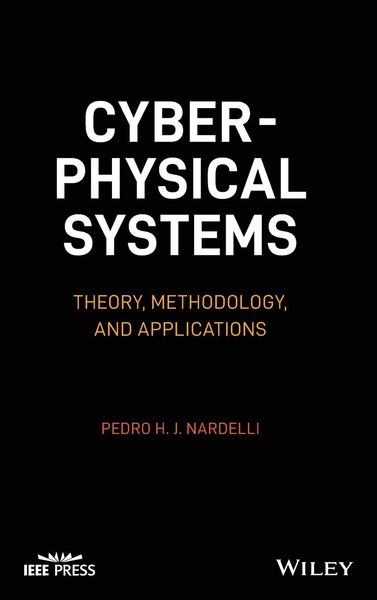
Cyber-Physical Systems Theory, Methodology, and Applications
138,99 €
inkl. gesetzl. MwSt.,
Lieferung nach Hause
Beschreibung
Produktdetails
Einband
Gebundene Ausgabe
Erscheinungsdatum
17.05.2022
Verlag
John Wiley & Sons IncSeitenzahl
288
Maße (L/B/H)
23,5/15,7/2 cm
Gewicht
568 g
Auflage
1. Auflage
Sprache
Englisch
ISBN
978-1-119-78516-3
CYBER-PHYSICAL SYSTEMS
Provides a unique general theory of cyber-physical systems, focusing on how physical, data, and decision processes are articulated as a complex whole
Cyber-physical systems (CPS) operate in complex environments systems with integrated physical and computational capabilities. With the ability to interact with humans through variety of modalities, cyber-physical systems are applied across areas such as Internet of Things (IoT)-enabled devices, smart grids, autonomous automotive systems, medical monitoring, and distributed robotics. Existing engineering methods are capable of solving technical problems, yet the deployment of CPS in a net-enabled society requires a general theory of cyber-physical systems that goes beyond specific study cases and their associated technological development.
Cyber-physical Systems: Theory, Methodology, and Applications is a unique theoretical-methodological guide to assessing systems where complex information processing defines the behavior of physical processes. Using a systematic approach, the book describes the fundamentals of cybernetics, complexity sciences, system engineering, concepts of data and information, the data dissemination process, graph theory, and more. Readers are provided with the general theory, methodological framework, and analytical tools to assess and design CPS for applications in transport, energy, communication, health care, the military, and industry.
* Provides a framework for measuring the performance of different cyber-physical systems and assessing the potential impact of various cyber-threats
* Proposes a theory of CPS comprised of autonomous but interdependent physical, data, and regulatory layers
* Discusses decision-making approaches rooted in probability theory, information theory, complexity sciences, and game theory
* Helps readers perform a systemic impact evaluation of trending topics such as Artificial Intelligence, 5G, Energy Internet, blockchain, and data ownership
* Features extensive analysis of various cyber-physical systems across different domains
Cyber-physical Systems: Theory, Methodology, and Applications is a must-read for undergraduate and graduate students, researchers, and practitioners in electrical and computer engineering and other technical fields.
Provides a unique general theory of cyber-physical systems, focusing on how physical, data, and decision processes are articulated as a complex whole
Cyber-physical systems (CPS) operate in complex environments systems with integrated physical and computational capabilities. With the ability to interact with humans through variety of modalities, cyber-physical systems are applied across areas such as Internet of Things (IoT)-enabled devices, smart grids, autonomous automotive systems, medical monitoring, and distributed robotics. Existing engineering methods are capable of solving technical problems, yet the deployment of CPS in a net-enabled society requires a general theory of cyber-physical systems that goes beyond specific study cases and their associated technological development.
Cyber-physical Systems: Theory, Methodology, and Applications is a unique theoretical-methodological guide to assessing systems where complex information processing defines the behavior of physical processes. Using a systematic approach, the book describes the fundamentals of cybernetics, complexity sciences, system engineering, concepts of data and information, the data dissemination process, graph theory, and more. Readers are provided with the general theory, methodological framework, and analytical tools to assess and design CPS for applications in transport, energy, communication, health care, the military, and industry.
* Provides a framework for measuring the performance of different cyber-physical systems and assessing the potential impact of various cyber-threats
* Proposes a theory of CPS comprised of autonomous but interdependent physical, data, and regulatory layers
* Discusses decision-making approaches rooted in probability theory, information theory, complexity sciences, and game theory
* Helps readers perform a systemic impact evaluation of trending topics such as Artificial Intelligence, 5G, Energy Internet, blockchain, and data ownership
* Features extensive analysis of various cyber-physical systems across different domains
Cyber-physical Systems: Theory, Methodology, and Applications is a must-read for undergraduate and graduate students, researchers, and practitioners in electrical and computer engineering and other technical fields.
Kundinnen und Kunden meinen
Verfassen Sie die erste Bewertung zu diesem Artikel
Helfen Sie anderen Kund*innen durch Ihre Meinung
Kurze Frage zu unserer Seite
Vielen Dank für dein Feedback
Wir nutzen dein Feedback, um unsere Produktseiten zu verbessern. Bitte habe Verständnis, dass wir dir keine Rückmeldung geben können. Falls du Kontakt mit uns aufnehmen möchtest, kannst du dich aber gerne an unseren Kund*innenservice wenden.
zum Kundenservice