• Produktbild: Crystal Pulling from the Melt
  • Produktbild: Crystal Pulling from the Melt

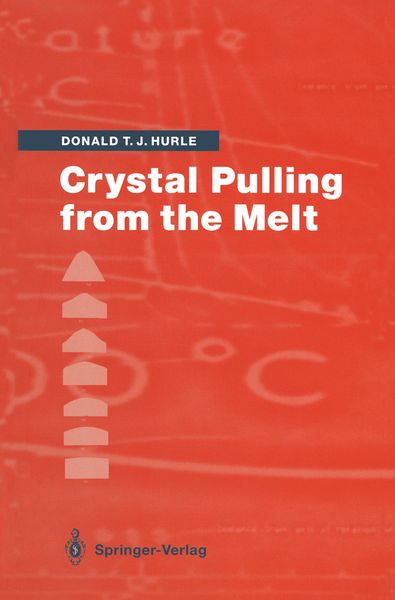
Crystal Pulling from the Melt

49,99 €

inkl. gesetzl. MwSt., Versandkostenfrei

Lieferung nach Hause

Produktdetails

Einband

Taschenbuch

Erscheinungsdatum

28.12.2011

Verlag

Springer Berlin

Seitenzahl

148

Maße (L/B/H)

23,5/15,5/1 cm

Gewicht

260 g

Auflage

Softcover reprint of the original 1st ed. 1993

Sprache

Englisch

ISBN

978-3-642-78210-7

Produktdetails

Einband

Taschenbuch

Erscheinungsdatum

28.12.2011

Verlag

Springer Berlin

Seitenzahl

148

Maße (L/B/H)

23,5/15,5/1 cm

Gewicht

260 g

Auflage

Softcover reprint of the original 1st ed. 1993

Sprache

Englisch

ISBN

978-3-642-78210-7

Herstelleradresse

Springer-Verlag KG
Sachsenplatz 4-6
1201 Wien
AT

Email: ProductSafety@springernature.com

Kundinnen und Kunden meinen

0 Bewertungen

Informationen zu Bewertungen

Zur Abgabe einer Bewertung ist eine Anmeldung im Konto notwendig. Die Authentizität der Bewertungen wird von uns nicht überprüft. Wir behalten uns vor, Bewertungstexte, die unseren Richtlinien widersprechen, entsprechend zu kürzen oder zu löschen.

Die Bewertungen sind nach Format, Anzahl Sterne und Datum sortiert.

Verfassen Sie die erste Bewertung zu diesem Artikel

Helfen Sie anderen Kund*innen durch Ihre Meinung

Kundinnen und Kunden meinen

0 Bewertungen filtern

  • Produktbild: Crystal Pulling from the Melt
  • Produktbild: Crystal Pulling from the Melt
  • 1 Introduction and Historical Perspective.- 2 Elements of the Process.- 2.1 Introduction.- 2.2 Heat Balance and Growth Rate.- 2.3 The Meniscus.- 2.4 Crystal Rotation.- 3 Techniques and Technology.- 3.1 Introduction.- 3.2 Silicon.- 3.3 Gallium Arsenide.- 3.4 Oxides.- 4 Convection and Flow in the Melt.- 4.1 Melt Convection.- 4.1.1 Introduction.- 4.1.2 The Navier-Stokes Equation.- 4.2 Flow Due to a Rotating Disc.- 4.3 Natural Convective Flow.- 4.3.1 Buoyancy-Driven Flow.- 4.3.2 Marangoni Flow.- 4.3.3 Convective Turbulence.- 5 Heat Transport.- 5.1 Introduction.- 5.2 Heat Loss from the Cooling Crystal.- 5.3 The Thermal-Capillary Model.- 5.4 Heat Transfer in the Encapsulant.- 5.5 Global Heat Transport.- 5.6 Optically Semi-Transparent Crystals.- 6 Mass Transport and Solute Segregation.- 6.1 Introduction.- 6.2 The Burton, Prim and Slichter Analysis.- 6.3 Macrosegregation.- 6.4 Microsegregation.- 7 The Use of a Magnetic Field.- 7.1 Motivation.- 7.2 Interaction of a Magnetic Field with Melt Flow.- 7.3 Generation of the Magnetic Field.- 7.4 Magnetic Field Configurations.- 7.5 Flow and Segregation in a Magnetic Field.- 7.5.1 Flow and Temperature Fields.- 7.5.2 Segregation.- 7.6 Applications.- 7.6.1 Silicon.- 7.6.2 Gallium Arsenide.- 7.6.3 Indium Phosphide.- 7.7 Concluding Remarks.- 8 System Dynamics and Automatic Diameter Control.- 8.1 Introduction.- 8.2 Dynamic Stability.- 8.3 Meniscus Dynamics.- 8.4 Linear Stability Analysis.- 8.5 Automatic Diameter Control.- 8.5.1 Introduction.- 8.5.2 Reflection from the Meniscus.- 8.5.3 Crystal Imaging.- 8.5.4 Crystal and Crucible Weighing.- 8.5.5 The Use of Dies.- 8.6 Dynamics of Control by the Weighing Technique.- 9 Morphological Stability of a Planar Rotating Interface.- 9.1 Introduction.- 9.2 Constitutional Supercooling.- 9.3 Cellular Structures.- 9.4 Linear Stability Theory.- 10 The Cooling Crystal.- 10.1 Introduction.- 10.2 Stress Distribution and Dislocation Generation in Gallium Arsenide and Indium Phosphide.- 10.3 Point Defect Equilibria in the Cooling Crystal.- 11 Future Developments.- 12 References.