Crossing over in the HLA region
Versandkostenfrei!
Versandfertig in 6-10 Tagen
29,99 €
inkl. MwSt.

PAYBACK Punkte
15 °P sammeln!

Bone marrow transplants are the treatment of choice for many malignant and non-malignant diseases, such as leukemia, bone marrow aplasia and immune deficiency. In Tunisia, only allogeneic or allograft transplants are performed between a recipient and an HLA-identical donor. Such geno-identical donors are found in the siblings of patients who are candidates for BM transplants. Donors are first selected on the basis of histocompatibility class I (HLA-A and B) by serology. This is followed by PCR-SSP or PCR-SSO for HLA class II typing of the recipient and any compatible donor. Given that all the ...
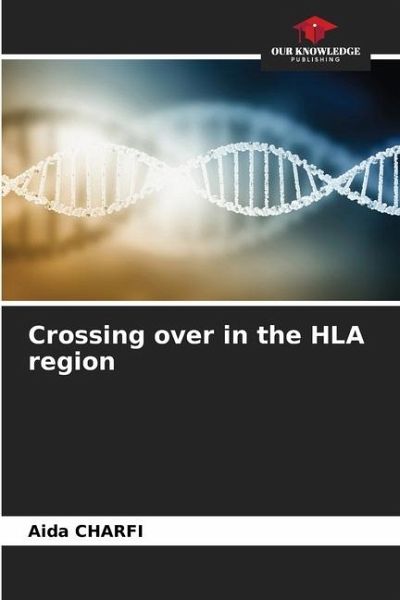
Bone marrow transplants are the treatment of choice for many malignant and non-malignant diseases, such as leukemia, bone marrow aplasia and immune deficiency. In Tunisia, only allogeneic or allograft transplants are performed between a recipient and an HLA-identical donor. Such geno-identical donors are found in the siblings of patients who are candidates for BM transplants. Donors are first selected on the basis of histocompatibility class I (HLA-A and B) by serology. This is followed by PCR-SSP or PCR-SSO for HLA class II typing of the recipient and any compatible donor. Given that all the HLA typing kits we use are of low resolution, a microsatellite screening approach has been developed. HLA typing is completed by genotyping a panel of 4 microsatellites covering the entire HLA region. The study of haplotype segregation using this panel in the various family members of a candidate for OM transplantation enabled us to highlight genetic or CO recombinations in the HLA region.
Andere Kunden interessierten sich für