Gutscheinbedingungen

**Gültig vom 15.06.2026 bis 17.06.2026 | Gültig für nicht preisgebundene fremdsprachige Bücher | Einzelne Artikel können ausgeschlossen sein | Maximaler rabattfähiger Warenkorbwert 500 € | Nicht kombinierbar mit weiteren Aktionen | Nur einmal pro Person einlösbar | Nur solange der Vorrat reicht

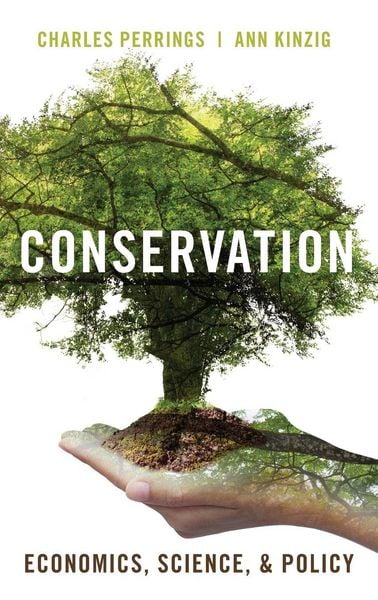
  • Produktbild: Conservation C
  • Produktbild: Conservation C

Conservation C Economics, Science, and Policy

215,99 €

inkl. gesetzl. MwSt., Versandkostenfrei

Lieferung nach Hause

Beschreibung

Produktdetails

Einband

Gebundene Ausgabe

Erscheinungsdatum

12.10.2021

Verlag

Oxford Academic

Seitenzahl

446

Maße (L/B/H)

24/16,1/2,8 cm

Gewicht

853 g

Sprache

Englisch

ISBN

978-0-19-061360-0

Beschreibung

Produktdetails

Einband

Gebundene Ausgabe

Erscheinungsdatum

12.10.2021

Verlag

Oxford Academic

Seitenzahl

446

Maße (L/B/H)

24/16,1/2,8 cm

Gewicht

853 g

Sprache

Englisch

ISBN

978-0-19-061360-0

Herstelleradresse

Libri GmbH
Europaallee 1
36244 Bad Hersfeld
DE

Email: gpsr@libri.de

Kundinnen und Kunden meinen

0 Bewertungen

Informationen zu Bewertungen

Zur Abgabe einer Bewertung ist eine Anmeldung im Konto notwendig. Die Authentizität der Bewertungen wird von uns nicht überprüft. Wir behalten uns vor, Bewertungstexte, die unseren Richtlinien widersprechen, entsprechend zu kürzen oder zu löschen.

Die Bewertungen sind nach Format, Anzahl Sterne und Datum sortiert.

Verfassen Sie die erste Bewertung zu diesem Artikel

Helfen Sie anderen Kund*innen durch Ihre Meinung

Kundinnen und Kunden meinen

0 Bewertungen filtern

Die Leseprobe wird geladen.
  • Produktbild: Conservation C
  • Produktbild: Conservation C
    • PREFACE

    • LIST OF FIGURES

    • LIST OF TABLES

    • LIST OF ACRONYMS

    • CHAPTER 1 ENVIRONMENTAL CONSERVATION AND ENVIRONMENTAL CHANGE

    • 1.1 Introduction

    • 1.2 The biological record

    • 1.3 Implications for conservation

    • 1.4 Plan of the book

    • PART I THE ECONOMIC THEORY OF CONSERVATION

    • CHAPTER 2 THE DECISION PROBLEM

    • 2.1 Introduction

    • 2.2 Elements of the decision problem

    • 2.3 A numerical example-the wine storage problem

    • 2.4 Summary and conclusions

    • CHAPTER 3 HOTELLING CONSERVATION

    • 3.1 Introduction

    • 3.2 The Hotelling arbitrage condition

    • 3.3 The Hotelling prices and quantities

    • 3.4 Renewable natural resources and the Hotelling arbitrage condition

    • 3.5 Connecting the Hotelling theory of conservation to Conservation Biology

    • 3.6 Summary and conclusions

    • CHAPTER 4 THE CONSERVATION RENEWABLE RESOURCES

    • 4.1 Introduction

    • 4.2 Marine capture fisheries

    • 4.3 Forests and forestry

    • 4.4 Rangelands

    • 4.5 Summary and conclusions

    • PART II VALUATION

    • CHAPTER 5 THE VALUATION OF ENVIRONMENTAL GOODS AND SERVICES

    • 5.1 Introduction

    • 5.2 The basis of value

    • 5.3 Ecosystem services and the value of non-marketed environmental resources

    • 5.4 The valuation of provisioning and cultural services

    • 5.5 The valuation of regulating services

    • 5.6 Summary and conclusions

    • CHAPTER 6 THE VALUATION OF ENVIRONMENTAL ASSETS

    • 6.1 Introduction

    • 6.2 Sustainability and the value of environmental assets

    • 6.3 The value of environmental assets in the national accounts

    • 6.4 Inclusive wealth

    • 6.5 Environmental assets and total factor productivity

    • 6.6 Summary and conclusions

    • CHAPTER 7 SUBSTITUTABILITY AND THE VALUATION OF NATURAL CAPITAL

    • 7.1 Introduction

    • 7.2 Substitution in production

    • 7.3 Substitution in a generalized model of joint production

    • 7.3 Substitution and public goods

    • 7.4 Net substitutes and complements

    • 7.5 Conditional substitutes and complements

    • 7.6 Summary and conclusions

    • PART III ALIGNING THE PRIVATE AND SOCIAL VALUE OF NATURAL RESOURCES

    • CHAPTER 8 ENVIRONMENTAL PUBLIC GOODS

    • 8.1 Introduction

    • 8.2 The optimal provision of public goods

    • 8.3 Types of public good

    • 8.4 Strategic behavior and the provision of public goods

    • 8.5 Resolving the public good problem

    • 8.6 Summary and conclusions

    • CHAPTER 9 ENVIRONMENTAL EXTERNALITIES

    • 9.1 Introduction

    • 9.2 The nature of environmental externalities

    • 9.3 Unidirectional externalities

    • 9.4 Positional externalities

    • 9.5 Public externalities

    • 9.6 Aligning private and social value

    • 9.6 Summary and conclusions

    • CHAPTER 10 POVERTY, VALUE, AND CONSERVATION

    • 10.1 Introduction

    • 10.2 Income effects and poverty

    • 10.3 Poverty-population-environment

    • 10.4 Per capita income growth and conservation

    • 10.5 Wealth, property rights, and conservation

    • 10.6 Summary and conclusions

    • CHAPTER 11 CONSERVATION IN PROTECTED AREAS

    • 11.1 Introduction

    • 11.2 Protected area design: ecological principles

    • 11.3 Protected area design: economic principles

    • 11.4 Protected areas and the supply of ecosystem services

    • 11.5 Protected areas and poverty

    • 11.6 Summary and conclusions

    • CHAPTER 12 CONSERVATION BEYOND PROTECTED AREAS

    • 12.1 Introduction

    • 12.2 Conservation of threatened wild species outside protected areas

    • 12.3 Conservation in agriculture

    • 12.4 Habitat substitutability

    • 12.5 Summary and conclusions

    • CHAPTER 13 CONSERVATION AT THE NATIONAL LEVEL

    • 13.1 Introduction

    • 13.2 Property rights

    • 13.3 Legal restrictions on land use

    • 13.4 Environmental offsets

    • 13.5 Economic incentives

    • 13.6 Summary and conclusions

    • CHAPTER 14 CONSERVATION AT THE INTERNATIONAL LEVEL

    • 14.1 Introduction

    • 14.2 Migratory species

    • 14.3 Transboundary and linked ecosystems

    • 14.4 Trade, travel, and the movement of species

    • 14.5 Strategic behavior and transboundary conservation

    • 14.6 Funding conservation as a global public good

    • 14.6 Summary and conclusions

    • CHAPTER 15 CONSERVATION IN THE FUTURE

    • 15.1 Introduction

    • 15.2 Environmental trends

    • 15.3 Economic trends

    • 15.4 The population affected by conservation decisions

    • 15.5 The optimal scale at which to conserve and the governance of conservation

    • Index