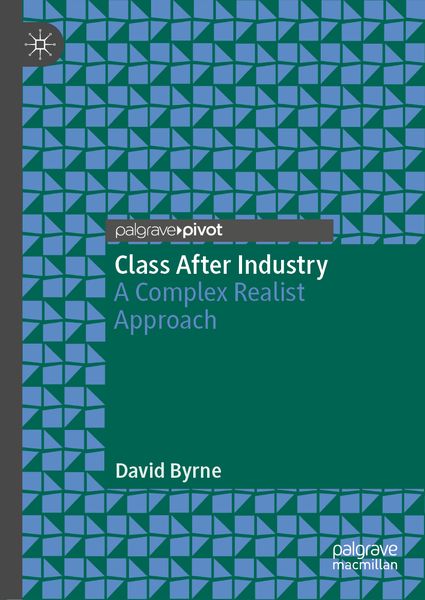
Class After Industry A Complex Realist Approach
55,99 €
inkl. gesetzl. MwSt.,
Lieferung nach Hause
Beschreibung
Produktdetails
Einband
Gebundene Ausgabe
Erscheinungsdatum
01.11.2018
Verlag
SpringerSeitenzahl
136
Maße (L/B/H)
21,6/15,3/1,3 cm
Gewicht
318 g
Auflage
1st ed. 2019
Sprache
Englisch
ISBN
978-3-030-02643-1
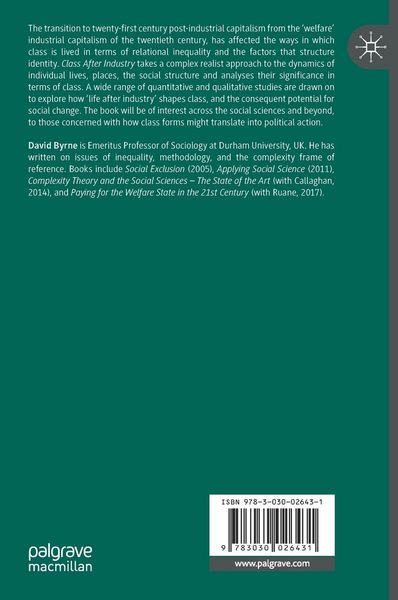
The transition to twenty-first century post-industrial capitalism from the ‘welfare’ industrial capitalism of the twentieth century, has affected the ways in which class is lived in terms of relational inequality and the factors that structure identity. Class After Industry takes a complex realist approach to the dynamics of individual lives, places, the social structure and analyses their significance in terms of class. A wide range of quantitative and qualitative studies are drawn on to explore how ‘life after industry’ shapes class, and the consequent potential for social change. The book will be of interest across the social sciences and beyond, to those concerned with how class forms might translate into political action.
Kundinnen und Kunden meinen
Verfassen Sie die erste Bewertung zu diesem Artikel
Helfen Sie anderen Kund*innen durch Ihre Meinung
Kurze Frage zu unserer Seite
Vielen Dank für dein Feedback
Wir nutzen dein Feedback, um unsere Produktseiten zu verbessern. Bitte habe Verständnis, dass wir dir keine Rückmeldung geben können. Falls du Kontakt mit uns aufnehmen möchtest, kannst du dich aber gerne an unseren Kund*innenservice wenden.
zum Kundenservice